
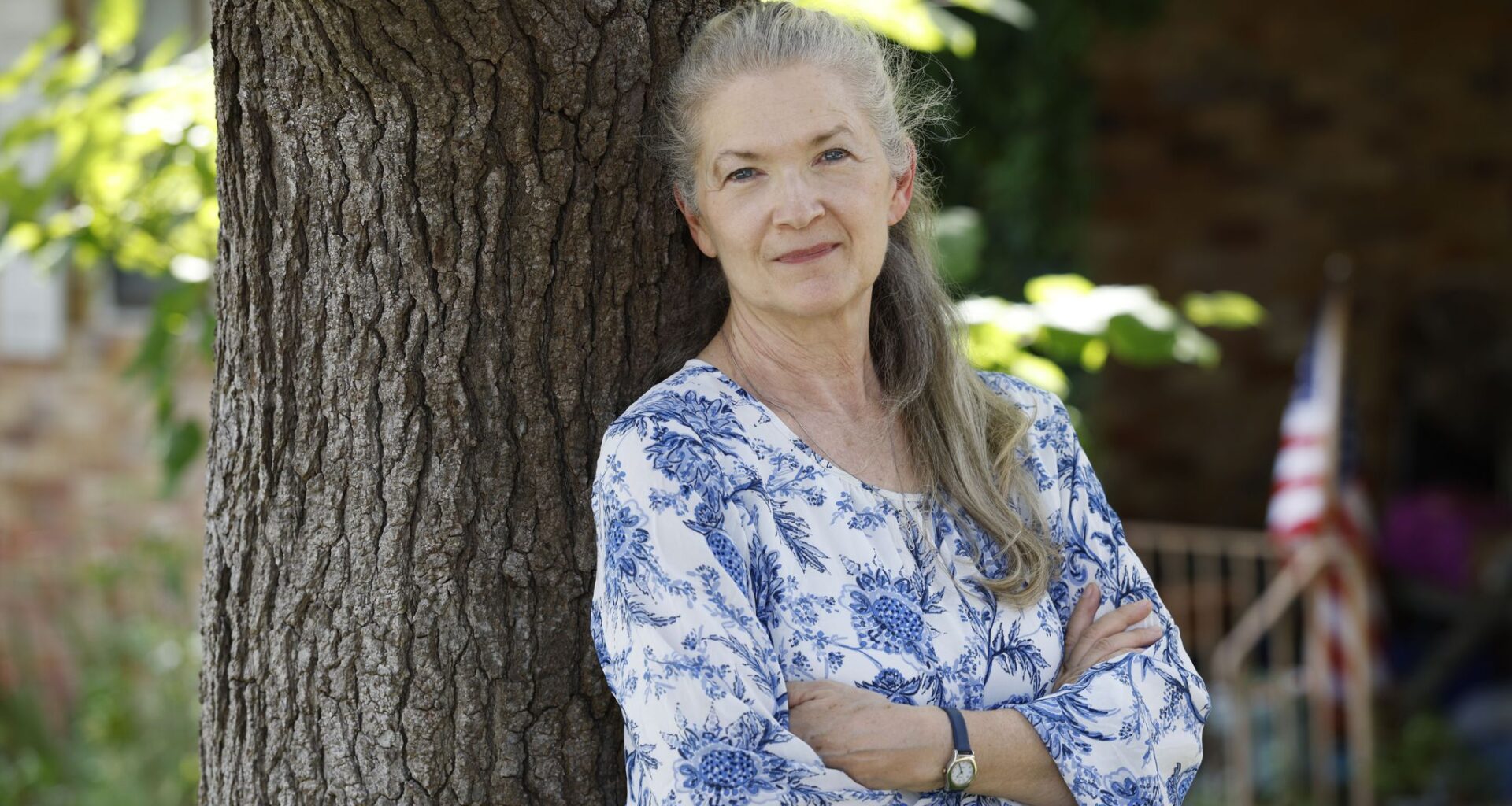
Grace Barber, 65, a retired nurse and teacher, poses for a photo in front of the house where she lives with her daughter, Wednesday, July 22, 2026, in Dallas.
Chitose Suzuki/The Dallas Morning News
While watching TV one night, Grace Barber, 65, decided to make a career change.

A commercial showcasing a nurse tending to a car crash victim, performing CPR and responding to a series of other emergencies resonated with her as an already practicing medical professional. At the end, the commercial revealed the nurse was not the one actually on-scene, but rather the students she taught.
Barber continued working full time while earning her alternative certification in teaching health, science and technology, and began instructing at Dallas’ School of Health Professions.
Article continues below this ad
As the years passed, Barber began planning for retirement at the encouragement of her friends and a financial advisor. Most of her savings came from the social security benefits of a 12-year nursing career.
Barber’s daughter, Laura Hayes, grew concerned about her mom’s ability to save enough when Barber, whom she said spent her life in service of others, received a $200 monthly increase in rent.
Haynes sat down with her mom and compared recommended retirement numbers to reality. The result? “Pretty sobering.”
Barber would eventually move in with Haynes, her husband and their two children, in 2017.
The financial factor
David John, a senior strategic policy advisor at AARP Public Policy Institute, said inflation and the rising cost of living are among the most pressing concerns for older adults across the nation. Social security benefits have not risen at a high enough rate to match inflation, John said, making retirement more difficult to save for.
Article continues below this ad
In North Texas, organizations such as The Senior Source work to help older adults address these concerns as they navigate aging.
Julie Krawczyk is the director of the non-profit’s Elder Financial Safety Center, where financial counseling services reach lower and middle income adults who receive social security benefits.
“Our older adults are walking through the door already at a deficit,” Krawczyk said, noting the average affordable senior apartment in Dallas is $1,418 a month while the average social security benefit ranges from $1,200 or $2,000. Add transportation, healthcare, food and essential needs, and the challenge mounts.
Both John and Krawczyk said they often hear older adults say saving for retirement is important to them, but in practice, these savings cannot meet the cost of living demands.
Grace Barber, 65, a retired nurse and teacher, right, poses for a photo with her daughter Laura Haynes, left, and granddaughter Irene Haynes, 10, in front of their house, Wednesday, July 22, 2026, in Dallas.
Chitose Suzuki/The Dallas Morning News
A rise in multigenerational housing
After years of seeing adult children move in with their parents, Krawczyk has noticed an increase in older adults moving to and from Texas in order to live in a multigenerational home. She believes this trend will continue and credits it to a lack of affordable housing.
Article continues below this ad
Doni Green, director of aging programs for the North Central Texas Council of Governments, is part of the Texas Department of Housing and Community Affairs. She said the department has been discussing a limited availability of affordable homes for older adults in Dallas.
She pointed to a National Low Income Housing Coalition report which found Dallas-Fort Worth only offered 18 affordable and available rental homes for every 100 low income renter households, lower than the state’s average.
Juliana Horowitz, senior associate director of social trends research at the PEW Research Center, studies how the American family and the workplace are changing.
In 2022, her team undertook a project to understand the increase in multigenerational homes in the U.S. Researchers concluded finances were one of the top reasons Americans chose to live in multigenerational homes.
The prevalence of multigenerational homes also varies depending on demographic background, Horowitz said. White adults are the least likely to live in a multigenerational home in the U.S., whereas nearly a quarter of Hispanic and Asian adults do.
Article continues below this ad
Haynes echoed this sentiment, saying her first-generation immigrant friends responded with immense joy after hearing about Barber moving in.
“They jumped up off the chair and gave me a big hug and said, ‘I’m so happy for you, you’re living the dream. I can’t wait until the day we’re financially stable enough that I can reach out to my parents and offer to have them live with us.’”
Yet, a number of Haynes’ American-born friends immediately asked if everything was okay.
Related: After a lifetime of work, D-FW retirees struggle to stay afloat
Life inside the home
Most days, Haynes and Barber end up doing things together – eating dinner, jigsaw puzzles and, the stand out, spending time with the children.
Article continues below this ad
“I hope when my kids look back on this, it’s the cumulative impact of hundreds of little moments,” Haynes said.
Most recently, Barber assisted her granddaughter and friends in a homemade theater production. Cooking and sewing also allow the generations to spend more quality time together, compared to when Barber was raising Haynes as a single working parent.
If she’s not yet awake in the morning, Barber’s granddaughter will come wake her and ask, “have you done your morning stretches?”
Related: Older residents are caught in the affordability gap in North Texas
Article continues below this ad
A garage office behind the house enables Barber to have her own haven away from the chaos of small children.
She graded papers there until she retired in May.