
Ramon Carretero/Getty Images/iStock
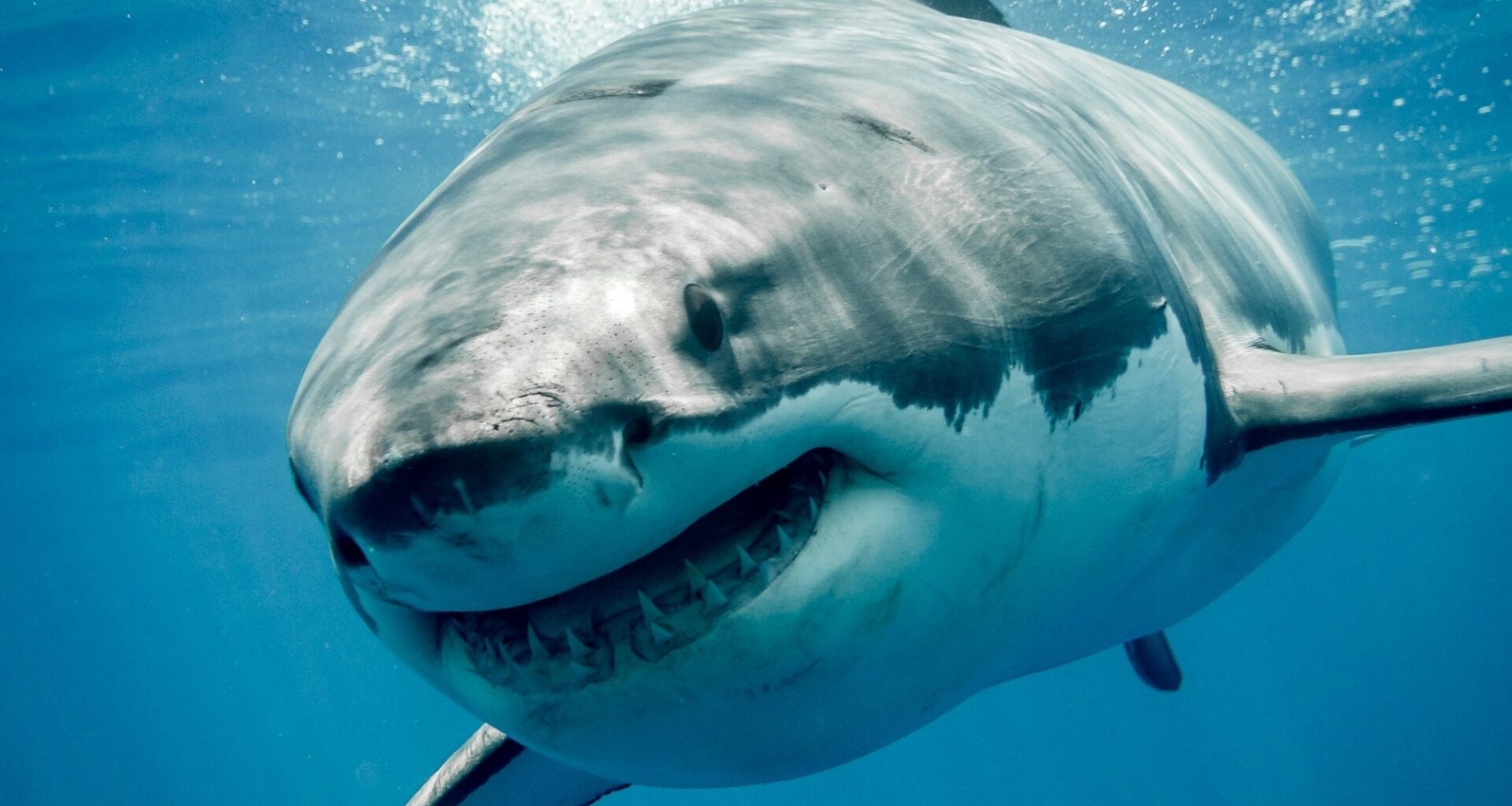
Shark Week is kicking off on Sunday, and North Texans may soon see a local on screen.

Discovery Channel’s Shark Week began in 1988 to help educate the public about sharks and dismantle common misconceptions. But it has since grown into a cultural phenomenon.
The Perot Museum of Nature and Science will be making its Shark Week debut, and one of the museum’s own, Ron Tykoski, will play a major role.
Article continues below this ad
About “Jurassic Sharks”
Tykoski, the vice president of science and curator of vertebrate paleontology at the Perot, will appear in Shark Week’s Jurassic Sharks, airing Tuesday at 7 p.m. on Discovery and streaming on HBO Max.
As the name of the show suggests, it will focus on some of the largest and most bizarre prehistoric sharks. “Turns out,” Tykoski said, “we’ve got a good number of them preserved in the rocks here in Texas.”
During the segment, Tykoski, Kesley Banks, an associate research scientist with Texas A&M University Corpus Christi, and Chris Flis, the museum director of the Whiteside Museum of Natural History, will visit a famous Permian fossil site in North Texas, where ancient sharks lived more than 270 million years ago.
There the trio will discuss a number of ancient shark species, many of which Tykoski described as “weirdos.”
Article continues below this ad
“Sharks were more diverse in the past than they are today,” Tykoski said. Some of that diversity is due to them taking advantage of different niches, like different foods, which is reflected in their anatomy.
Xenacanthus teeth in rock from the Early Permian.
Perot Museum of Nature and Science
For example, the freshwater shark Xenacanthus had a mouthful of razor-blade-like teeth with multiple points. “Imagine each tooth having two prongs angled out like a V, biting and slashing on things, and then spines on their heads and on their fins,” Tykoski said.
A different shark called Ptychodus, on the other hand, had wide, flattened teeth designed to crush shelled prey such as ammonites, ancient relatives of the nautilus, rather than tear flesh.
Ptychodus teeth from the late Cretaceous, Coniacian age.
Perot Museum of Nature and Science
The show will also use CGI to reconstruct these prehistoric sharks, based in part on fossils from the Perot, to help show viewers what these creatures looked like.
Article continues below this ad
Celebrate Shark Week at the Perot
The Perot will host shark-themed activities all week starting Sunday.
In the Bio Lab, visitors can test stress biomarkers in blood samples to see how conditions like water pollution and hunting impact sharks. Visitors can also put their engineering skills to the test in the ChallENGe Lab by trying to build a shark-proof boat.
Themed foods, like Coral Reef Burgers and SharkBite Slushies, will be available all week at the Museum Café, and visitors 21 and older can enjoy Great White Margaritas at the museum’s Thursdays on Tap event on Thursday.
The first 100 guests to the Perot on Tuesday can get a free Discovery Channel Shark Week fin hat. That same day from 1 to 3 p.m., Tykoski will be hosting a meet-and-greet style pop-up booth in the Perot. Visitors can ask him questions about ancient sharks and the show Jurassic Sharks as well as see rarely shown fossil specimens, including a set of crushing Ptychodus teeth.
Article continues below this ad
“If sharks are the vehicle it takes to get people excited about the natural world,” Tykoski said, “let’s ride sharks to the future.”
Niamh Ordner is a science reporting fellow at The Dallas Morning News. Her fellowship is supported by the University of Texas at Dallas. The News makes all editorial decisions.