
LUBBOCK, Texas (KCBD) – State lawmakers are laying the groundwork to ban THC products across Texas ahead of the 90th Legislative Session, reviving an effort that was vetoed by Gov. Greg Abbott last session in favor of regulation.
The Senate Health and Human Services Committee spent several hours recently hearing testimony from parents, law enforcement, and medical professionals about the effects of THC.
Lubbock State Sen. Charles Perry, the committee’s vice-chair who led the push for a ban last session, said regulation has failed and an outright ban is the only path forward.
“This is an industry built on getting you wasted, let’s be clear,” Perry said. “We’re at our breaking point financially. I’m at my breaking point from a conscience level. I don’t know as a society how we can allow this stuff to perpetuate itself in the name of profit. As a state legislator, I’m tired of chasing addiction with another addiction and having the taxpayers fund it.”
Aubree Adams, a parent who testified before the committee, told lawmakers she’s seen the negative effects of marijuana first-hand. She’s from Colorado, and told the committee about how its legalization ruined her neighborhood and her family.
“They call fentanyl a weapon of mass destruction. I disagree. Fentanyl is a weapon of mass death. THC is a weapon of mass destruction, causing chemical injuries to the brain from the body,” Adams said. “He became addicted to marijuana, then came the paranoia, delusions, and violence.”
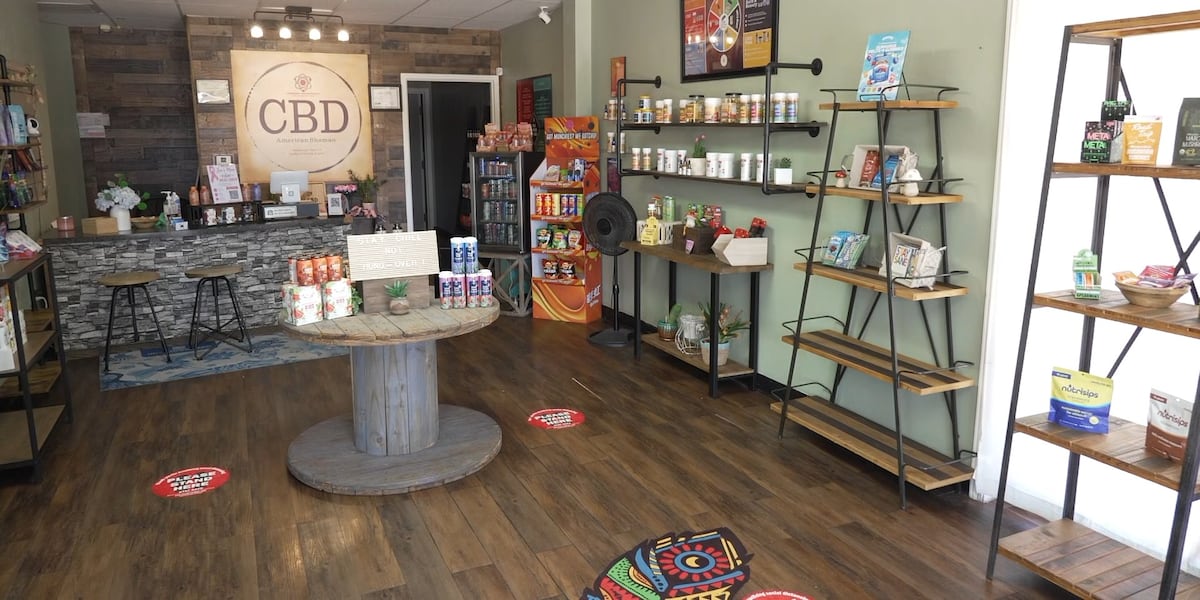
Hemp shop owners pushed back on those claims. Jennifer Garza, owner of CBD American Shaman in Lubbock, said there is no medical proof that hemp-derived THC on its own causes mental distress.
“A lot of these people they are talking about are young adults in their early 20s and their frontal lobes not fully developed or closed. So if there is already an underlying health condition, mental condition, then of course anything can set that off,” Garza said. “Alcohol could cause that. Food could cause that. It is not our products causing that.”
Lawmakers also heard testimony that dosages printed on product packaging are not always equal to the actual dosage of the product.
Steve Dye, Chief of the Allen Police Department, says that’s the case with most of his department’s investigations.
“Our public safety concerns and observations continue to include cannabinoid variants being chemically modified from industrial hemp, then being mislabeled as edibles and other consumables and openly and illegally sold in Texas,” Dye said. “Products with high THC content continue to be marketed and sold as hemp products.”
Garza said her store uses QR codes on every product that link directly to lab reports, including batch numbers. She said the solution is stronger enforcement against bad actors — not a blanket ban.
“Are there some people not doing it correctly? Of course, but that’s any industry. So what they need to do is have better rules, regulation, and enforcement. Go after the people that are not doing it right. There is no reason to just do an all-out ban,” Garza said.
Testimony also revealed a gap in the state’s ability to test and regulate THC products, with lab testing costing an estimated $1,200 per product for compliance and a shortage of personnel to enforce existing regulations. Dye said the Texas Alcoholic Beverage Commission already manages more than 60,000 alcohol retailers and is stretched thin, raising questions about its capacity to take on THC oversight as well.
“Since March 31st we’ve seen no difference at our stores. We’ve had nobody coming in from the state to look at those stores. It’s still left at the doorstep of the local agency, at least at this point,” Dye said.
Perry maintains gaps in resources are the reasons regulation will not work.
“States that regulate gain nothing. If you have regulations you create a path toward the court system that will not take this on because they’re too busy handling the other social problems that come from addiction. So there’s no path to fix this other than getting rid of it,” Perry said.
Garza, who lives in Perry’s district, said she has repeatedly sought a meeting with the senator to discuss her products and called his lack of engagement disappointing.
“It feels like a big slap in the face. Spend the day with me. Talk to my customers. Talk to people that are paying for you to be sitting behind that desk and doing what they want,” Garza said.
The state is already working to more heavily regulate the hemp industry. Garza said she supports regulation but not when it is designed to shut her business down entirely.
“It is my livelihood. It takes care of my family. It gives back to the Lubbock community. And to just completely wipe it out, it’s just crazy to me,” Garza said.
Copyright 2026 KCBD. All rights reserved.