
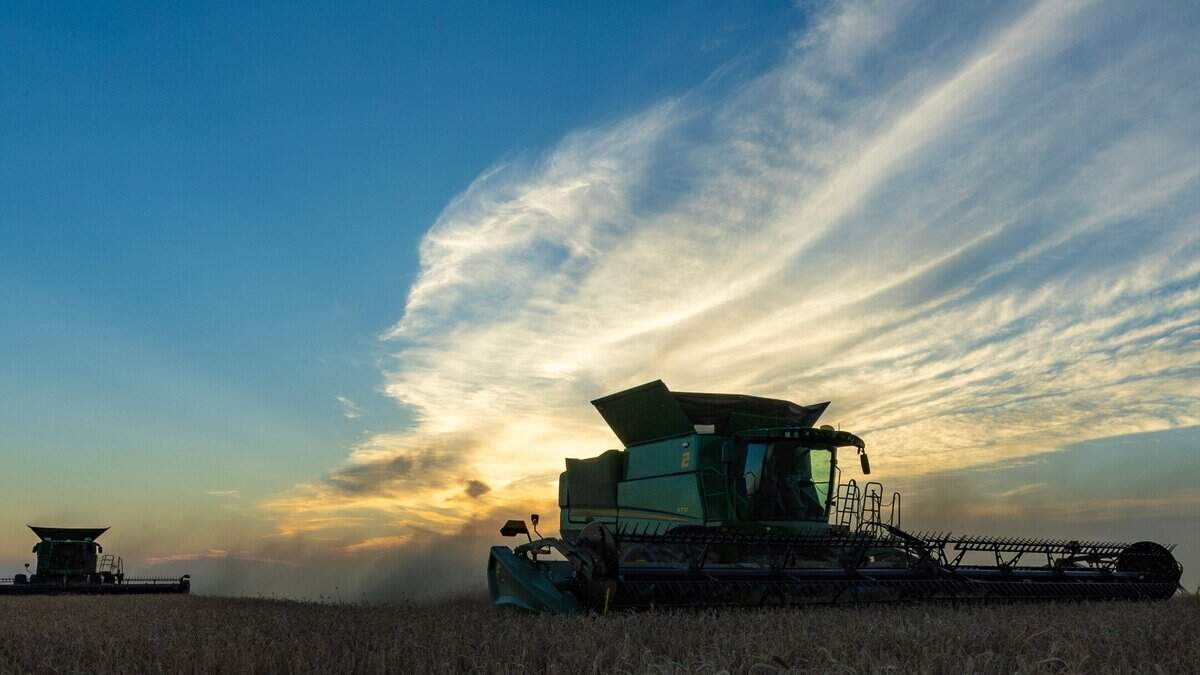
Wheat farmers across Texas struggled this season, but a report showed that DFW had the best wheat harvest during the rough season.
Travis Heying
The Wichita Eagle
Rain levels and viruses led to a statewide nightmare for wheat farmers this season, though the Dallas-Fort Worth area had the best in Texas, according to a report from Texas A&M.
The report found that DFW has the best non-irrigated wheat in the state due to rainfall at the right times and the fungal issues in the wheat crops in other parts of the state.
Throughout the rest of Texas, triticum mosaic viruses took over wheat crops due to the lack of rainfall. In DFW, the crops faced fungal pathogens and insect pressure from pests like Hessian flies.
Brandon Gerrish, a Texas A&M AgriLife Extension statewide small grains specialist, performs variety testing for grains across Texas. He said that this year, a lot of the wheat won’t even be harvested because of “how bad it was.”
Around 1.6 million acres of wheat is expected to be harvested throughout Texas this season, though that is only around 29% of the 5.5 million acres that was planted. This is the lowest harvested acreage since 2022, when 1.3 million acres were harvested.
Despite the lower amount of Texas wheat, consumers shouldn’t see a noticeable price increase for items containing wheat at the grocery store. The European Union, China, India and Russia are all top producers of wheat.
Though considered the best in the state, the DFW crop was “less of a tragedy than others,” according to Robert Braden, president and CEO of the Texas Grain and Feed Association, who noted that North Texas farmers still struggled significantly compared to previous years.
Across Texas, farmers faced freezes, hail, heavy winds, rainfall and lack thereof.
“Mother Nature is wreaking havoc from one end of the state to the other. We love rain, but there are times and amounts that are not that are just not helpful,” Braden said. “And we’re living that nightmare right now.”
Threats to Texas Farmland
Paige Strickland works as a bookkeeper for Strickland Farms in Collin County, home to 1.3 million people and some of the fastest growing cities in the country. Strickland said weather and development have been the farm’s biggest struggles.
The main road in front of Strickland Farms is scheduled to be widened to six lanes. Strickland said even getting equipment on the road during construction can be difficult for farmers.
“If there’s road construction that that prevents them from getting into a field, they have to go around call another farmer. Like, ‘Can I go through your field to get to my field?’ Or, they might even have an inability to even get in there to plant,” Strickland said.
Urban sprawl is one of the largest issues facing Texas farmland, with the American Farmland Trust reporting that Texas farmland is the most threatened in the country.
Braden added that rising costs from the extensive growth in DFW is directly affecting farmers’ ability to grow large amounts of quality crops.
“Urban sprawl is definitely eating up our farmland,” Braden said.
Fort Worth is the 10th-largest city in the United States, and more than 19,000 people moved to the city from 2024-2025. The city’s population is over 1 million.
Some of the most fertile farmland in Texas is in the Blackland Prairie region, which includes the DFW region and stretches through San Antonio.
“As DFW grows, we are paving it over at a huge rate, that fertile, fertile black clay is just going under the concrete,” Rebecca Sharpless, TCU professor and author of the book “People of the Wheat” said.

Fort Worth Star-Telegram
Maven Navarro is a local news reporter at the Star-Telegram. She covers Fort Worth and Tarrant County.