
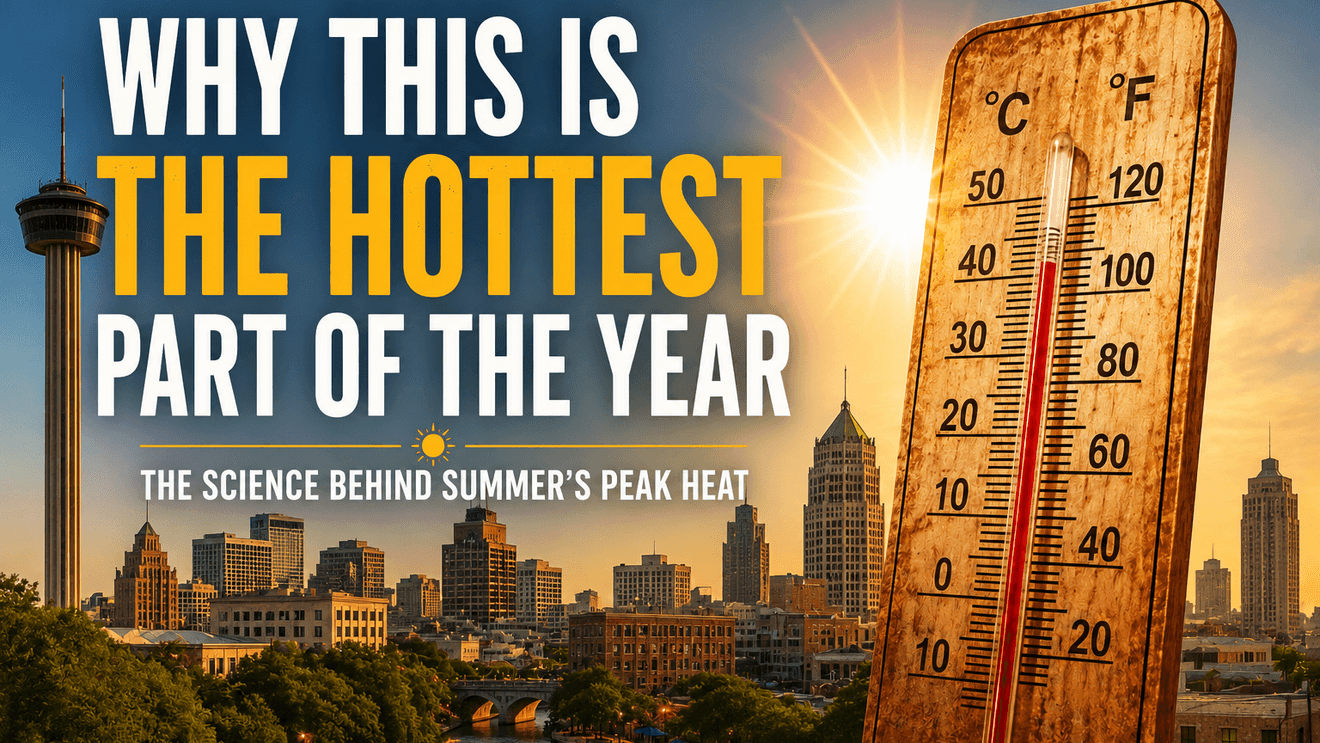
SAN ANTONIO – If it feels like South Texas has entered the hottest stretch of summer, it’s not your imagination. Late July into early August is typically the hottest time of the year across much of Texas – even though the longest day of the year happened back in June..
So why does the hottest weather arrive after the summer solstice?
The answer comes down to one simple concept: thermal lag.
Think of the atmosphere like a cast-iron skillet sitting on a stove. Even after you stop adding heat, the skillet doesn’t cool immediately – it continues holding and redistributing heat.
The Earth and the atmosphere work the same way.
Even though daylight slowly begins decreasing after June 20-21, we’re still receiving more solar energy each day than the atmosphere and ground lose overnight. That allows heat to continue accumulating throughout July.
By late July, several factors come together:
The ground has been heating for weeks.Nights stay warm, limiting overnight cooling.High-pressure systems become dominant.Dry soils allow temperatures to climb even faster.Humidity pushes heat index values well above the actual air temperature.
The result = the hottest stretch of the year for much of South-Central Texas.
Why Nights Matter
One reason the heat becomes so stressful is that mornings don’t cool off very much.
Instead of waking up to temperatures in the 60s or lower 70s, many locations begin the day in the upper 70s or even lower 80s.
That means your body—and your home—start each day with very little opportunity to recover before the next afternoon’s heat.
When Does It Finally Cool Down?
Here’s a bit of good news.
While August is still hot, daylight continues shrinking by nearly a minute each day. Eventually, longer nights begin winning the battle against daytime heating.
Relief you can feel, arrives when:
Cold fronts begin reaching Texas in October.Overnight temperatures fall into the 60s.Afternoon highs return to the upper 80s and lower 90s.Humidity gradually becomes less oppressive.
This is when the atmosphere finally begins losing more heat than it gains.
Bottom Line
We’re entering the climatological peak of summer.
The combination of weeks of built up heating, warm nights, plenty of sunshine, and high humidity makes late July and early August the hottest period of the year across South Texas.
Positive Thought: Every day from here forward is a little shorter than the last, and while relief won’t happen immediately, nature has already begun the slow march toward fall.