
El Paso, Texas (KFOX14) —
Sudden flashes of light, a burst of new floaters, a dark curtain or shadow across the field of vision, or an abrupt decline in sight should be treated as urgent warning signs. The National Eye Institute says those symptoms can point to retinal detachment, a medical emergency that can cause permanent vision loss without prompt care.
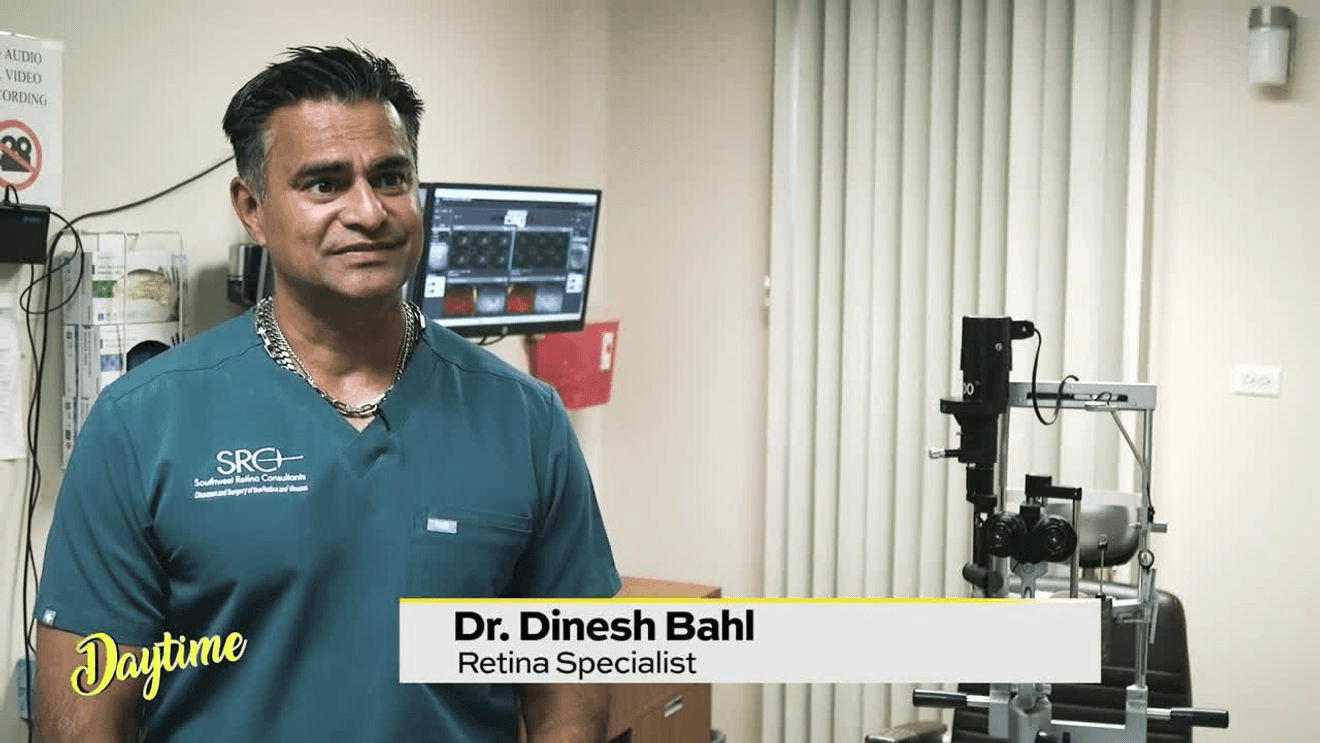
In a sponsored “Daytime” segment, Dr. Dinesh Bahl of Southwest Retina Consultants urged Borderland residents not to wait for eye pain before seeking help. Bahl, a fellowship-trained retina specialist who joined the El Paso practice in 2008, said retinal problems may affect vision without making a person feel hurt or sick.
How the retina helps create sight
The retina is a layer of light-sensitive tissue lining the back of the eye. When light reaches the retina, specialized cells convert it into electrical signals. Those signals travel through the optic nerve to the brain, which processes them into the images people see.
Bahl compared the retina to a satellite dish that receives information and sends it to a television through a cable. In the human visual system, the retina receives visual information and passes signals to the brain.
“If it doesn’t work, we cannot see,” Bahl said.
Serious problems may not cause pain
One of the biggest misconceptions about retinal disease, Bahl said, is the expectation that a serious problem will hurt. A person with a retinal detachment may experience no pain but could notice vision loss, a shadow along the side of the visual field or another sudden change. MedlinePlus also notes that retinal detachment usually does not cause pain.
“Don’t wait for something you can feel,” Bahl said.
Floaters can develop as part of the eye’s normal aging process, and not every floater signals an emergency. However, a sudden increase in floaters — particularly when accompanied by flashes of light, blurred vision or a curtain-like shadow — requires immediate evaluation.
The National Eye Institute recommends going to an eye doctor or emergency room immediately when symptoms of retinal detachment appear. A dilated eye examination can help a specialist look for a retinal tear or detachment, and early treatment can help protect a patient’s remaining vision.
Bahl said delaying an examination can allow a retinal condition to progress, potentially making it more difficult to treat or correct.
Nutrition is part of long-term eye care
Everyday food choices may also play a role in supporting long-term eye health. Bahl encouraged viewers to eat green vegetables such as kale, broccoli and Brussels sprouts while limiting heavily processed and high-glycemic foods.
The National Eye Institute similarly recommends dark, leafy greens such as spinach, kale and collard greens as part of a healthy diet. Healthy eating and regular physical activity can also reduce the risk of conditions such as diabetes, high blood pressure and high cholesterol, which may contribute to eye and vision problems.
Nutrition, however, is not a substitute for an eye examination. Anyone who experiences sudden flashes, numerous new floaters, a curtain or shadow over the field of vision, or sudden vision loss should seek immediate medical evaluation.
Southwest Retina Consultants has provided retinal care in the region since 1982. The practice operates offices in central and east El Paso, as well as Las Cruces, New Mexico, and reports providing continuous coverage for its patients.
An El Paso retina specialist explains urgent vision warning signs, how nutrition supports eye health and when to seek immediate care.
About Southwest Retina Consultants
Central El Paso Office
1700 Curie Drive, Suite 3800
El Paso, TX 79902
Phone: (915) 532-3912
East Side El Paso Office
11331 James Watt Drive, Suite 400
El Paso, TX 79936
Phone: (915) 592-3397
Las Cruces Office
3900 E. Lohman Ave., Suite A
Las Cruces, NM 88011
Phone: (575) 522-4774
Toll-Free Phone: (800) 227-1426
Website: swretina.com
Online Appointment Request: Request an Appointment