
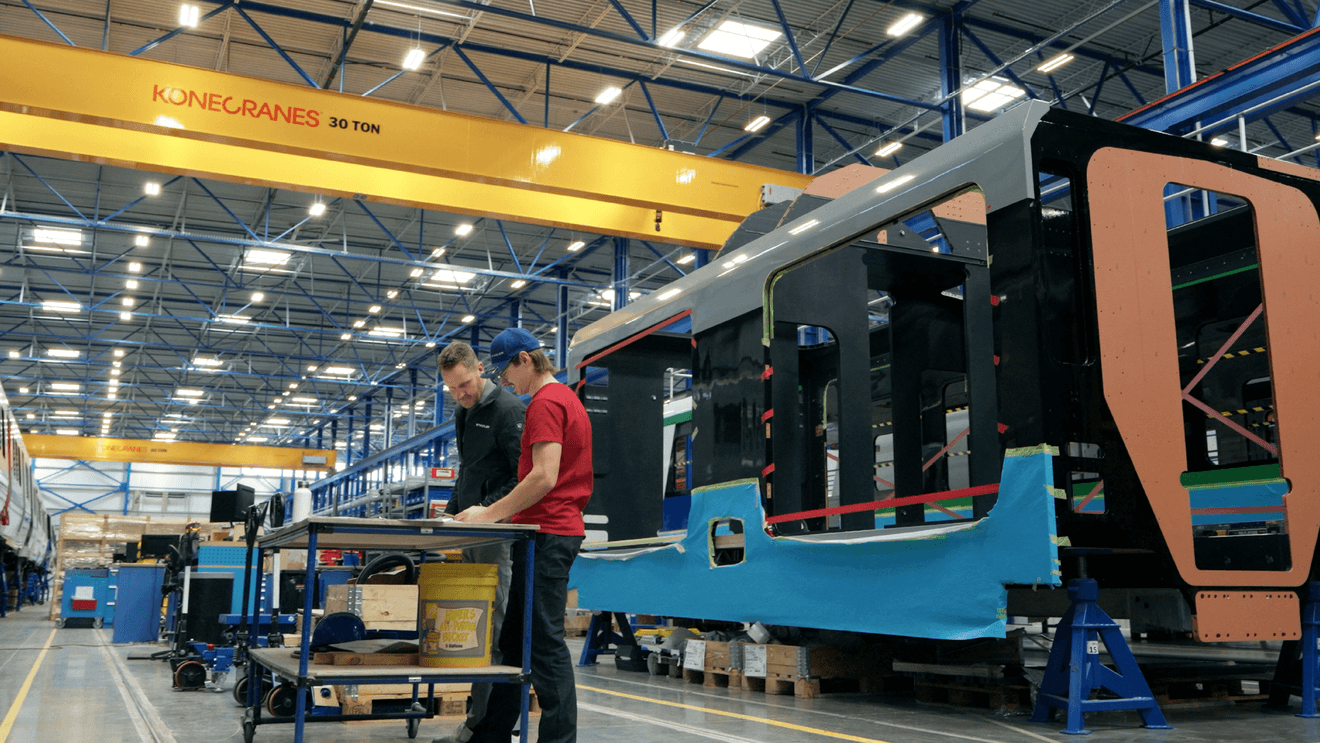
AUSTIN, Texas — Austin Transit Partnership (ATP) announced that it has chosen Stadler to manufacture its CityLink rail vehicles for Austin’s light rail, coming to the city in the early 2030s.
“The CityLink vehicle has been tested and used all over the world, from Mexico to the Netherlands, to Spain, to all over Europe. And we’re really excited to bring this really sleek, modern European style train here to Austin,” said Brad Cummings, Senior Vice President of Procurement and Contracts Management at ATP.
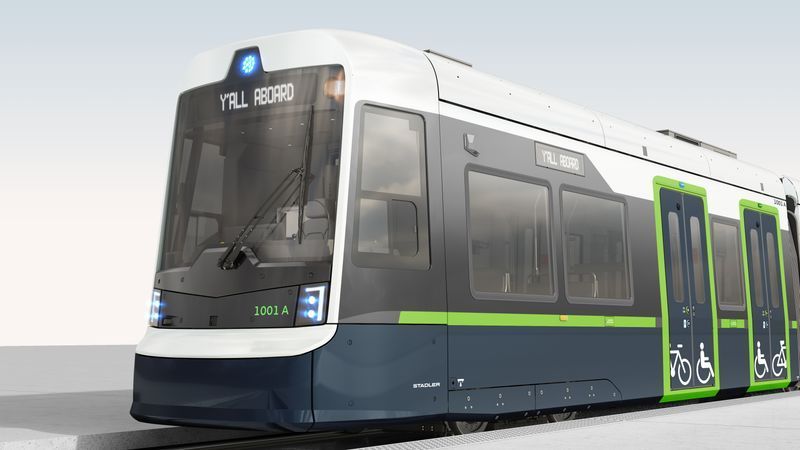
Renderings of Stadler’s CityLink rail vehicles (Photo: Artist Conceptual Visualization, Austin Transit Partnership)
Cummings says Stadler’s approach to accessibility outcompeted bids from other manufacturers to be signed to the project.
“We really want this vehicle to be open for all of Austin, and the way that Stadler responded to that is they proposed a 100% low-floor vehicle,” said Cummings. “So you can go from one end of the train to the other end of the train without having to take a step up at any point.”
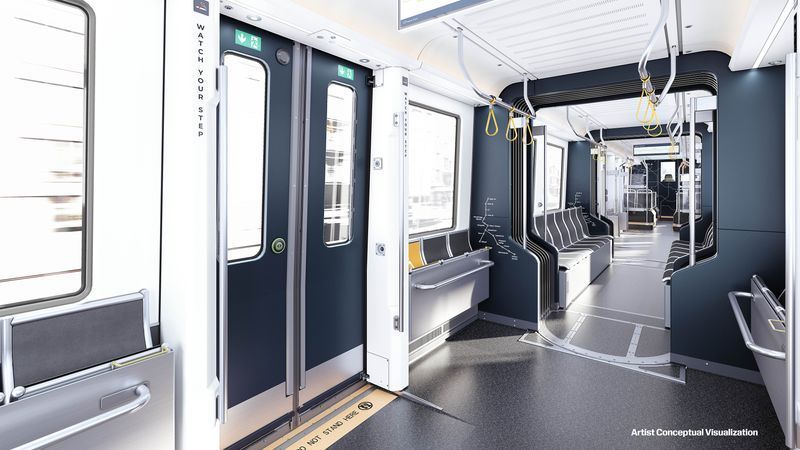
Renderings of Stadler’s CityLink rail vehicles (Photo: Artist Conceptual Visualization, Austin Transit Partnership)
Stadler produces rail vehicles for railway systems around the world, but Cummings also noted the company’s existing presence in Texas.
RELATED| NYU transit expert questions high costs ahead of Austin Transit Partnership meeting
“They are a huge train manufacturer here in the state of Texas that provides vehicles all over the state–for DART in Dallas and Trinity Metro in Fort Worth, as well as the vehicles that operate on the red line right here in Austin,” he said.
ATP is planning to build the light rail as a 10-mile route with 15 stops across Austin’s busiest hot spots, including spots at Austin-Bergstrom International Airport, South Congress, and UT.
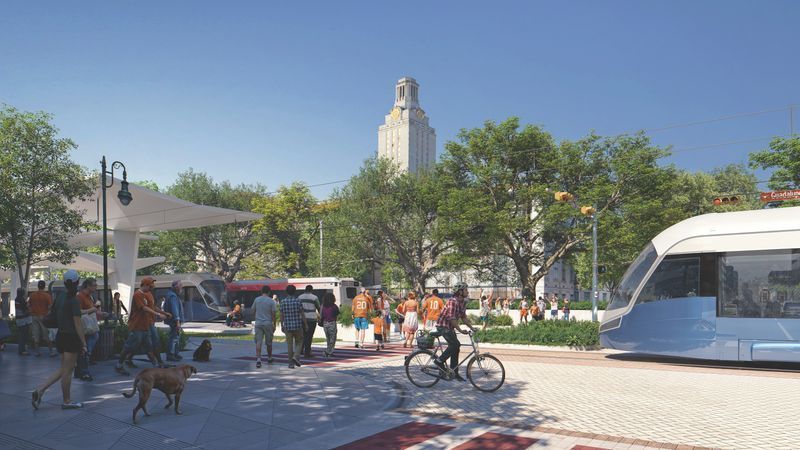
The light rail will make 15 stops at some of Austin’s most visited spots (Photo: Artist Conceptual Visualization, Austin Transit Partnership)
The company says the railway system will make transportation faster and more convenient for locals and visitors alike.
One bus rider, Christine Ybarra, said she supports the light rail’s progress, drawing from a positive experience riding Houston’s METRORail.
“I really enjoyed the ride. It was quicker,” she said. “If Austin gets it, I would be for it.”
ALSO | Austin lifts waterways ban on Lady Bird Lake, Colorado River
However, Dr. Kara Kockelman, a transportation engineering professor at UT Austin, says there’s more to the light rail logistics than meets the eye.
She says that, per passenger mile, a trip on the light rail could end up costing riders six times as much as a private vehicle.
“On these inside-of-city-of-Austin trips… we end up paying about 50 cents per passenger mile for those trips,” Kockelman said. “But transit in this country costs about $3 per passenger mile, and only about 15% of that is covered by the fare box, by the passengers themselves.”
Dr. Kockelman also assessed the 10-mile route of the light rail as limited, whereas the cost to produce and maintain the rail vehicles requires high costs and emissions.
Instead, she says a program in which CapMetro would incentivize riders to use autonomous vehicles, or ‘robotaxis,’ via competitive rates would serve them better than the light rail.
“You would have much happier passengers, because it’d be much closer to a door-to-door experience,” she said. “It’d be much more frequent. It would allow them to go almost seamlessly rather than transferring and having to pick their origins and destinations.”
She says the model has already been implemented and seen success.
“Singapore has competitive bidding from all these groups that manage its bus system,” she said. “They’re very on time. They’re very clean. Everything works well because they’re all competing with one another.”
In regard to projected fares for light rail riders, Cummings said it’s too early to say what riders will pay. However, he said ATP will work to ensure the experience is worth riders’ money.
“The goal is to have it tied seamlessly into the overall transportation network here in Austin,” he said. “So that way, if you buy a fare, it should be able to be transferable and usable across the network.”
ATP has authorized an initial $39 million to move forward with the project, which will be dedicated to furthering community engagement and continuing the design process of the rail vehicles with Stadler.