
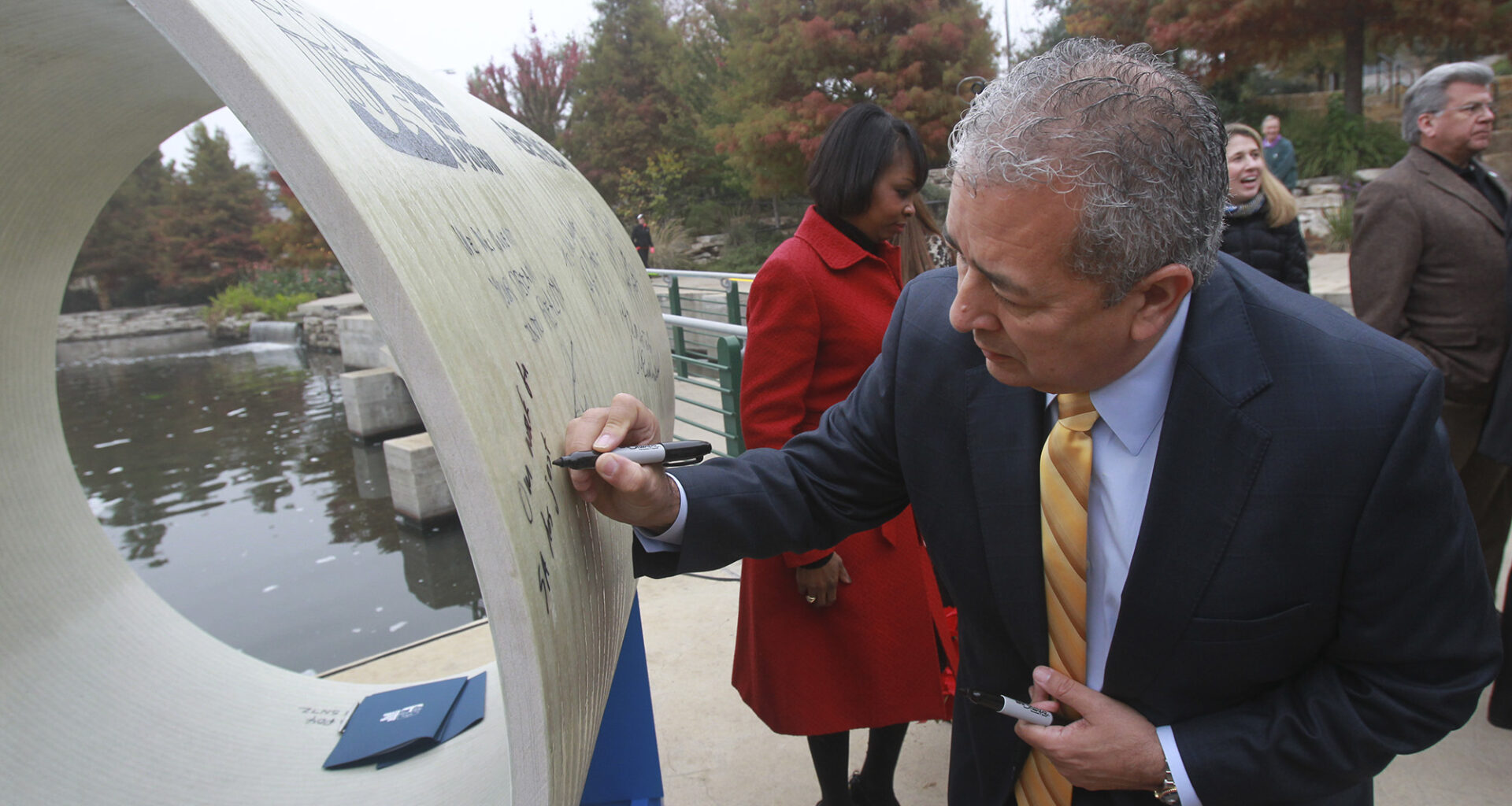
San Antonio Water System President and CEO Robert R. Puente signs a 54-inch diameter pipe at the launch of the Vista Ridge water project in 2014. The pipeline was an investment in San Antonio’s water security and future. As City Council considers a SAWS rate increase, there is a chance to create civic input and oversight to ensure future water investments meet community priorities.
JOHN DAVENPORT/San Antonio Express-News
Sometimes the most important progress comes after pressing pause.

San Antonio now has that opportunity.
Article continues below this ad
City Council’s decision last month to delay action on the proposed SAWS rate adjustment creates a window to strengthen trust between public institutions and the communities they serve. The opportunity is not simply to debate one rate adjustment, but to establish the principles that should guide every major infrastructure investment San Antonio makes.
The Metro SA Chamber, where I serve as president and CEO, represents businesses across nearly every sector of San Antonio’s economy. While the healthcare, tech, manufacturing, financial services and hospitality industries may be different, they share a need for infrastructure that is reliable, resilient, and prepared for growth.
Water is a foundational asset that allows businesses to invest, families to put down roots, and communities to prosper.
The Metro SA Chamber supports a responsible rate adjustment because the need for investment is clear. There is an important distinction, however, between spending and investing. Spending is an expense. Investing creates long-term value. If we’re asking people to invest more, they deserve to know what they’re getting in return for their water system.
Article continues below this ad
SAWS has a strong record of planning for our region’s future, and our chamber has supported strategic investments such as the Vista Ridge pipeline that strengthened San Antonio’s long-term water security. The opportunity is to build on that success by ensuring future investments are backed by disciplined planning.
If the city and SAWS ask families and businesses to pay more, ratepayers deserve to know exactly where the money is going, why it matters, and how success will be measured.
City Council has a responsibility to ask the difficult questions before approving long-term financial commitments, and SAWS has a responsibility to provide clear answers.
The months ahead should now be defined by collaboration as SAWS leadership, City Council, and the business community work together to answer the important questions raised during this rate discussion. That work should produce greater clarity around SAWS’ capital improvement priorities, infrastructure replacement strategy, management of bonding capacity and how ratepayer dollars are being invested to support San Antonio’s future.
Article continues below this ad
Engineers and utility leaders should determine where projects can be redesigned, phased, or delivered more efficiently. Ensuring those opportunities are fully explored before asking ratepayers to invest more is the responsibility of good governance.
More time should create greater value for ratepayers, not greater cost. A revised proposal should reflect a lower overall cost and a reduced impact on monthly customer bills than the initial proposed rate increase, demonstrating how it has been strengthened through thoughtful prioritization, greater efficiency and disciplined financial stewardship.
San Antonio should use this moment not only to resolve a rate discussion, but to establish a stronger model for how major infrastructure decisions are made.
Before asking the public to invest more, every major infrastructure proposal should meet four tests: that it addresses a long-term need, has been properly prioritized, is financially responsible and clearly communicates the value it will deliver.
Article continues below this ad
To help achieve this, San Antonio needs to establish a standing semiannual SAWS accountability report to City Council. Twice each year, SAWS leadership should publicly report progress on major capital projects, infrastructure performance, financial stewardship, and implementation of agreed-upon priorities.
Those updates would give City Council, the business community and the public regular opportunities to evaluate progress, discuss challenges and ensure the utility remains aligned with civic and community priorities.
Looking beyond this proposed rate increase, let’s set a new standard for how San Antonio makes the infrastructure decisions that will shape our future. Let’s create a shared blueprint for how our community evaluates major investments, balances competing priorities, and makes the difficult decisions that accompany growth.
Article continues below this ad
Growth is not waiting for San Antonio. Neither should we.
Brett Finley is president and CEO of the Metro SA Chamber.