
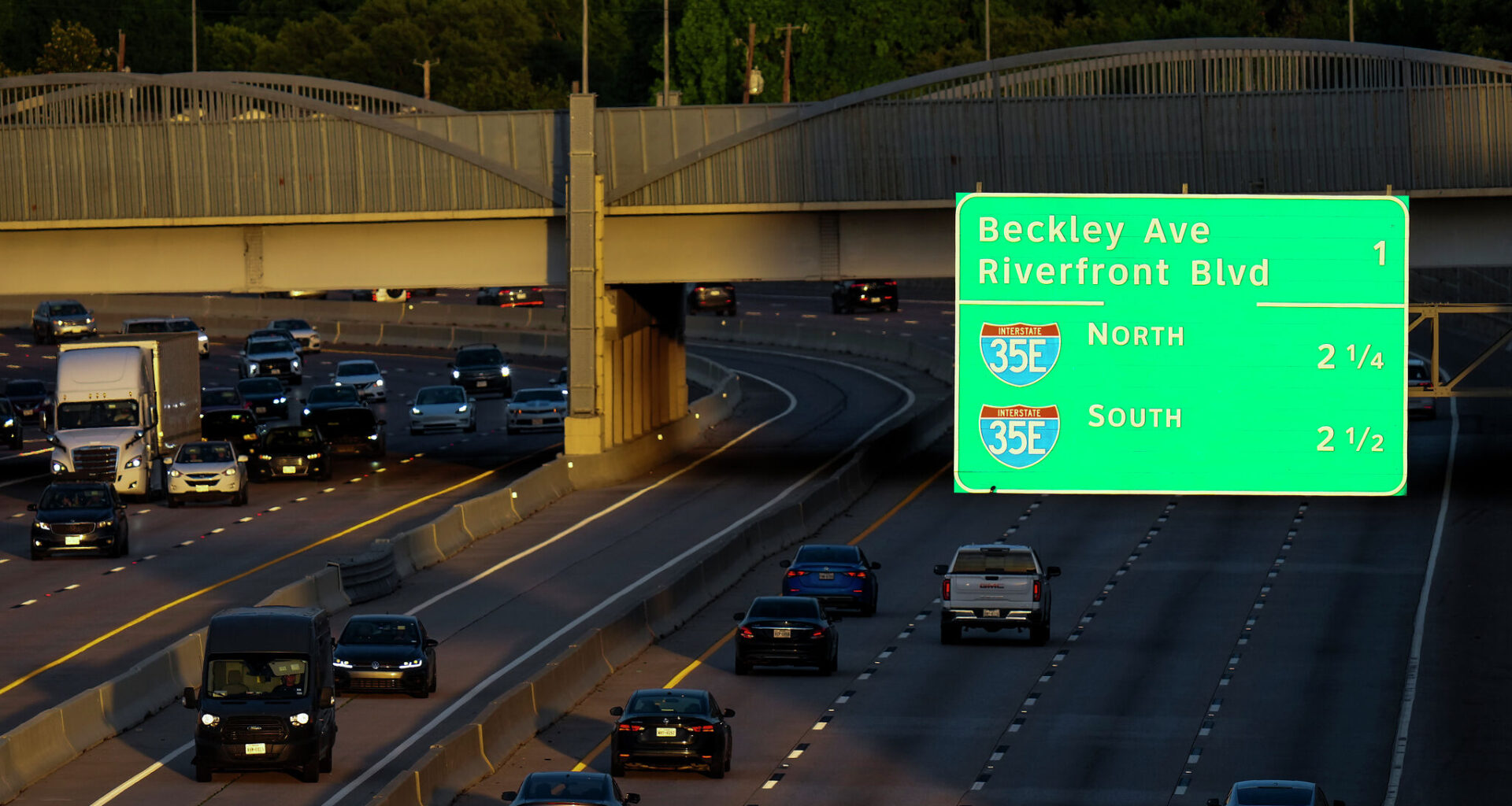
North Texas officials explain what they learned about traffic, transit and regional planning after moving more than 1 million World Cup visitors.
Smiley N. Pool/The Dallas Morning News
North Texans spent months hearing about the influx of people coming to the region and the expected overflow of traffic on major motorways during the World Cup. But did that happen, and did transportation suffer?

During the nine matches and a month-long fan festival, the North Central Texas Council of Governments said over a million visitors and match attendees moved throughout North Texas during the tournament’s run.
From expanded rail services to regionally coordinated traffic management efforts, officials used the World Cup as a test of the region’s transportation abilities. Regional officials attribute the combined efforts of transportation authorities to some of the success the World Cup brought to the region. Now that the tournament has ended, here’s what regional transportation authorities learned.
Article continues below this ad
Regional planning works
The council worked in tandem with several regional transit authorities and city officials to create a comprehensive transportation plan for the World Cup. The council used the 2011 Super Bowl as a reference to develop a regional mobility plan, addressing highways, rail, buses, pedestrians, rideshare operations and emergency response simultaneously.
Instead of agencies working solely within their jurisdiction, the plan required extensive collaboration and coordination on all fronts – DART, Trinity Metro, the cities of Arlington and Dallas and local law enforcement. This effort allowed for faster response times to changing traffic conditions and emerging incidents.
“Executing a seamless experience for global fans required monumental teamwork, and the innovative transit strategy delivered by the [council of government’s] Transportation Department, regional transit agencies and the Regional Transportation Council was vital to this success,” Monica Paul, president of the North Texas FIFA World Cup Organizing Committee, said in a news release. “By aligning our federal, state and local partners under a single, coordinated vision, we didn’t just move people efficiently, we proved that our region can deliver at the highest level to successfully host the biggest sporting event in the world.”
Public transit plays an important role
Despite Dallas-Fort Worth-Arlington being the fourth largest metropolitan area in the United States, according to the 2020 U.S. Census Bureau, it has the worst public transportation system. Arlington, home of AT&T Stadium – renamed Dallas Stadium for the games – is the largest city in the country without a connected public transportation system.
Article continues below this ad
Regional officials recognized many international visitors would rely on public transit as their primary means of transportation. In an effort to get cars off the road and prevent further traffic congestion, millions of dollars were invested to improve DART and Trinity Metro prior to the World Cup.
“You don’t build rail corridors for special events, you build rail corridors for what you need every day, and then you look at your every day assets and see how you can use them for special events…” said Michael Morris, the council’s director of transportation. “We will be expanding rail services in a region that approaches 12 million people, but it won’t be in corridors that are a function of special events.”
The Trinity Railway Express used four-car trains and extended services running at increased frequencies during the tournament. Designed to carry about 1,200 passengers per trip, the TRE transported nearly 8,000 riders on its busiest World Cup match day on June 25 to watch Japan take on Sweden. A bus bridge was stationed nearby in case trains reached full capacity, but they were never deployed. Approximately 30,000 fans arrived at CentrePort station using the Trinity Railway Express throughout the tournament.
“The temporary service enhancements allowed Trinity Metro to align service with actual customer demand as the tournament progressed,” said Ted Zimmerman, vice president of marketing and communications for Trinity Metro. “The ability to adapt service in real time ensured resources were deployed where they were most effective.”
The last mile matters
For decades, Arlington’s biggest problem hasn’t been getting people into the city. It’s getting them to their final destination. No direct rail lines or bus routes go to AT&T Stadium.
Article continues below this ad
The city has a microtransit service, Arlington On-Demand, which connects to the TRE CentrePort Station. However, with tens of thousands of anticipated commuters, transportation officials had to think bigger when planning for the World Cup.
Charter buses from the station to the stadium became the solution.
Loading six buses at a time with a maximum capacity of 50 passengers, the charter buses were transporting up to 300 match attendees at a time.
“It almost looked like it was continuous,” Morris said.
According to the council, more than 40,000 fans rode charter buses between CentrePort Station and the Bus Hub by AT&T Stadium. ADA accessible vans were available at the station and transported match attendees directly to the stadium. The walk from the Bus Hub to the stadium was half a mile, downhill. The council extended the walking lane from the Bus Hub toward the stadium, giving people more room.
Article continues below this ad
A blueprint for future events
North Texas is no stranger to large-scale events. What separated the World Cup from others was the duration. Officials coordinated multiple, simultaneous month-long events in the region between several organizations. Regional officials believe the years of extensive planning done ahead of the World Cup were the reason for the transportation system’s success in the region.
“Fortunately, the years of planning paid dividends and only small changes were required,” Morris said. “When hosting special events, especially one the magnitude of the World Cup, it is important to remain flexible.”
Although a similar event is not planned for the region anytime soon, officials said they are using their World Cup experience as a guidepost for all future events in North Texas. Transportation officials now have real-world data on how people traveled throughout North Texas during one of the area’s busiest events. They know which highways experienced the highest demand, how many people relied on rideshare services and how public transportation can reduce congestion.
Article continues below this ad
“DART demonstrated its ability to meet that demand while providing top-tier service,” said Jasmyn Carter, director of public relations for DART. “The experience will help inform planning for future major sporting events, conventions, festivals and other regional gatherings requiring sustained, high-capacity transit service.”