
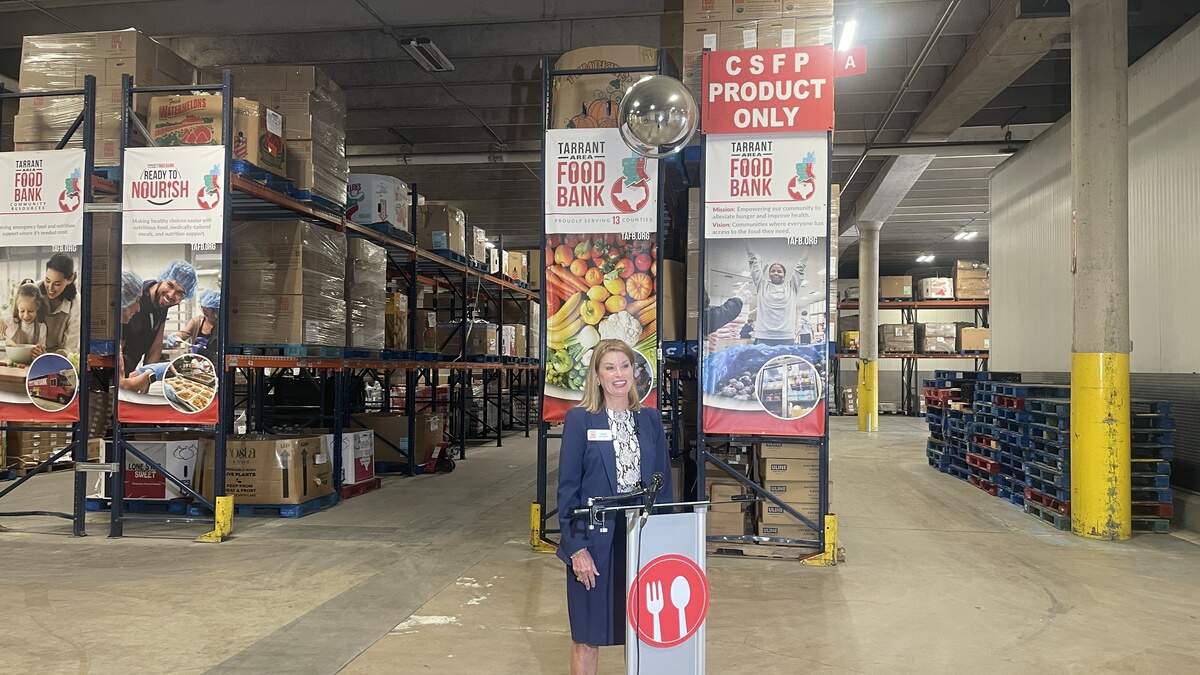
The Tarrant Area Food Bank CEO Julie Butner presents the results from the Feeding America Map Meal Gap Study at the food banks distribution center.
Mary Ella Hastings
With the cost of living steadily increasing, more than a million people in the Dallas-Fort Worth do not know where their next meal is coming from, and the Tarrant Area Food Bank is calling for donations and volunteers to help fill in the gap between supply and demand.
The Food Bank announced Tuesday that it is adding $1 million dollars to its 2027 budget to account for a possible loss of federal funding, according to President and CEO Julie Butner.
Butner said the population in the Dallas Fort Worth Area has grown by 8% since 2020 but the number of people experiencing food insecurity has risen by 32%.
Butner presented the result of the latest findings from the Feeding America Map Meal Gap Study during a press conference at the Tarrant Area Food Bank distribution center.
The study shows that Texas has the highest level of food insecurity in the nation, with 1.4 million people in Dallas-Fort Worth experiencing hunger.
“Hunger remains unacceptably high across North Texas, and the growing number of children facing food insecurity is simply alarming,” Butner said.
The Tarrant Area Food Bank serves 13 counties from Cooke County to Hill County. Its receives and distributes food through a network of partner agencies that help serve rural and suburban communities.
Butner said it’s not just the population growth that is causing this increase in hunger, it’s the economic pressures occurring because of high food and gas prices.
“We’ve never seen food costs rise the way it’s rising right now. We haven’t seen gasoline prices this high ever in our history, and those things come together and create a very difficult hardship for those families who are low income,” Butner said.
Butner said Tarrant Area Food Bank is addressing these issues with “innovative community-based solutions,” such as the Ready To Learn Program that brings food markets into schools for families and students in need.
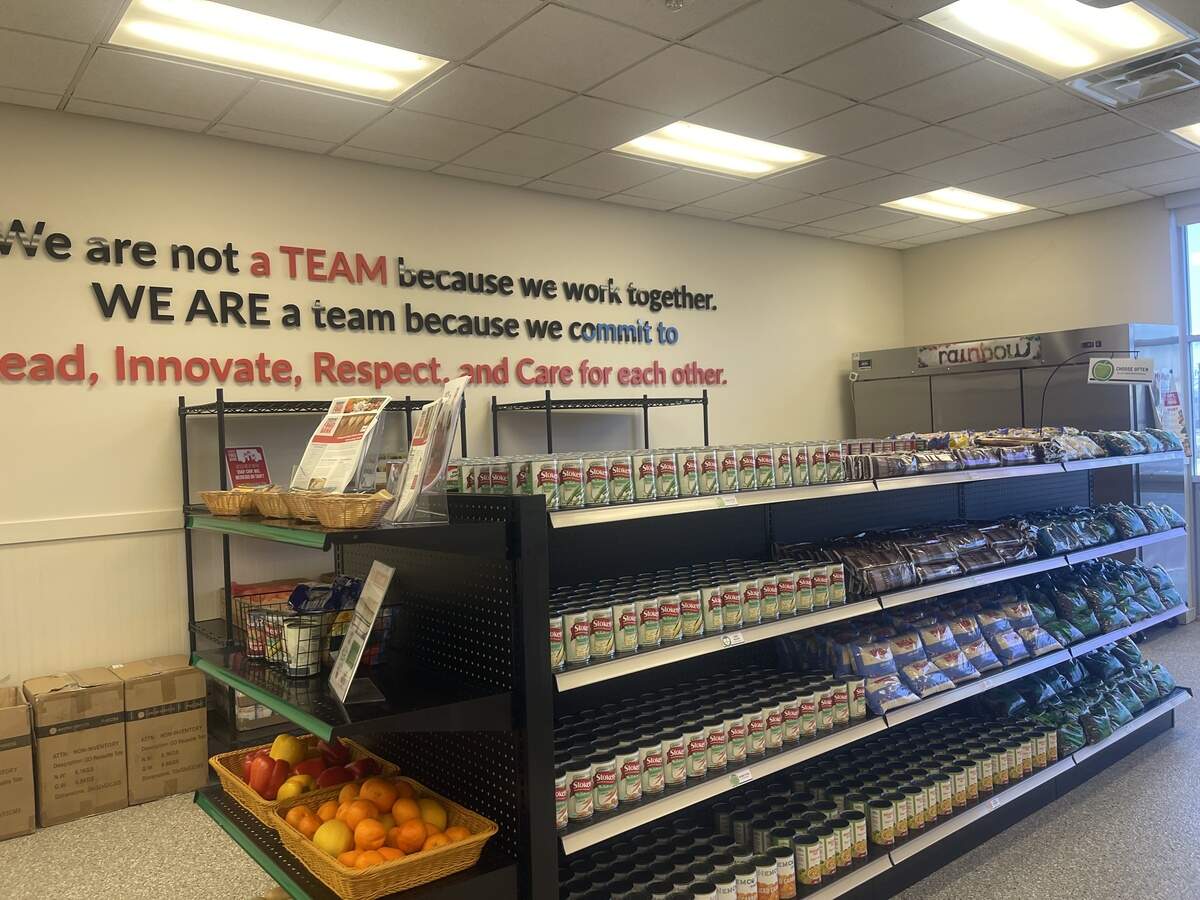 A model market in the Tarrant Area Food Bank distribution Center that models the markets implemented in Schools through the Ready To Learn Program. Mary Ella Hastings
It also offers SNAP enrollment assistance and direct services to those in need. SNAP, the Supplemental Nutrition Assistance Program, helps low income families purchase food.
Butner emphasized that food banks cannot solve hunger on their own. They need strong federal policies and funding to support them. S
“We need strong federal policies that support both the American agricultural system and families who experience hardship. Programs like the Emergency Food Assistance Program strengthen markets for farmers, reduce food waste, and provide nutritious food to our communities.”
In the 60 years that SNAP has been around it has always been a 50/50 cost share between the federal government and the state, according to Butner.
Under President Donald Trump’s Big Beautiful Bill federal funding for SNAP would fall to 25%. Butner said the state is simply not ready to cover the shortfall. That is why the Food Bank is asking for a two-year delay to prepare.
She said about 30% of the food bank’s funding comes from the federal government through the Farm Bill, which covers 16 federal nutrition programs including SNAP, and provides relief for farmers and ranchers.
She said relief for farmers is important for the hunger crisis because the food bank relies on them.
“There is an interconnection between local farmers and growers, and food banks. We’ve been working with them since our inception,” Butner said.
Trump’s proposed Farm, Food, and National Security Act of 2026 would cut nutrition programs.
Butner said as a result of this, the Tarrant Area Food Bank 2027 budget will include an extra $1 million for food to accommodate the rising hunger levels, knowing that there might be a reduction in federal funding.
She said they are seeing this increase in need voiced through their partner agencies, and they are doing their best to keep up with the demand.
“But we know it’s not enough. We know that our federal government has to continue to provide the support that they provide to this country,” Butner said.
If hunger continues to grow, Butner said the food bank may increase its operations from six days a week to seven. It is also ensuring that mobile markets are ready to go, so if a need arises it can feed lots of people at once.
“But there will be a point of no return. We can only do what the community supports us doing,” she said, adding that the food bank is heavily reliant on donations of food and money.
Butner said people who are concerned about the rising hunger rate are encouraged to come and volunteer at the food bank.
The Tarrant Area Food Bank is also building a new Community Center that will be ready in early 2027. The center will offer a variety of services including; increased food services, job training and nutrition classes.