
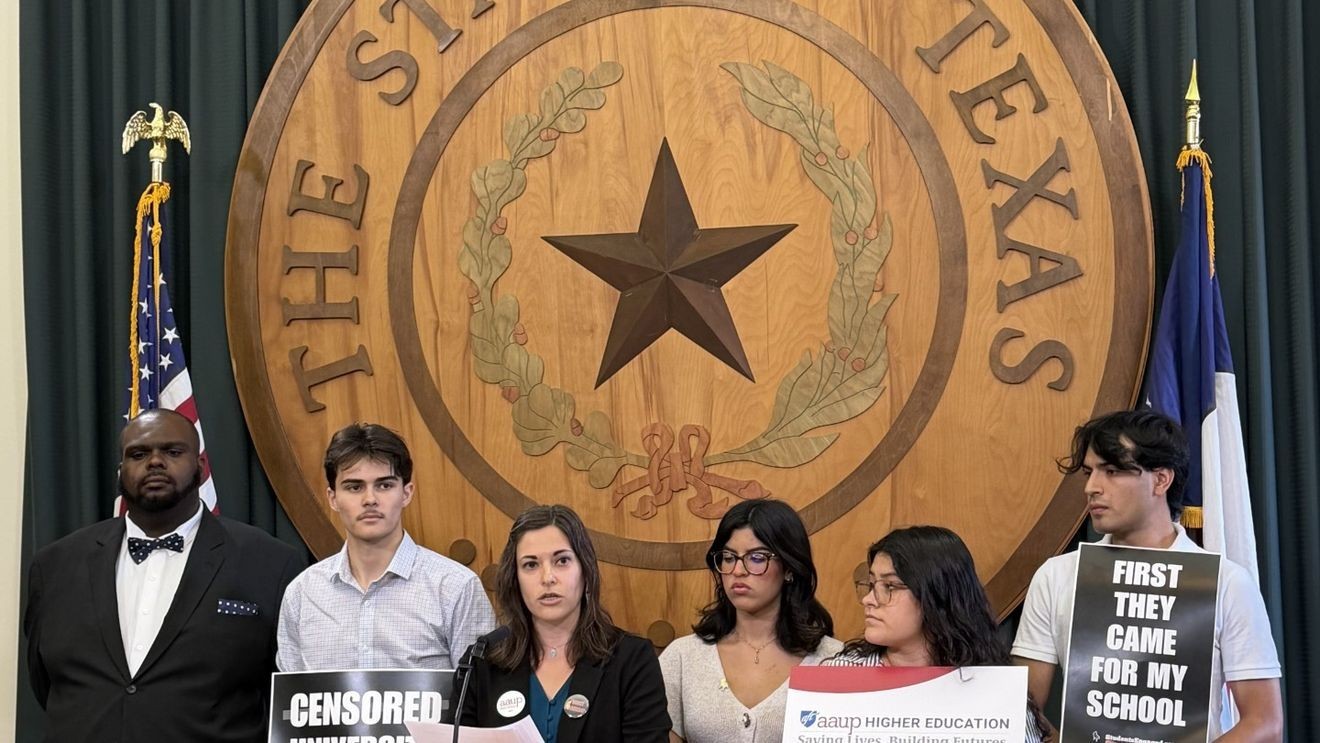
AUSTIN, Texas — The Texas Senate Committee on Higher Education met to evaluate the implementation of SB 37, which was passed into law last year.
SB 37 expanded the power of university regents, required curriculum reviews, and placed new restrictions on faculty senates, which are elected bodies of faculty members at universities that play a key role in shaping academic policy and curricula.
Leaders from public university systems across Texas testified before the committee about how their schools have implemented the law since it took effect last September.
ALSO | Austin police identify 17-year-old fatally shot by officers
Former state senator Brandon Creighton, the author of SB 37, is now serving as Chancellor of the Texas Tech University System.
“I’m pleased to report that each of our institutions within the Texas Tech System is ahead of schedule and has established what we believe to be a best-in-class model for implementing these reforms,” he told the committee.
Creighton reported that his office ordered the review of over 14,000 courses in December 2025.
Of the 14,000 courses reviewed, 60 courses saw modification after going through the formal review process, “less than one percent,” Creighton said.
However, critics of the law argue that any cuts to course content infringe on academic freedom.
Former Texas Tech professor Dr. Lisa Limeri says she left her tenured position at the school after subject matter was removed from biology coursework.
“This year, we had to remove content related to human sexual reproduction and development, genetic inheritance via pedigree analysis, and sex-linked inheritance,” she said.
SB 37 outlines the purpose of curriculum reviews as follows:
“In reviewing an institution’s general education curriculum, the governing board shall ensure courses in the curriculum:
(1) are foundational and fundamental to a sound postsecondary education;
(2) are necessary to prepare students for civic and professional life;
(3) equip students for participation in the workforce and in the betterment of society; and
(4) ensure a breadth of knowledge in compliance with applicable accreditation standards.”
Limeri said that the content cut from biology courses at Texas Tech met all these criteria, but it was cut anyway.
“Texas students need education on these topics in order to be successful on professional entrance exams, such as the MCAT, and in their future careers caring for the health of Texans and Americans,” she said. “But we had to alter our content because of the scientifically inaccurate definitions of sex and gender imposed by TTU under vague threats of termination.”
Izabella de la Garza provided perspective on SB 37 as both a former and incoming student.
She graduated from the University of Texas at Austin in 2023 with degrees in Government and Mexican American and Latino Studies (MALS).
Since graduating, her MALS degree is no longer offered at UT. The MALS department and several others were consolidated by UT after SB 37 took effect.
PAST COVERAGE | ‘I’m disappointed,’ UT Austin students protest department consolidations
This fall, de la Garza will return to UT for graduate school, where she will study in the Lyndon B. Johnson School of Public Affairs.
She says she’s conscious of the new higher education laws that have taken effect since she graduated, but she’s not letting them become a deterrence.
“I’m aware that it’s going to be different. I could have applied anywhere, and I wanted to stay in Texas because I care about Texas. I care about my community, and I care about the issues here,” she said. “And I fully intend on going to LBJ with the same motivations I had as an undergrad, of still advocating for these causes that I care about regardless of the censorship or anything that’s putting us at risk.”
Any changes to the law would have to be made during the 2027 Texas legislative session, which begins in January.