
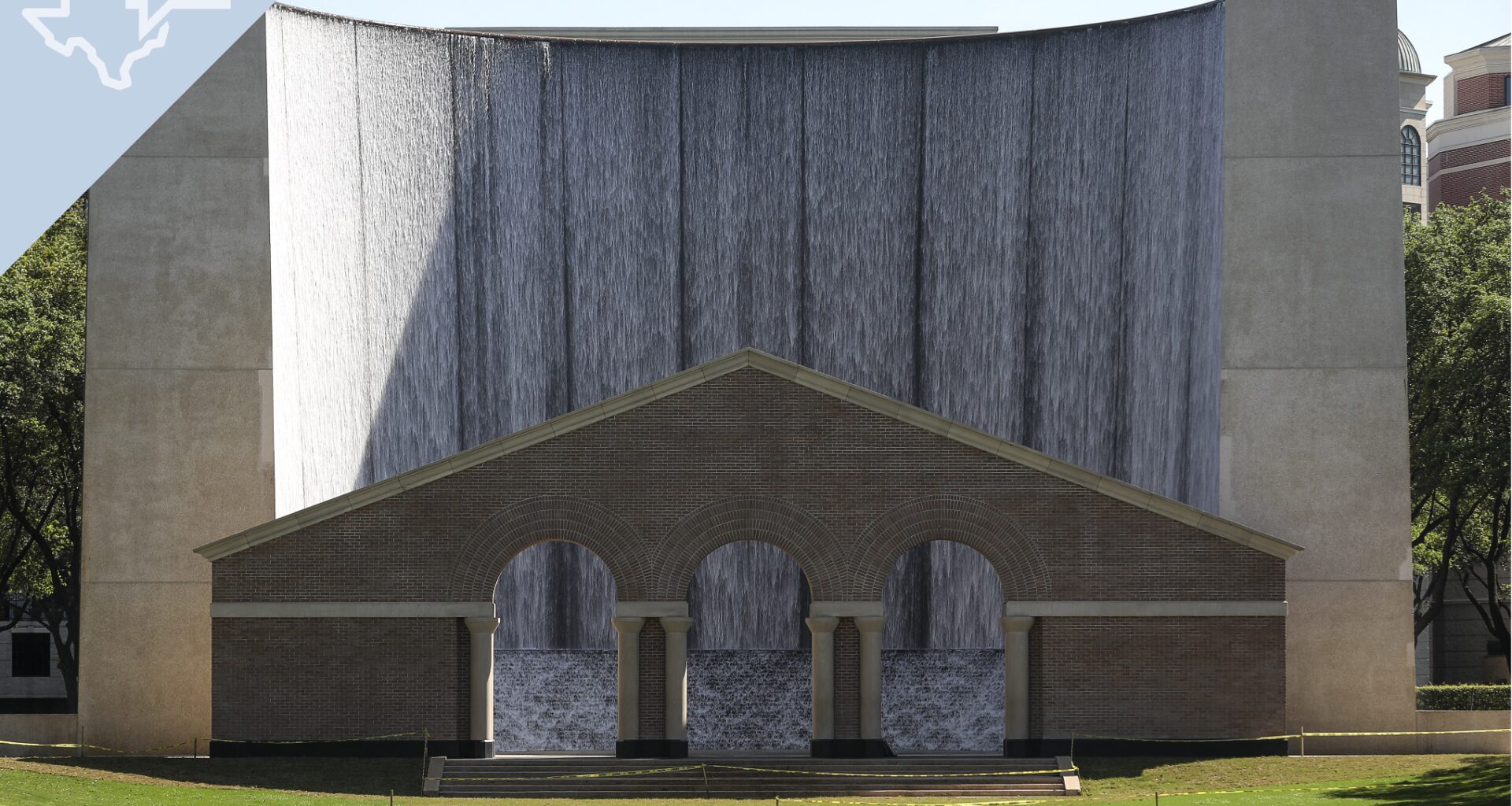
The Waterwall, the iconic Galleria-area landmark that has cemented itself as one of Houston’s backdrops of choice, draws couples in their courtroom-wedding chic straight from downtown for newlywed portraits, and those couples return years later for anniversary photos. Teenagers arrive at Gerald D. Hines Waterwall Park from every corner of the region in rented tuxes and princess dresses to mark their quinceañeras and homecomings and proms and graduations. So many family reunions end here in the shadow of Williams Tower, the humidity and the massive fountain’s cloud of mist wilting everyone’s good clothes. Even the World Cup crowds flocked to the Waterwall this summer to revel in the biggest sporting event on the planet.
The Houston Chronicle archives take us back to 1984.
But as he struggled to keep the company alive, Bowen steadily turned then-Transco Tower into an arts museum. Working with two curators and an advisory committee of art scholars who met monthly, he built a corporate collection of American art filled with works by Andrew Wyeth and bronze statues by Frederic Remington. The first floor of that grand tower became an art gallery where he even hung the watercolors he painted while vacationing on Martha’s Vineyard.
“That will be our piece of sculpture in response to the (Joan) Miró and (Jean) Dubuffet downtown,” Bowen told the Chronicle.
So the fountain rose at the other end of a 360-foot lawn where dewy grass, perpetually saturated by the mist hurled from that roaring piece of art that dampens picnic blankets and makes messes of energetic children tossing footballs and playing tag.
Like the building itself, it didn’t stay in the hands of Bowen and Transco forever.