
The Athletic has launched a Cricket WhatsApp Channel. Click here to join.
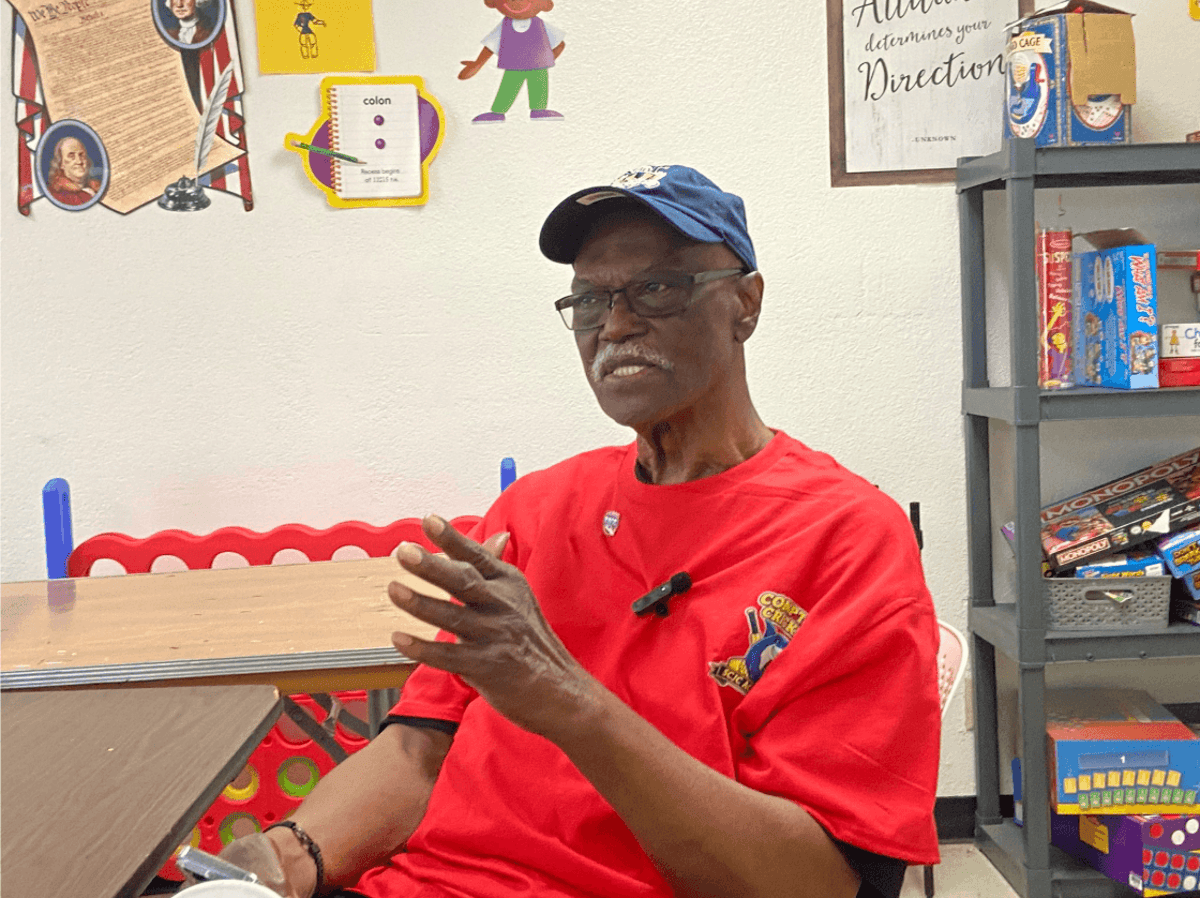
Mustafa Khan worked as a bodyguard to MC Hammer and Whitney Houston before becoming homeless at 45 and discovering cricket. Now 76, he uses the sport to steer children in Compton, Los Angeles, away from gangs and poverty.
Three months after first picking up a bat, he travelled to England with the first homeless cricket team. Three decades later, two teenage brothers developed at his academy, Johnny and Johnathon Tatum, have just returned from an English tour of their own.
With cricket returning to the Olympics at Los Angeles in 2028, both brothers believe they can represent the United States on home soil, with the event being held at the purpose-built Fairgrounds Cricket Stadium in Pomona, fewer than 50 miles from Compton.
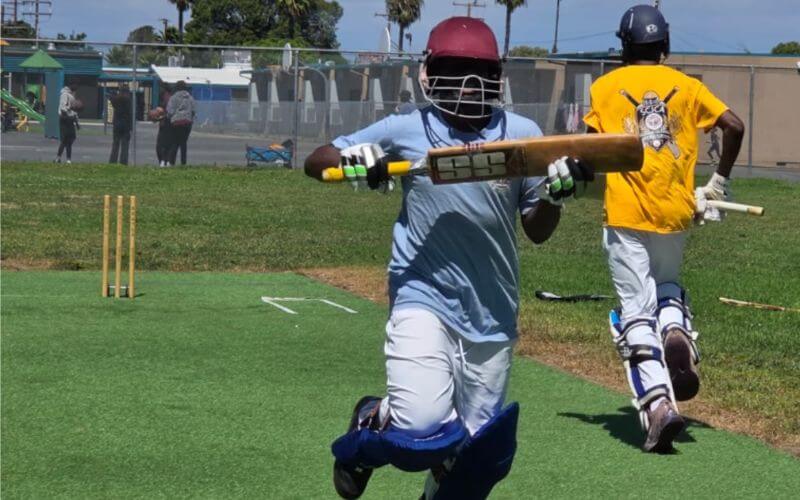
Johnathon, left and Johnny Tatum in Kelly Park, Compton (Latasha McGrew)
Khan’s path to coaching cricket runs through family tragedy, years of gang intervention and a post-match meal that restored his Islamic faith. Today, he runs the Southern California Junior Cricket Academy, using the sport to offer at-risk children a future.
At his first training session, he noticed that several boys’ trousers hung lower on one side and his years working in security told him why.
“I know you guys have got guns on you,” he recalls telling them. “I’m gonna walk away and I need you to go hide the guns in the bushes if you want to play cricket.”
The boys complied and returned to practice, forming the academy’s first team in Compton, a city where gang violence had shaped his own childhood.
He had moved there with his father at the age of three after his parents divorced, leaving behind the 167-acre farm in Texas where he had spent his early childhood and where his mother remained.
“You had to fight every day when you stepped out of the house,” he says. “My father always told me never to start a fight, but never to run from one either.”
The danger eventually pushed him out of Compton and into Santa Ana in Orange County.
“Everybody was friendly there, speaking to you and everything, and I wasn’t used to that,” Khan says. “It broadened my horizon and got me out of the warrior mode and into real life.”
At 6ft 7in (201cm), he turned his physical presence and experience of conflict into a career in personal security. Over more than 35 years, he protected figures including Houston and former world heavyweight boxing champion Lennox Lewis, and provided executive protection during Jesse Jackson’s 1984 presidential campaign.
His role as head of security for MC Hammer extended beyond protecting the performer. He and the rapper met the parents of young dancers joining the tour and promised that their children would return home in the same condition in which they had left.
“There would be no girls coming back pregnant and no guys or nobody involved in drugs,” he says. “He held me to that, so I established curfews.”
He came close to working for Paul McCartney, but the relationship lasted only a few days before McCartney saw Khan order meat at a restaurant. He describes The Beatles’ bassist as one of the classiest people he encountered during his time in security.
By early 1995, a succession of family tragedies had left him homeless in Los Angeles. He questioned God and turned his back on his Islamic faith before being introduced to cricket through Dome Village, a homeless shelter in downtown Los Angeles.
Social activist Ted Hayes and Hollywood producer Katy Haber helped establish a programme there that used the sport to encourage leadership, respect and discipline among residents. The team became known as the LA Krickets and Khan went on tour to England.
“It was just something to do,” he laughs. “That was the only reason I did it.”
The team slept in the clubhouse at Blackrod Cricket Club near Bolton in north-west England before travelling through Rutland and towards London, where dwindling funds prompted discussion of sleeping in Hyde Park during their six-match tour.
A mystery benefactor and the Prince’s Trust helped them secure accommodation and continue to the nets at Lord’s Cricket Ground and Hambledon, the village on England’s south coast widely associated with the development of organised cricket.
Yet it was an ordinary post-match meal that had the greatest effect on him. He had grown up around basketball and American football, where he believed “the idea is to crush the opponent”, but was shocked to see both teams sit at the same table and pass food to each other after his first cricket match.
The tour became what he calls a “total spiritual journey” and gave him something he felt he had lacked during years of gang diversion and intervention.
“Before cricket, I had nothing else to give children other than a speech: do right, go get a job, go to school,” Khan says. “There was nothing tangible that they could hold on to. Now I felt like I had it through cricket.”
When the LA Krickets returned home, the organisers were ready to abandon the programme.
“I insisted, ‘No, we’ve got to continue this’,” he says. “‘We’re going to Compton and introduce the sport of cricket to kids there’. The funding came out of my own pocket, against my wife’s will, to keep the programme going.”
Today, he remains president and chief executive of the Southern California Junior Cricket Academy alongside his career as a licensed private investigator. His role extends far beyond coaching.
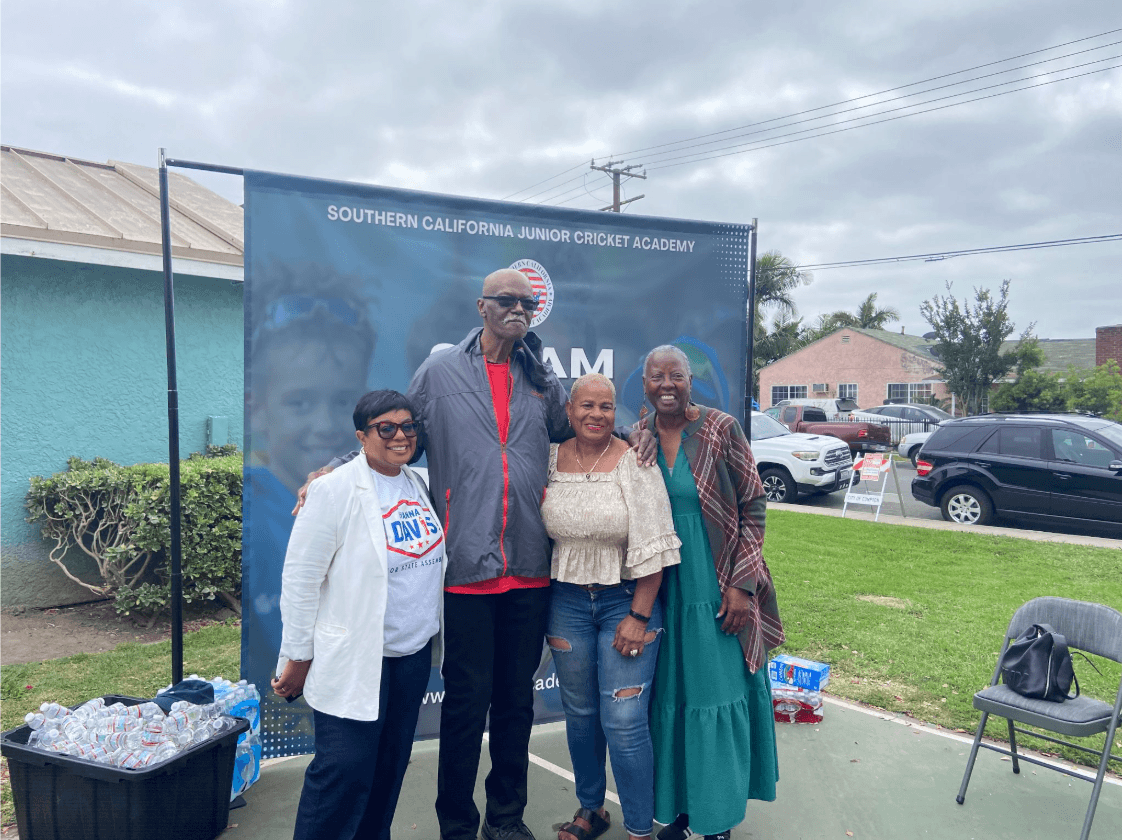
Mustafa Khan with Tatum family members (Nick Corso)
His adopted son played in the academy’s first team and, over the years, he has fostered many other children. Some players have arrived from homes where they slept on wooden pallets, while others have saved lunches provided at training to share with their parents and siblings.
When he took his first side to Woodley Park, a recreation and sports area within the Sepulveda Basin in Los Angeles, established players saw the teenagers’ tattoos and said they could not take part.
“I gave them the choice and told them, ‘I’ll take the bats and put them back in the trunk, and we’ll let them get their guns out if you don’t play with them’,” he jokes.
Brothers Johnny Tatum, 18, and Johnathon, 16, travelled to England with Southern California Cricket Association Youth (SCCAY) in June, having first learned the game through Khan’s academy after encountering it at Kelly Park, near their grandmother’s house, while heading to play basketball.
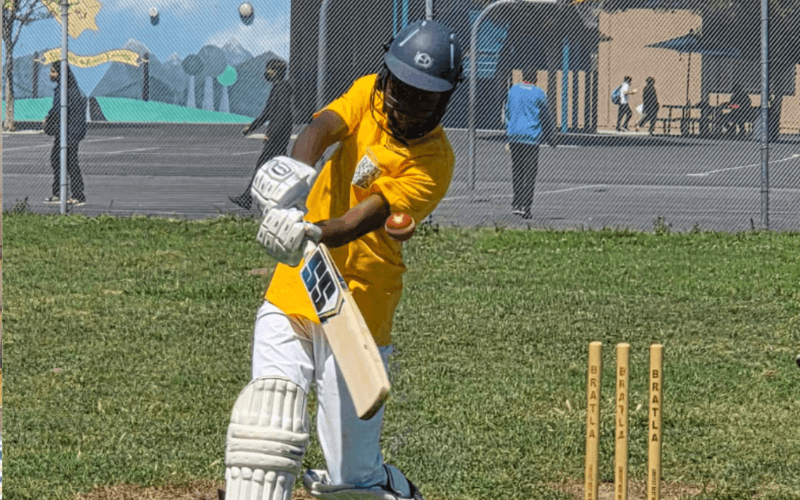
Johnathon Tatum on the attack (Latasha McGrew)
“I was 10 years old,” Johnathon says. “I came to the park to play basketball, saw cricket and thought it looked interesting. I asked my mum if I could play and she said, ‘Why do you want to play with bugs?’ She thought I meant the insect. I told her it wasn’t bugs, it was a sport.”
Johnny was named player of the match after one of SCCAY’s games at Shenley Cricket Centre, in Hertfordshire, north west of London. SCCAY head coach Mumtaz Yusuf was also impressed by Johnathon and the rest of the side.
The brothers also trained in the indoor nets at Lord’s Cricket Ground in St John’s Wood, north-west London, widely known as the Home of Cricket and the home ground of Middlesex.
Their tour of England echoed a journey their coach had first made while homeless 31 years ago.
“Going from basketball to cricket is a big change,” Johnny says. “You go from bouncing a ball to hitting one with a bat. It’s like playing chess: you’ve got to pick your pieces, work out how to hit the ball and where the gaps are.”
Johnathon says their opportunities have helped challenge assumptions attached to growing up in Compton.
“People think I’m doing something bad because I’m from Compton,” he says. “Cricket makes me feel different because I get to travel and some of my friends don’t.”
“Mustafa feels great when he watches us play,” he adds. “He’s known two young kids from Compton for years and now he’s watching us make it further in life.
“I can see myself competing for the United States in cricket for sure. It would mean everything to me to get there.”
The possibility that one of Khan’s players could use cricket to reach college, or even represent the United States at an Olympics held in their home county, would complete a journey that began when he picked up a bat while homeless more than three decades ago.
“If it could change my life,” he says, “think what it could do for the kids growing up in and around Compton.”