
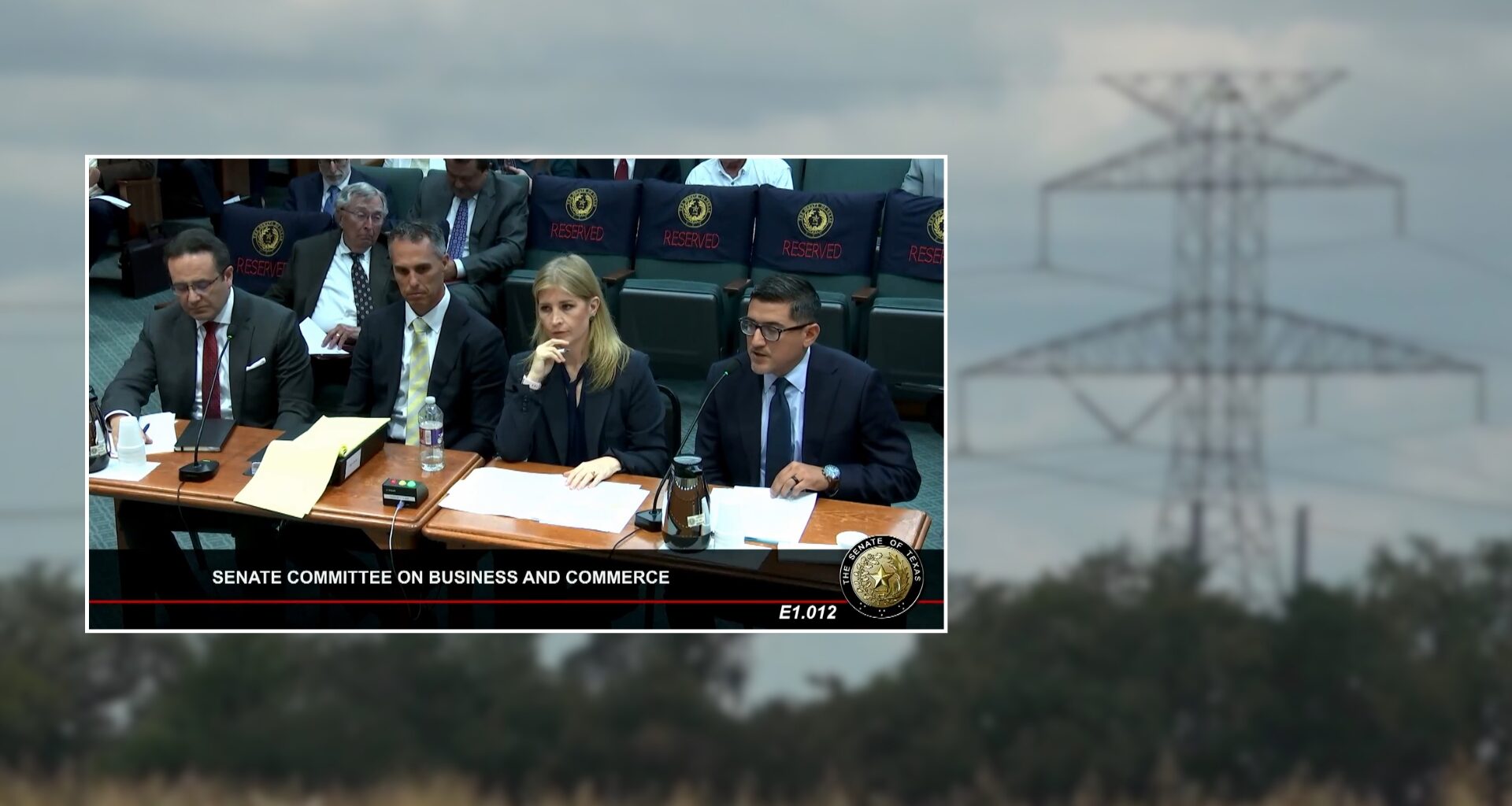
A Senate committee heard hours of testimony on a 200-mile transmission line proposal, with landowners and officials clashing over property rights and grid needs.
CENTRAL, Texas — Texas lawmakers spent hours on Wednesday, July 29 hearing from state officials, industry leaders and landowners over the proposed 765-kilovolt transmission line that would stretch nearly 200 miles across Central Texas.
The Senate Committee on Business and Commerce convened the hearing to examine the proposed line’s impact on private property and landowner rights, along with the regulatory process that has allowed the project to advance. More than 200 people signed up to testify, and the committee heard roughly seven hours of public comment.

This story continues below.
The Proposed Route
The transmission line, under review by the Public Utility Commission of Texas, would stretch nearly 200 miles through Bell, Burnet, Coryell and other counties. State officials, including PUC Chairman Thomas Gleeson, argued the project is necessary to strengthen the grid and deliver power to the Permian Basin, which has seen years of underinvestment in transmission infrastructure. Gleeson said extra-high-voltage lines, which have never been built in Texas before, represent the fastest way to move that power.
Opposition Grows
Landowners along the proposed route pushed back, saying the approval process has left them with little time or resources to respond. Bell County resident John Burrow, whose property lies along two potential line routes, told lawmakers he was among roughly 1,400 landowners who said they never received notice of a public meeting on the project.
Burrow said the 2023 passage of House Bill 5066 shortened the PUC’s review timeline to 180 days, giving landowners like him less than 90 days to prepare a response to the proposed $2 billion project.
“I never had an opportunity for my voice to be heard, I didn’t have the opportunity to obtain the specialized legal representation that you need to handle a project of this magnitude,” Burrow said. “It’s like throwing me into the ring with Mike Tyson. I’m having a battle against multi-billion dollar corporations and their high powered lawyers.”
For Burrow, and many of the other landowners who would be impacted by the development, the fight is personal.
“It affects me, my family, my land, so yeah, I mean there was nothing else that we could do,” Burrow said. “We have to fight.”
Advocate Mia Sarot, who has spent about a year helping landowners navigate the process, raised concerns about the project’s environmental footprint, noting the transmission towers could reach nearly 200 feet tall with clearings running alongside waterways.
Possible Changes Ahead
Gleeson said the commission is considering changes to the review process, including extending the intervention period from 30 to 60 days and shifting the 180-day review window to begin afterward, which would extend the process to at least 240 days. He maintained, however, that delaying the project altogether is not an option given projected load growth.
Some lawmakers voiced their own doubts about the process. Sen. Charles Perry, vice chair of the committee, called House Bill 5066 one of the worst decisions he had participated in, while other senators questioned whether landowners have had an adequate opportunity to weigh in.
Texas State Representative Brad Buckley, who has been outspoken about his opposition to the project, shared that the project now moving through the approval process goes far beyond what lawmakers intended when they passed the bill.
“When we passed the bill in ’23 to provide more power to the Permian Basin, this is certainly not what is being proposed… what is being proposed is not what the bill authorized,” Buckley said. “The bill authorized regional transmission upgrades and more generation, and now what we see really is the first part of a statewide plan that’s being proposed under the guise of that legislation.”
Buckley said the review timeline written into the bill was designed for smaller, regional upgrades, not a project spanning multiple routes and affecting thousands of landowners.
The PUC has not issued a final ruling on the project.