
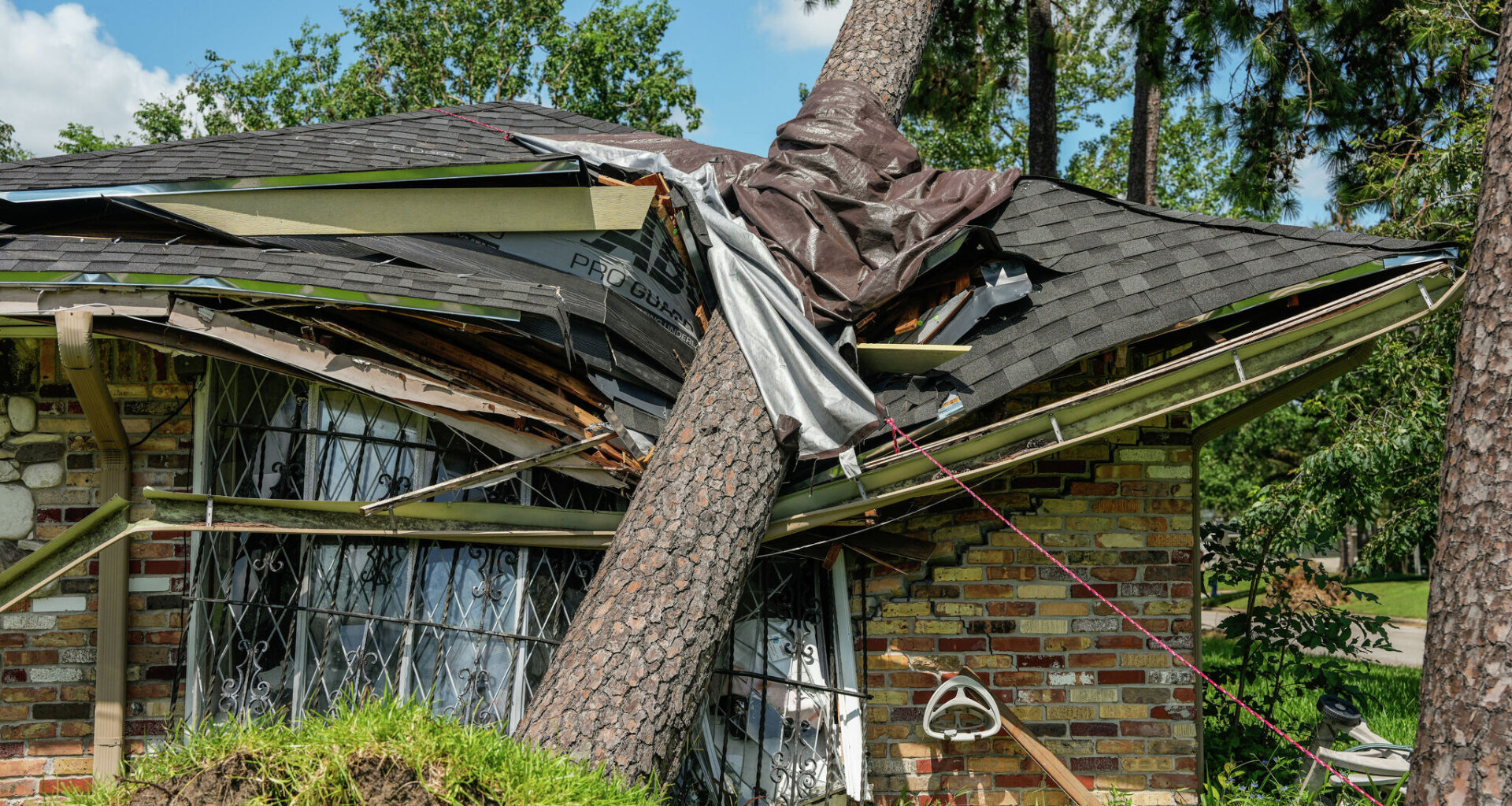
Home insurance accounts for 14.4 percent of monthly housing expenses for Texas homeowners, among the highest burdens in the country, according to a new analysis from LendingTree, an insurance shopping website.
Texas homeowners also pay the third highest premiums, $331 per month.
Extreme weather events, including hail, flooding and windstorms such as 2024’s Hurricane Beryl, have helped drive up insurance rates across the state along with inflation which has raised the cost of labor and materials such as lumber, according to industry experts.
“You guys have the unenviable position of being exposed to a lot of different risks,” said Rob Bhatt, a Lending Tree analyst and licensed insurance agent. “Hail, windstorms, thunderstorms are a big risk. You guys get tornadoes. You have coastal storms.”
Across the United States, home insurance accounts for 8.5% of total monthly housing costs for homeowners with a mortgage, according to LendingTree’s analysis. Only Nebraska and Oklahoma have higher home insurance burdens than Texas, at 19.4% and 17.6% respectively.
Home insurance accounts for just 2.1% of total monthly housing costs in Hawaii, the lowest burden in the country. However, Hawaii also has notoriously high housing costs overall, with average monthly mortgage payments of about $4,300 compared with about $1,500 in Texas.
Since 2020, average home insurance rates have soared in the state, rising more than 10% in 2022 compared to 2021, then leaping another 21.1% in 2023 and 18.7% in 2024, according to the Texas Department of Insurance.
But the pace of rising insurance rates has begun to cool off, said Rich Johnson, director of communications and public affairs for the Insurance Council of Texas, an industry group. Average home insurance rates increased just 4.3% in 2025 compared with 2024, and recent rate filings suggest that slower pace is continuing this year, he said.
“I’m not saying we’re going to see massive decreases, but we’ve definitely seen [rates] level out as inflation has cooled, as property values have cooled,” Johnson said.
While rates could come down, Bhatt said, that is not guaranteed. “We’re at the start of the Atlantic hurricane season. We’re also on the brink of possibly facing an uptick in inflation right now. This balance is very tenuous.”