
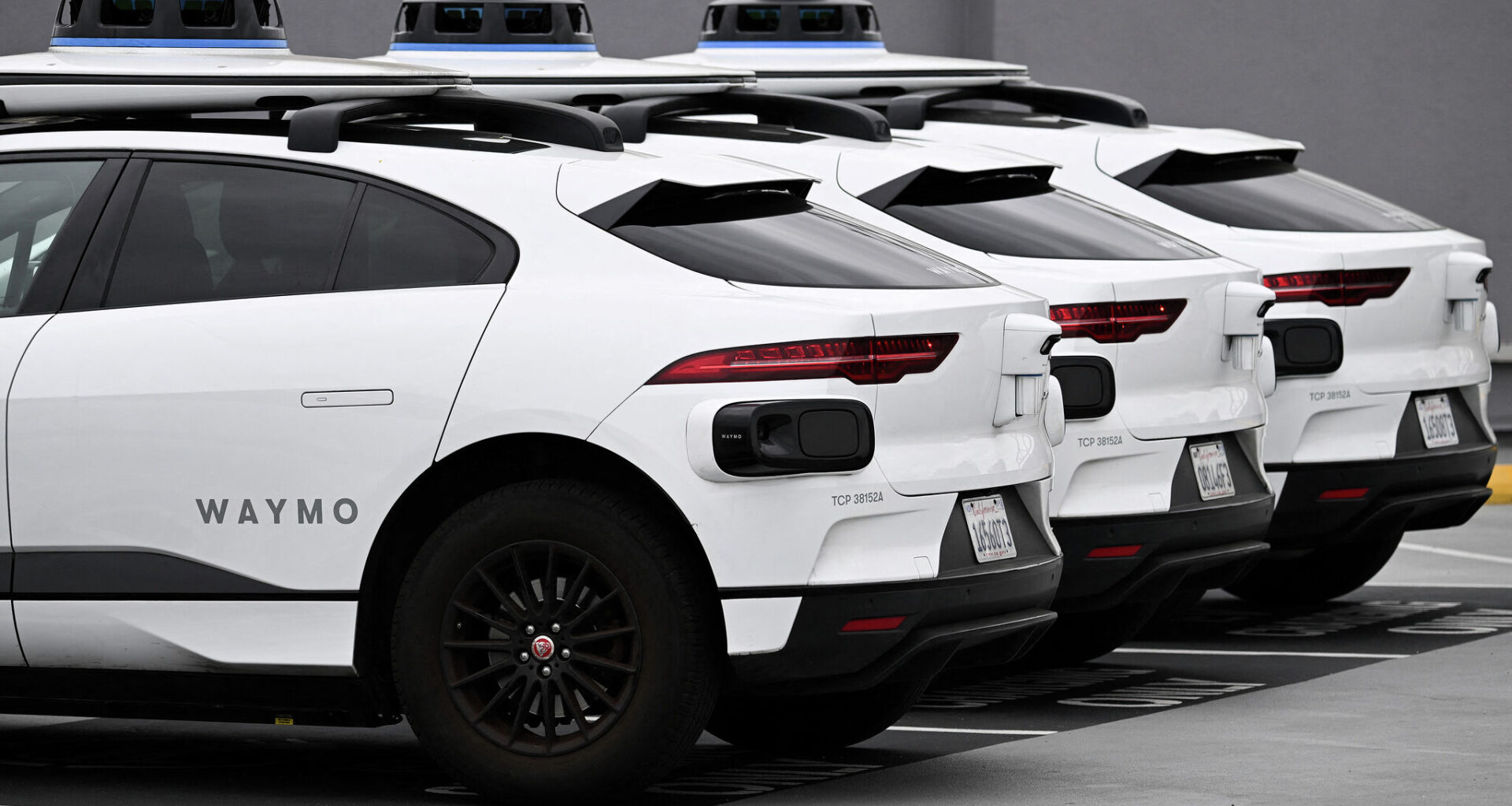
Traffic is one of the biggest frustrations for North Texans, and regional transportation officials have long searched for ways to address the issue without continuously expanding highways.
A new Southern Methodist University study suggests the uptick in autonomous vehicles on Dallas roads could be the answer.
Partially funded by the North Central Texas Council of Governments, researchers at the university modeled traffic across 13 counties in the Dallas-Fort Worth area using the council’s Transportation Analytical Forecasting Tool. The long-range planning study found that widespread adoption of AVs could reduce travel delays by about 33% by 2045 without adding new highway lanes. No specific corridors were analyzed in the study.
“Congestion improvements are likely to occur gradually over several years as autonomous vehicles become more common,” said Khaled Abdelghany, an engineering professor at SMU who led the study.
Abdelghany said the earliest benefits North Texans could see may not be congestion reduction but improved mobility for older adults and people with disabilities, as well as enhanced roadway safety.
The study modeled low, medium and widespread adoption of autonomous vehicles throughout the Dallas-Fort Worth area by 2045. The more AVs on the road, the less congestion was present. However, Abdelghany believes the area won’t reach high enough adoption numbers, remaining below 25%. Several advancements in both technology and infrastructure are needed to see changes in traffic patterns.
“We anticipated that smarter traffic signals would have a larger impact, but in an already highly congested network such as D-FW, there appears to be limited additional capacity that can be gained through signal optimization alone,” Abdelghany said. “This suggests that broader system-level changes, rather than isolated infrastructure improvements, will likely be needed to achieve substantial congestion reductions.”
The purpose of the study was to help transportation planners understand how the systems respond to varying degrees of AV adoption.
“Connected and autonomous vehicles are driving significant safety and economic growth advancements across Texas,” said Ryan LaFontaine, public information officer for The Texas Department of Transportation. “TxDOT’s role is to work with autonomous vehicle companies on what’s needed to ensure the state’s infrastructure is prepared for the safe and efficient roll out of AVs.”
The council sees potential in AV adoption and has invested over $40 million in planning, training, communications, technology and software to support vehicles in the region. Due to the automated nature of the vehicles, the council believes they leave less room for human error such as unexpected breaking, lane changes and inattentive drivers.
“Because autonomous vehicles can react more quickly than human drivers and process much more information in real time, they have the potential to improve traffic flow and recover more quickly from disruptions,” said Arash Mirzaei, the council’s senior program manager for model and data development. “As a result, highways could ultimately carry more traffic without requiring additional lanes.”