
New home construction in the Tiermo development east of Austin near Hornsby Bend in October 2021. A new report from Unlock MLS shows just how fragile homeownership can be in the Austin metro area.
Austin American-Statesman file photo
In one of Texas’ most expensive metro areas, rising insurance costs, property taxes, utility bills and mortgage payments are putting increasing pressure on Austin-area homeowners. Now, a new report from the Austin Board of Realtors and Unlock MLS examines how those costs are reshaping affordability.

New data from Unlock MLS suggests that every $100 increase in monthly homeownership costs pushes about 9,800 Central Texas households across the federal cost-burden threshold, meaning they’re spending more than 30% of household income on housing.
Article continues below this ad
The report lands as Austin leaders are debating a proposed budget that would increase property taxes and utility costs by nearly $346 annually for the average homeowner.
“The story in the data is clear. While home prices across the region have stabilized since their 2022 peak, the true monthly cost of homeownership has continued to climb,” Emily Girard, Unlock MLS and Austin Board of Realtors CEO, said in the report. “None of these pressures directly appear in the sales price of a home. All of them show up in a family’s monthly budget.”
Climbing costs
According to the report, Texas homeowners insurance premiums have increased more than 60% over the past seven years, making it the fastest-growing component of homeownership costs.
Article continues below this ad
The report also highlights the growth of “equity-rich, cash-poor” homeowners — those whose home values far exceed what they owe on their mortgages but whose incomes have not kept pace with the rising costs.
The amount of property tax a household pays stems directly from the market value of their home and a tax rate set by local governments. In 2024, 187,000 homeowners in Travis County protested the appraised value of their homes. For a household whose home value jumps but whose income lags behind or stays the same, “the tax bill grows faster than the ability to pay it,” the report said.
“When nearly four in ten property owners challenge their assessments, rising appraisals and property tax rates are no longer an exception affecting a narrow group of homeowners,” it said. “They are a material burden on the average Central Texas household, and protesting has become one of the few tools available to slow the growth of a tax bill.”
Depending on any eligible exemptions, under the first draft of the city budget, the average Austin homeowner is looking at an estimated property tax increase of $173.87 per year. The cost of utilities could pose a problem in the coming years, the report said.
Article continues below this ad
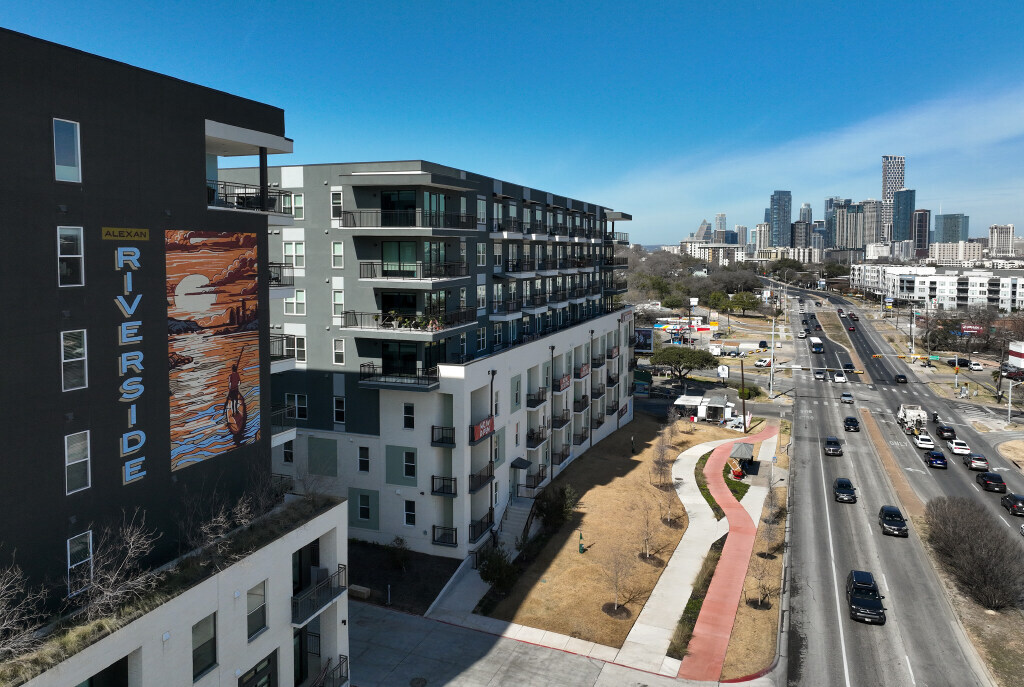
Rivercrest Apartments on East Riverside Drive in Austin on Feb. 9. A new housing affordability report examines how rising ownership costs are putting increasing pressure on Austin-area homeowners.
Jay Janner/Austin-American Statesman
Public servants among hardest hit by rising costs
The report estimates a typical Travis County homeowner spends about $2,500 a month on mortgage payments, property taxes, insurance and utilities. It also modeled how rising costs affect representative dual-income households for Austin Independent School District teachers, Austin-Travis County EMS medics and Austin firefighters.
At the report’s baseline, housing costs consume 26% of household income for teachers, 26.6% for EMS medics and 22.9% for firefighters. A $100 monthly increase raises those shares to 27%, 27.7% and 23.8%, respectively.
Article continues below this ad
The report notes those examples assume two full-time earners in each household. Single-income, fixed-income and multigenerational households would likely face greater financial strain.
According to a May 2025 affordability profile from Berbas Groups, the Austin housing market favors renters over buyers. In June, the median home price within city limits was $605,000 — almost $200,000 more expensive than the national average of $410,700, according to the Federal Reserve Bank of St. Louis.
As rising ownership costs make buying less attainable for many households, Austin’s rental market has become comparatively more affordable thanks to a surge in new apartment construction. For renters, Austin’s is on par with national averages and with more units coming online, complexes are considering more deals and lower rents to fill units.
“The cost-burden thresholds shown above are a floor, not a ceiling,” the report states. “The real strain on many Central Texas homeowners is likely even greater.”
Article continues below this ad
The financial pressure is also changing where Central Texans choose to live.
More than 25,000 more people left Travis County than moved in during the early 2020s, according to a recent American-Statesman analysis. Most residents moved to nearby Williamson, Bastrop or Hays counties.
What can city leaders do?
The report offers several recommendations for local leaders, including zoning reforms, expanding weatherization and resource-efficiency programs, supporting workforce housing developments and using public land to support broader community goals.
Article continues below this ad
“Growing the local tax base is more important than ever — it is the most direct path to easing pressure on existing property owners and sustaining the fiscal health of the region without pricing out the residents and businesses that drive it,” the report states.
The city of Austin released a report early this year showing that although reforms to the land use code like dissolving parking requirements and density bonus programs, many homes still remain unaffordable. In March, the city council approved a resolution that directed the city manager to create missing-middle and mixed-use districts, hopefully allowing more types of housing, like multi-family homes and cottages, to be built in Austin.
“The tools are available,” Girard said in the report. “The time to use them is now — because the cost of staying should not exceed the cost of leaving.”
Article continues below this ad