
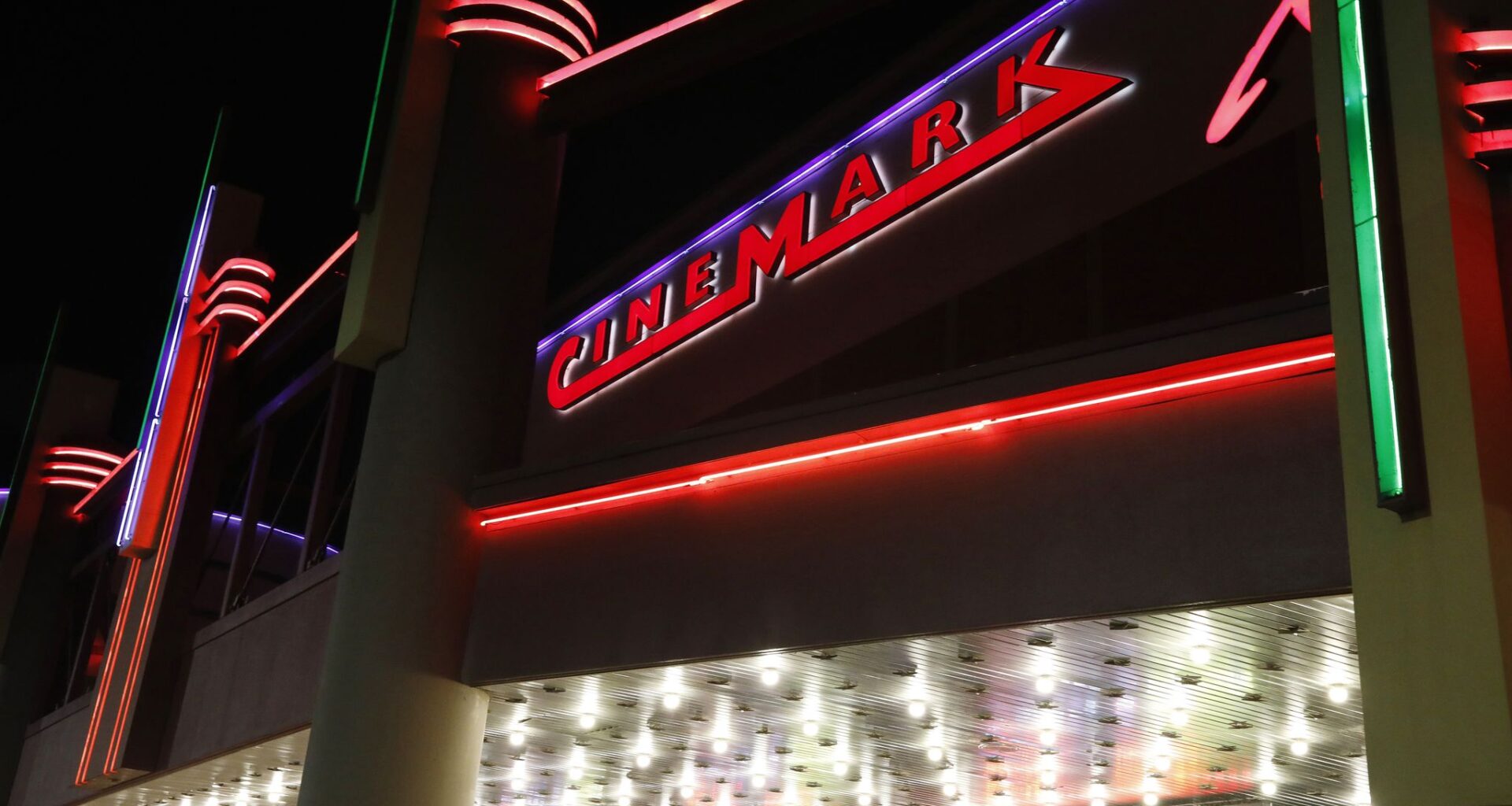
Cinemark, based in Plano, Texas, reported its first $1 billion quarter ever in the second quarter of 2026, in part due to the breakout success of “Backrooms” (top right) and “Obsession” (bottom right).
Clockwise from left: File photo, Associated Press, Courtesy of Focus Features
Reports of the movie theatre’s demise are greatly exaggerated.

Cinemark, based in Plano, announced its second-quarter earnings Thursday, reporting more than $1 billion in quarterly revenue for the first time in the company’s history and topping last year’s equivalent period operating income by $70 million. The results come via a strong box office, augmented by growth in concessions and its subscription service, Movie Club.
“The performance we delivered this quarter is a testament to the dedication, skill, and execution of our sensational team and their ability to capitalize on strong film content and positive industry dynamics,” said president and CEO Sean Gamble in Cinemark’s Thursday earnings call. “As we move ahead, we believe we are exceptionally well-positioned for the future. … We remain highly encouraged by positive recent industry developments, including expansion in theatrical window exclusivity, increases in young moviegoer frequency, and strength in emerging forms of content.”
Article continues below this ad
Related: Cinemark founders sell Preston Hollow home for $15 million
The second quarter included new releases The Super Mario Galaxy Movie, The Drama, Michael, Toy Story 5, The Devil Wears Prada 2 and Star Wars: The Mandalorian and Grogu. Gamble also singled out the breakout success of low-budget horror films Obsession and Backrooms — which made $237 million and $186 million at the domestic box office in the second quarter, respectively — as good omens and good lessons for the future of the movie industry and how it can continue to recover from an extended post-COVID hangover.
The unexpected success of Obsession and Backrooms contributed to a strong quarter for the Plano-based movie theater chain Cinemark.
Vernon Bryant/Staff Photographer
Per Cinemark’s quarterly report, U.S. attendance increased 8.7% to 40.1 million patrons during the second quarter compared with 36.9 million in the same quarter last year. Additional growth was seen in its international attendance (Cinemark also has theaters in 13 Latin American countries), which grew more than 12% to 23.6 million patrons. Meanwhile, concession revenue per patron grew by grew 36 cents to $8.70 year-to-year, while the average ticket price increased by 44 cents to $10.83.
In total, Cinemark achieved an all-time high in quarterly admission revenue, $540 million, in the second quarter, while hitting 1.5 million members for its subscription program Movie Club. The program grants members one free movie ticket a month and discounts on concessions and further tickets starting at $10.99 a month. Since its launch in 2017, it has sold more than 200 million tickets and accounted for around 30% of Cinemark’s domestic box office in the second quarter.
Article continues below this ad
“We continue to see really healthy growth of younger audiences. I mentioned that earlier, some of these films — particularly you saw films like Obsession and Backrooms, which were based upon creator content — they’ve got these embedded younger audiences. It’s helping to bring them in, similar to others. It’s a momentum business. They see other things of interest when they’re there, they wind up coming back, it just winds up being a positive cycle,” Gamble said.
“We’re definitely seeing healthy signs of new attendees, also nice signs of sustained and growing frequency from our existing audiences. There’s just a lot of great momentum. This year has been obviously really positive for the industry and certainly for our company with regard to moviegoing in general,” he continued.
Related: Why the internet is comparing Dallas downtown tunnels to the viral movie ‘Backrooms’
Another positive factor was better spacing of popular movies. Movie releases have long followed a conventional wisdom: Oscar contenders come out in the late fall and winter, blockbuster tent poles come out in the summer, the best horror movies come out near Halloween, etc. However, Gamble spoke about how Cinemark benefited from the dispersion of the year’s most popular films, noting that the success of Obsession and Backrooms off May release dates helped spread out capacity and demonstrated how non-traditional movies (Obsession had a budget of under $1 million while Backrooms is based on an internet meme) can contribute to the health of theaters.
This combination of images shows promotional art for the films The Devil Wears Prada 2, from left, The Super Mario Galaxy Movie, and The Drama.
20th Century Studios/Universal Pictures/A24 via AP
“We are hopeful that even some of the more traditional, larger Hollywood films will spread themselves out a bit. It’s something that took a long, long while for Hollywood to figure out and eventually got there, and you started to see larger films in February and in March, and in other off periods from the summer and year-end, and they worked great,” Gamble said. “I think that will start to naturally happen. In the meantime, yes, these types of non-traditional films, creator content, anime, faith-based, foreign, they can definitely help to fill those gaps. We’re seeing some real significant success stories now.”
Article continues below this ad
Gamble spoke optimistically about the future, with films like Christopher Nolan’s The Odyssey, which has already grossed nearly $700 million worldwide since its release on July 17, and new Spider-Man and Avengers films coming out later this year. In the long term, while Cinemark’s outlook will depend on the strength of film lineups, the return of theatrical exclusivity windows, once the norm but fallen to the wayside in the streaming era, could train movie fans to come back to theaters.
“The most tangible thing we’ve seen is that the theatrical exclusivity did start to increase in the second quarter as studios started to honor those commitments of 45 days. We’ll have to see. It’s going to take a little bit more time,” Gamble said. “We’re optimistic about the positive benefits that will yield, which we think will continue to be meaningful. It will take a little bit more time for that to roll out and for consumers to fully feel the impact of that.”