
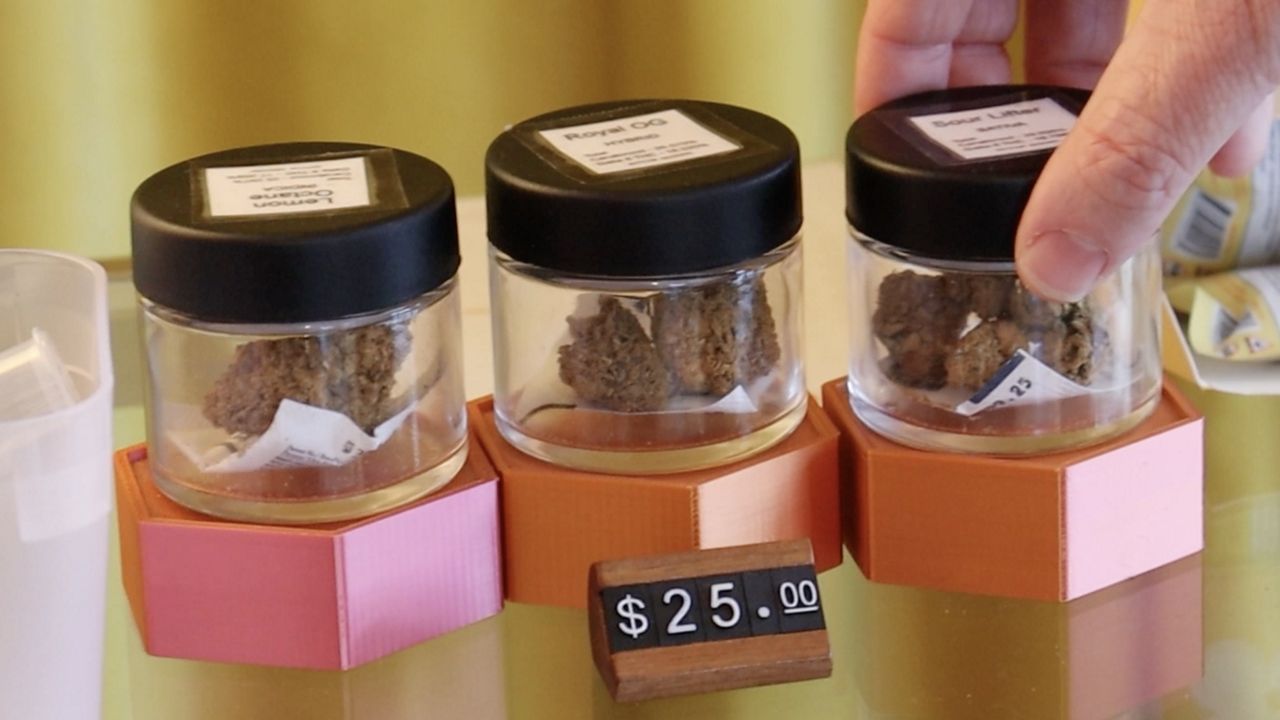
TEXAS — New rules on THC compounds are in effect.
Following a state Supreme Court opinion released on May 1, the Texas Department of State Health Services (DSHS) is now enforcing a new rule on synthetic THC compounds, specifically delta-8 THC.
Delta-8 is a compound naturally found in low doses of hemp, but manufacturers can convert it into larger quantities enough to create an intoxicating, or “high” feeling when consumed.
“I think it’s something we’re battling today,” said Todd Harris, the owner of The Happy Cactus in South Austin. “Is it synthetic? Is it converted? We believe it’s converted, especially the products we use, we converted from CBD.”
The compound is what Harris built his business off of in 2020.
“We primarily started with delta-8 products,” Harris said. “We had some CBD, some CBG, but 90% of our sales were delta-8 flower, edibles, pre-rolls and vape carts back in the day.”
Effective Friday, July 31, Harris, along with more than 14,000 registered hemp retailers in the state, cannot sell delta-8 products. It follows a ban on THC-A flower back in March and a ban on THC vapes months before. Harris says it was a quick turnaround when the state released the new rules on delta-8 on July 10.
“We pretty much have had a week or two to kind of switch up and pivot, and figure out what we’re going to use and what we’re going to have on our shelves instead of delta-8,” Harris said.
The case in question: The DSHS (including commissioner Dr. Jennifer Shuford) versus Sky Marketing Corp, also known as Hometown Hero, an Austin-based consumable hemp company.
The case originated in 2021, when Hometown Hero sued the state for making delta-8 a schedule 1 controlled substance, which ordered products off the shelves. A Travis County district court ruled the state needed to remove delta-8, allowing products back on the shelves.
Lawyers have worked on an injunction yearly since 2021, until the state’s highest court weighed in and gave the final ruling.
Justice Evan A. Young delivered the opinion. At the beginning of his 30-page opinion, Young acknowledged the difficulty, and sometimes confusion, when it comes to decision making over drugs, writing, “that task is complex in this case because the law governing controlled substances is itself complex, both procedurally and substantively.”
Ultimately, though, the court ruled in favor of the state, that DSHS has authority over delta-8 and other THC extracts and isomers found in hemp.
Justice Young wrote: “If the legislature desires to legalize powerful drugs, it has every tool it needs to do so—and to do so unmistakably, as we expect for such a major change to social policy.”
At his shop, Harris has to destroy any remaining delta-8 products if they haven’t been sold already.
“Destroying your product is never a fun thing, but especially when we know it’s a helpful product, that can make us money, and can also make the state money,” he said. “We’re very confused about it, and very upset.”
See the full state supreme court opinion below.