
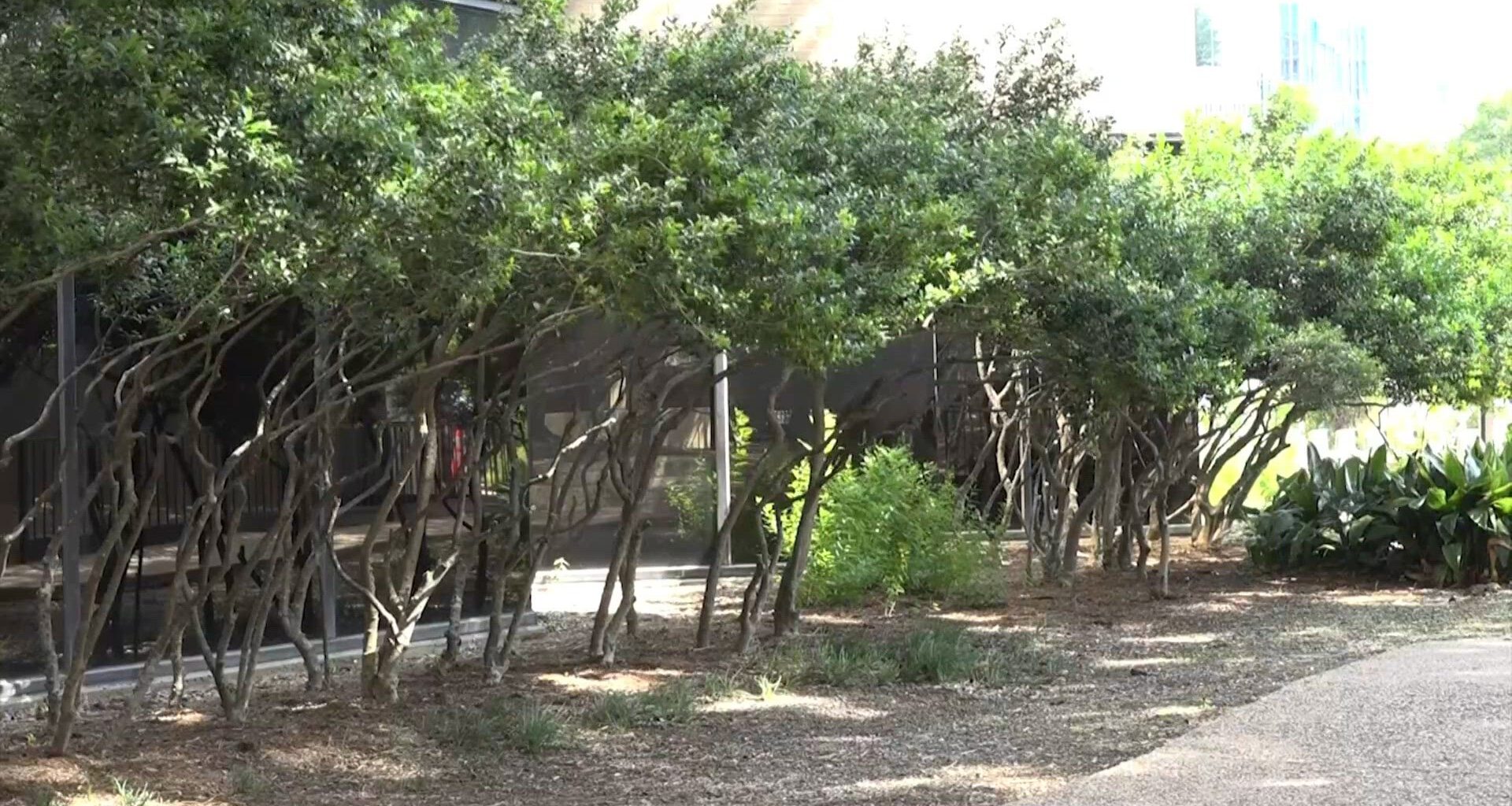
Amid soaring temperatures, Austin officials emphasize the importance of the city’s tree canopy in cooling neighborhoods and reducing energy costs.
AUSTIN, Texas — As triple-digit temperatures settle over Central Texas, city officials say Austin’s tree canopy is one of the most effective tools for cooling neighborhoods and lowering energy costs, but not every community benefits equally.
Austin is a relatively green city, with 41% tree canopy cover as of 2022. Tree canopy refers to the area of ground shaded by tree leaves and branches.

This story continues below.
More in Local
City of Austin lifts waterways ban as floodgate operations end
“If you were to think of yourself as a bird flying over the city and looking down, you would see a whole bunch of different canopies connected and stretched out across town,” said Emily King, an urban forester for the city of Austin. “All of that space where there is tree leaves and branches and cover is all part of our city’s tree canopy cover.”
Trees do more than provide shade. They also cool surrounding air through transpiration, a natural process that moves water through the tree and releases moisture into the atmosphere. That makes standing beneath a tree feel noticeably cooler than standing in the shade of a building, King said.
The cooling benefits are especially important as paved surfaces absorb and radiate heat during Austin’s hottest months. Neighborhoods with more mature trees generally experience lower temperatures than areas with fewer trees.
Tree cover, however, is uneven across the city.
King said western Austin naturally has more tree canopy than eastern neighborhoods, but decades of development and land-use decisions have widened that gap. Areas like Westlake and Northwest Austin have 60–70% canopy cover, while neighborhoods like Montopolis and St. John have far fewer trees and more buildings. That matters because standing beneath a tree provides noticeably more cooling than standing in the shade of a building.
To address those disparities, the city uses a Tree Equity Score, which combines tree canopy data with demographic information to identify neighborhoods that would benefit most from additional tree planting and investment.
City officials say increasing canopy is only part of the solution. Maintaining the health of existing trees, particularly mature trees, has become a major priority because larger trees provide the greatest environmental benefits.
Residents can also help expand Austin’s canopy by caring for existing trees and planting new ones during the fall, when cooler temperatures improve survival rates.
“This isn’t planting season,” King said. “Right now, you would be wanting to think about and plan for planting in the fall.”
During the summer, arborists recommend adding compost, applying mulch and monitoring watering needs. Because Central Texas has received more rainfall than usual this summer, many established trees require less supplemental watering than in drier years.
Trees can also reduce household expenses. King said strategically planted trees lower air conditioning demand by shading homes during the hottest part of the day.
“Having shade over your home will definitely cause you to run your air conditioner less in the summertime,” she said. “If I plant a tree such that it’s going to shade the afternoon sun from my house, I’m going to get a whole lot more value.”
Proper placement can also shade driveways and parked vehicles, helping reduce heat buildup and sun damage.
The city offers a free tree program for eligible residents that includes guidance on selecting planting locations, proper planting techniques and early tree care.
As Austin works toward its goal of 50% tree canopy by 2050, city officials say protecting existing trees and strategically planting new ones will be key to keeping neighborhoods cooler, reducing energy costs and expanding those benefits across the city.