
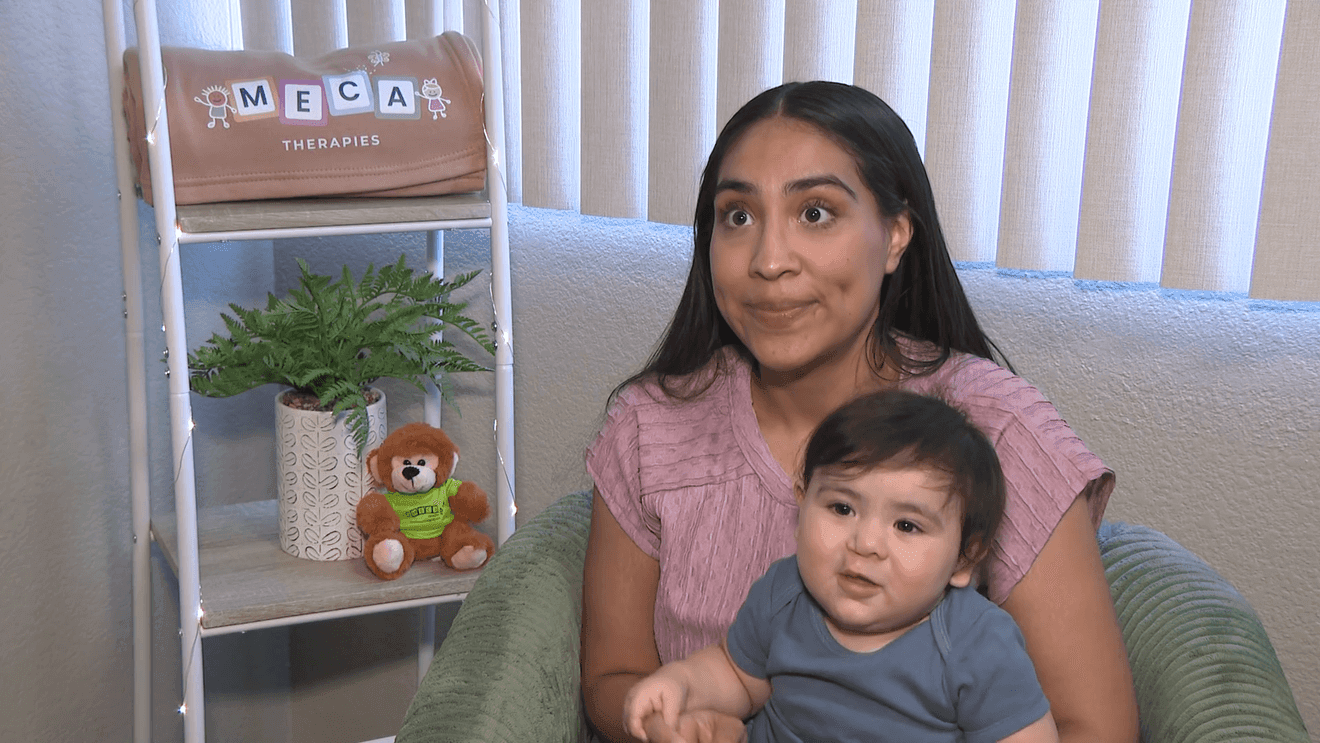
LAS CRUCES, N.M. (KFOX14/CBS4) — What began as one mother’s battle to secure medically necessary treatment for her newborn son has grown into an advocacy effort that’s changing insurance coverage for families across New Mexico and could soon impact Texas, including the El Paso region.
Kylene Ramirez of Las Cruces said she learned during pregnancy that her son, Ezekiel Camarena, would be born with a cleft lip and palate. Soon after, she discovered that insurance companies in New Mexico routinely denied coverage for Nasoalveolar Molding (NAM), a pre-surgical treatment used to improve outcomes before cleft repair surgery.
“No baby in New Mexico had ever been covered,” Ramirez said. “We had to fight for insurance to pay for the coverage that other children in El Paso were getting.”
Rather than approving NAM treatment, Ramirez said her insurance company initially wanted the family to travel to Albuquerque for a different treatment that she said was not as comprehensive.
Over several months, she appealed the denials, researched Medicaid protections and worked directly with insurance medical directors until coverage for Ezekiel’s treatment was approved.
Her advocacy has since helped establish a pathway for other families seeking the same care.
According to Ramirez, four additional New Mexico families have since received insurance coverage for NAM treatment.
RECOMMENDED: NMPRC approves $1.25B sale of New Mexico Gas Co. to Bernhard Capital affiliate
“For families who have just learned during pregnancy or after birth that their baby has a cleft lip or palate, it takes a huge burden off their shoulders,” Ramirez said. “You’re already processing the diagnosis, and then you’re handed a bill for thousands of dollars and asked how you’re going to pay for it.”
Ramirez said NAM treatment can cost more than $3,500 out of pocket, adding to the financial strain families already face. Even specialized feeding bottles for infants with cleft conditions can cost about $20 each, she said.
She hopes her story also reminds parents they are not alone.
Through Smile Train, an international nonprofit focused on cleft care, Ramirez found guidance navigating insurance laws, connected with families around the world and learned more about the lifelong journey many people with cleft conditions experience.
She has since begun mentoring other families in southern New Mexico, helping parents learn how to feed their babies and navigate treatment options.
Ramirez recently shared her family’s story at Smile Train’s national Cleft Con conference, where she spoke about insurance advocacy and expanding access to medically necessary care.
She described the conference as emotional but encouraging.
“It was really amazing to meet teenagers and adults who are cleft-affected and see how well they’re doing,” she said. “It gave me hope for Ezekiel’s future.”
Ramirez’s advocacy is now focused on Texas, where she is working with lawmakers, particularly in the El Paso area, to support the Ensuring Lasting Smiles Act, federal legislation aimed at improving insurance coverage for medically necessary treatment related to congenital anomalies such as cleft lip and palate.
She said many border families face challenges similar to those she encountered in New Mexico.
“Las Cruces and El Paso are such connected communities,” Ramirez said. “We’re trying to get the community in El Paso and our representatives there to support the Ensuring Lasting Smiles Act.”
Ramirez hopes policymakers and insurers recognize that cleft care extends far beyond appearance.
“Cleft is not just cosmetic,” she said. “It affects speaking, breathing, eating—every aspect of a person’s life.”
She worries that without stronger protections, families will continue fighting insurance companies throughout their children’s lives for procedures that doctors consider medically necessary.
“When my son is a teenager and needs additional surgeries, I don’t want to have to argue with an insurance company all over again,” Ramirez said.
She also pointed to the need for improved access in New Mexico, noting the state has a higher-than-average rate of babies born with cleft lip or palate.
Looking ahead, Ramirez plans to continue advocating for passage of the Ensuring Lasting Smiles Act while supporting families beginning their own cleft care journeys.
“My hope is that parents reach out and find the resources that are out there,” she said. “No family should have to fight alone for the care their child needs.”
Sign up to receive the top interesting stories from in and around our community once daily in your inbox.