
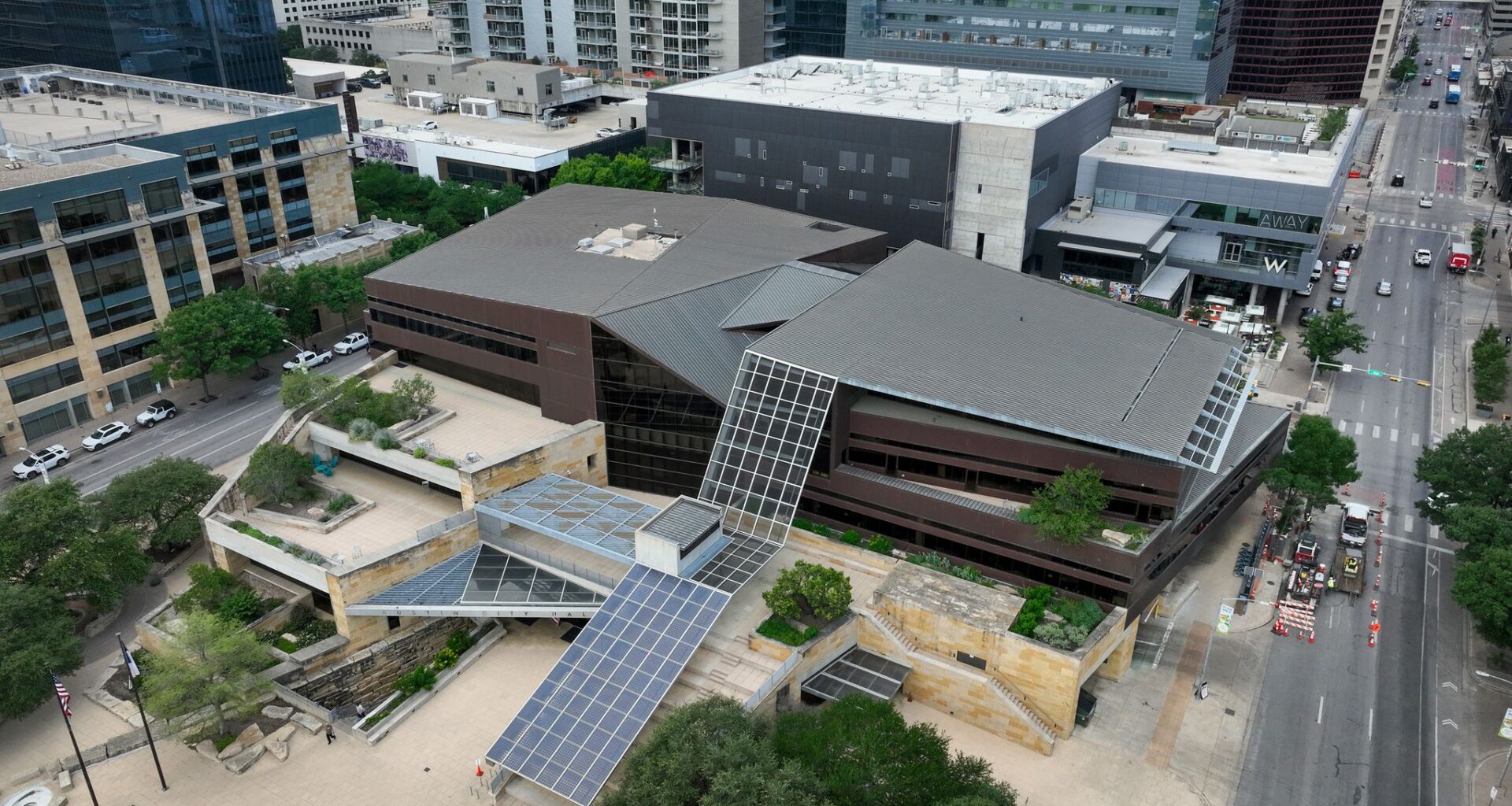
Austin City Hall on Monday, May 18, 2026.
Jay Janner/Austin American-Statesman
The Austin officials contacted most frequently by registered lobbyists are not Mayor Kirk Watson or the 10 other members of the City Council. Instead, the list is dominated by city employees who review zoning cases, development proposals and other policy matters before they reach elected officials.

The finding comes from an American-Statesman analysis of Austin’s first quarterly lobbying reports filed under new disclosure rules the City Council approved in March.
Article continues below this ad
The rules expanded the types of lobbying contacts that must be disclosed to include emails, text messages, phone calls and other communications. Previously, city employees were responsible for reporting only scheduled, in-person meetings with lobbyists. Under the new system, lobbyists are responsible for reporting their own contacts with city officials.
Some council members opposed the changes, arguing that relying on lobbyists to report their own contacts could weaken transparency and accountability.
Still, the first batch of reports provides the broadest look yet at who seeks to influence Austin government and which officials they approach most frequently.
The Statesman found that 73 registered lobbyists reported 1,076 contacts with 181 different city officials between Jan. 1 and March 31. Each interaction was counted equally, regardless of whether it was a brief email or a lengthy meeting. Each email, text message, call or meeting was counted as a separate contact. For each contact, lobbyists identified the client they represented and disclosed whether they worked for an organization or were self-employed.
Article continues below this ad
Matthew Wilson, a political science professor at Southern Methodist University, said lobbying is common in large cities because local governments make financially consequential decisions involving zoning, public spending and property.
“A lot of economic interests are really affected by city policy, whether it’s zoning, whether it’s city expenditures, whether it’s city decisions to buy or sell property,” Wilson said. “All those kinds of things have real economic impacts on some important players in a community, and so they love to advance their economic interests in city policy.”
Beyond the overall totals, the reports reveal several clear patterns in who contacts the city and whom they approach.
Lobbyists contact city staff more often than elected officials
Joi Harden, Austin’s chief zoning officer, received more reported lobbyist contacts than any other city official. She oversees the division responsible for administering land-use regulations, zoning classifications and site-plan reviews that help determine what can be built on a property.
Article continues below this ad
Harden declined to comment for this story.
Most of the other officials near the top of the list also were rank-and-file employees, including several policy advisers to council members.
Wilson said lobbyists often concentrate on staff members because they research proposals, draft policy language and advise elected officials before a vote.
“A lot of lobbyists will focus on lobbying members’ staff as much as they will the members themselves, because they know that the staff very often are going to write the actual regulations,” Wilson said. “At the end of the day, members will vote, but if you can get in at the staff level, a lot of times that’s a more effective route to accomplishing what you want.”
Article continues below this ad
The practice is not unique to Austin. Wilson said that lobbying elected officials’ staff is a common practice at all levels of government, including in Congress.
Wilson said Harden’s role likely attracts frequent contacts because developers and their representatives consult planning staff about whether proposals comply with zoning and development rules before seeking council approval.
Such staff members often serve as the initial point of contact for people seeking changes or approvals and may hear from lobbyists more frequently than the elected officials they advise.
For example, a policy advisor for Mayor Kirk Watson was contacted by lobbyists 26 times during the reporting period, making her the sixth-most lobbied official, while Watson himself was contacted just five times. That made him the 59th most-contacted official on the list.
Article continues below this ad
Development interests account for most reported lobbyist contacts
Development industry lobbyists accounted for roughly 55% of all communications reported during the filing period, far more than any other industry category, the analysis found. Agencies working in the development industry were identified manually using company descriptions from public websites.
Wilson said this result isn’t surprising. Many of the most financially consequential decisions made by local governments involve property, development and zoning, he said.
Article continues below this ad
“Real estate developers, probably more than anybody else, have a lot to gain or lose based on city policy, so it does not surprise me that they would be actively lobbying City Hall,” he said.
Four of the five lobbyists who reported the most contacts with city officials worked for the Drenner Group, a law firm specializing in real estate transactions, business advice and land use issues. These lobbyists made up half of all reported communications, the analysis showed.
Many of their clients had projects or other matters before the city during the first quarter, although the reports do not identify the subject of each contact.
Steve Drenner, the firm’s founder and president, said his lobbyists primarily talk to the city about zoning and permits.
Article continues below this ad
“We try to make sure that the people that are asked to take a position on those cases have the opportunity to get all the information that they need in order to make a decision,” he said in an interview, adding that he supports the new lobbying rules.
Lobbyists representing Rundog Real Estate Group reported more contacts with city officials than those representing any other client. The Austin developer received city approval in March for two towers near the University of Texas.
Karlin Real Estate ranked second with 77 reported interactions and recently developed the former 3M site before it was sold to SB Energy.
Lobbyists working for the developer behind the RIDA COTA Hotel reported 19 exchanges with city officials in the first quarter. At the end of April, City Council negotiated an economic business agreement to construct the property.
Article continues below this ad
Rundog, Karlin and RIDA COTA did not respond to emails requesting comment.
The outliers: Public schools, Waymo and a conservative activist
In a sea of real estate developers, the University of Texas at Austin, the Austin Independent School District and Waymo also stood out for frequent lobbyist contact with city officials.
Article continues below this ad
Lobbyists representing the University of Texas reported 81 contacts with city officials during the first quarter of the year.
Austin school district lobbyists reported contacting city staff a total of 12 times, classifying the nature of the discussions as “real estate.” In March, the city’s planning commission forwarded a controversial zoning proposal to repurpose an old school into multi-family housing units.
Wilson said he wasn’t surprised that educational entities ranked among the most active lobbyists at City Hall.
“Schools are affected in all sorts of ways by local government decision-making, especially on questions dealing with zoning and construction,” he said. “UT Austin is deeply integrated into and reliant on the city of Austin in all sorts of ways, so it is no surprise that it has substantial interests in what happens at City Hall.”
Article continues below this ad
Venture capitalist Evan Baehr, who has financed efforts to elect conservative candidates and promote conservative policies in Austin, was listed as a client in reports covering 82 contacts with 37 city officials.
Lobbyists representing Waymo reported 71 contacts, many involving a city consultant who works on autonomous-vehicle policy in the Smart Mobility Office.
Austin ISD and the University of Texas at Austin did not respond to multiple requests for comment. Baehr could not be reached for comment. Waymo declined to comment but noted the company had multiple lobbyists at the same meetings.
What the records don’t reveal
When the City Council decided on the new lobbying rules in March, two prominent members — Ryan Alter and Vanessa Fuentes — voted in opposition.
Article continues below this ad
Though the new rules technically expanded reporting requirements — under the old rules, only scheduled meetings had to be logged rather than all types of contact — the council members worried that shifting reporting responsibility from city employees to lobbyists could produce incomplete or inaccurate records and weaken accountability.
The rules took effect March 23, but several lobbyists told the Statesman that city officials had asked them to report contacts from earlier in the quarter. The city’s online system prevents lobbyists from submitting reports with required fields left blank, and city staff review the filings for apparent errors before publishing them, according to the city clerk’s office.
It’s unclear if the city independently verifies that lobbyists disclosed every contact; A spokesperson did not respond by the Statesman’s deadline.
Article continues below this ad
The Statesman examined all 109 quarterly reports covering disclosed contacts with city officials. The reports do not describe the substance, duration or significance of each contact, or identify what the lobbyist and city official discussed.Whether the reported contacts were a lengthy telephone call or a brief text message, each counted as a single contact in the analysis.