
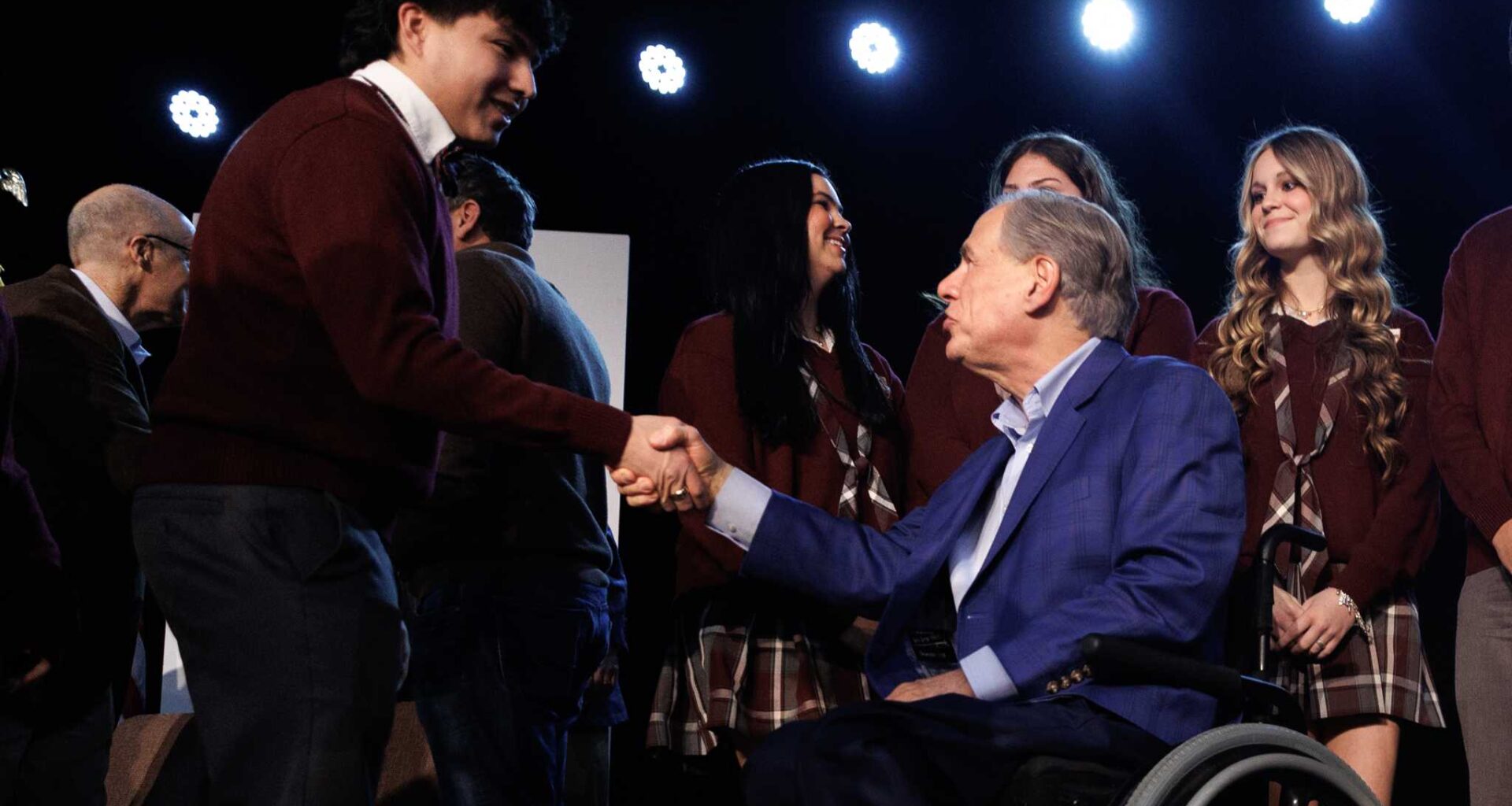
Governor Greg Abbott greets students from San Antonio Christian School on February 17, 2025, after giving a speech to promote school vouchers. More than 8,400 San Antonio students will use the school choice program, according to data released by the Texas comptroller.
Jessica Phelps
At least 8,405 students who live in San Antonio school districts will use the state’s new voucher program, according to data released Monday by the Texas Comptroller, who oversees the initiative.

These students are among the 85,434 statewide to receive some of the $1 billion from the Texas Education Freedom Accounts, an education program that gives families public funds for private education costs including tuition at private schools, learning supplies and therapy.
Article continues below this ad
More than 2,200 students living in Northside Independent School District will use a voucher, making it one of the top Texas districts with students claiming TEFA funds. Other San Antonio-area districts with a large number of students using the vouchers include North East and San Antonio ISDs, with 1,536 and 972 students enrolled, respectively. The data from the comptroller’s office tracks the district where students live but does not list where they previously attended school.
The state prioritized awarding TEFA money to children with disabilities from low- and middle-income households. The next priority group — making up around 80% of all TEFA recipients — is children from families with incomes at or below two times the federal poverty level, which is $66,000 for a family of four.
The TEFA program gives students with disabilities up to $30,000 annually. Other students can get up to $10,500 for private schooling and $2,000 for homeschooling. Parents can only use the funds to pay for state-approved private education costs.
Monday’s data reflects the number of students whose parents have claimed or used their awards. Of the program’s 274,000 applicants, 90.5% were eligible for the funding, and 31.1% received funding. About 121,000 students are on a waiting list.
Article continues below this ad
As of June 10, 43% of students awarded a voucher previously enrolled in public schools, not including those in prekindergarten, kindergarten or first grade. Around a third of the students in the San Antonio region who applied for vouchers attended public schools in 2024-25.
The data offers insight into who in San Antonio will benefit from the controversial program in its inaugural year. The Texas Legislature approved the creation of a voucher program in 2025, making it the third-largest initiative of its kind in the country. It has the highest beginning enrollment of any similar school choice program, Comptroller Don Huffines said on Monday. Huffines was sworn in as comptroller earlier this month after acting Comptroller Kelly Hancock, who previously oversaw the voucher program, stepped down.
Supporters of the TEFA program say it gives parents greater control over their child’s schooling and that the competition will push public schools to improve.
“No Texas child should be trapped in a failing school or forced to attend a school that is unable to provide the services they need to address disabilities,” Huffines said in a statement.
Article continues below this ad
Some education policy experts have warned that the program might push more students to leave Texas public schools, which receive funding based on how many students show up for class each day. Many public school districts are already facing tight budgets that have forced some campuses to shutter.
In almost three-quarters of Texas districts, at least one student accepted a TEFA scholarship. In San Antonio, fewer than 30 students living in Alamo Heights, Randolph Field and Lackland ISDs, respectively, will use TEFA funds. The report from the comptroller only includes data from districts with 30 or more participants.
Across the state, 40.8% of students using vouchers are white, 28.2% are Hispanic and 13.6% are Black. By comparison, in the 2024-25 school year, 24.4% of the students enrolled in Texas public schools were white, 53.5% were Hispanic and 12.7% were Black, according to the Texas Education Agency.
Article continues below this ad