
Keenan Vaughan/Houston Public Media
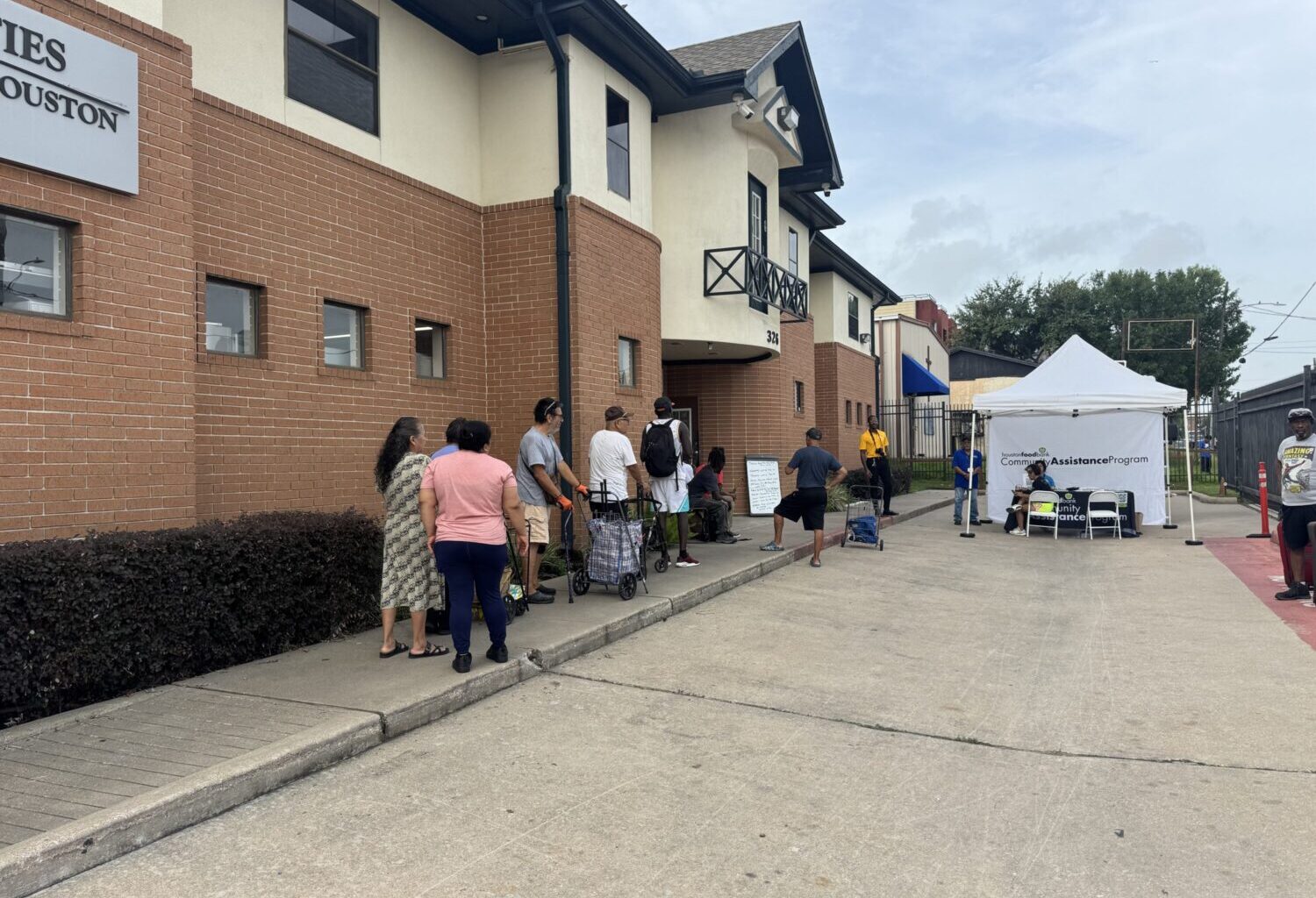
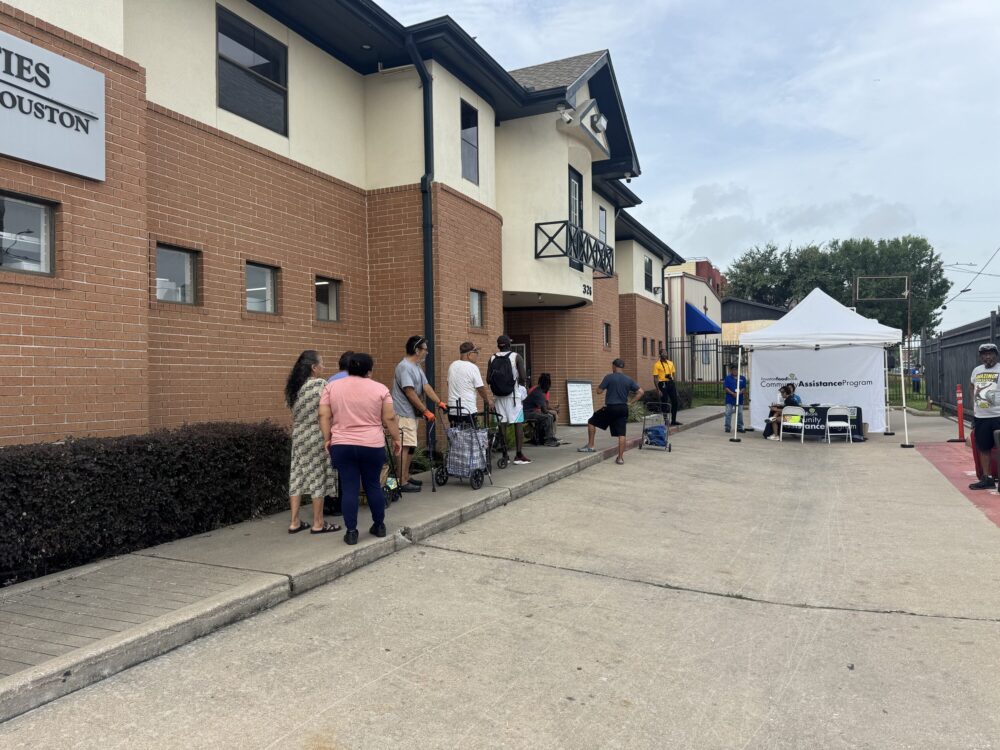
People wait in line outside of a food distribution center operated by Catholic Charities of the Archdiocese of Galveston-Houston on July 16, 2026.
On a hot morning in Southwest Houston, Krystal Hitt sat underneath a white canopy tent with three of her children by her side.
The 44-year-old waited patiently to be handed a shopping list made up of items like food, toiletries and clothing that she could grab from the food pantry at New Hope Housing Reed.
After previously moving from Virginia to the Braeburn area in Houston, she and her husband made the decision in 2018 to relocate to the low-income housing community. Eight years later, she still relies on both the pantry program and the federal Supplemental Nutrition Assistance Program (SNAP), or food stamps, to help feed her family of seven.
“Since we got here, we’ve been participating in everything because, literally, we just grabbed garbage bags of clothing,” Hitt said. “When we moved here to Houston, we didn’t have anything.”
Click here for more inDepth features.
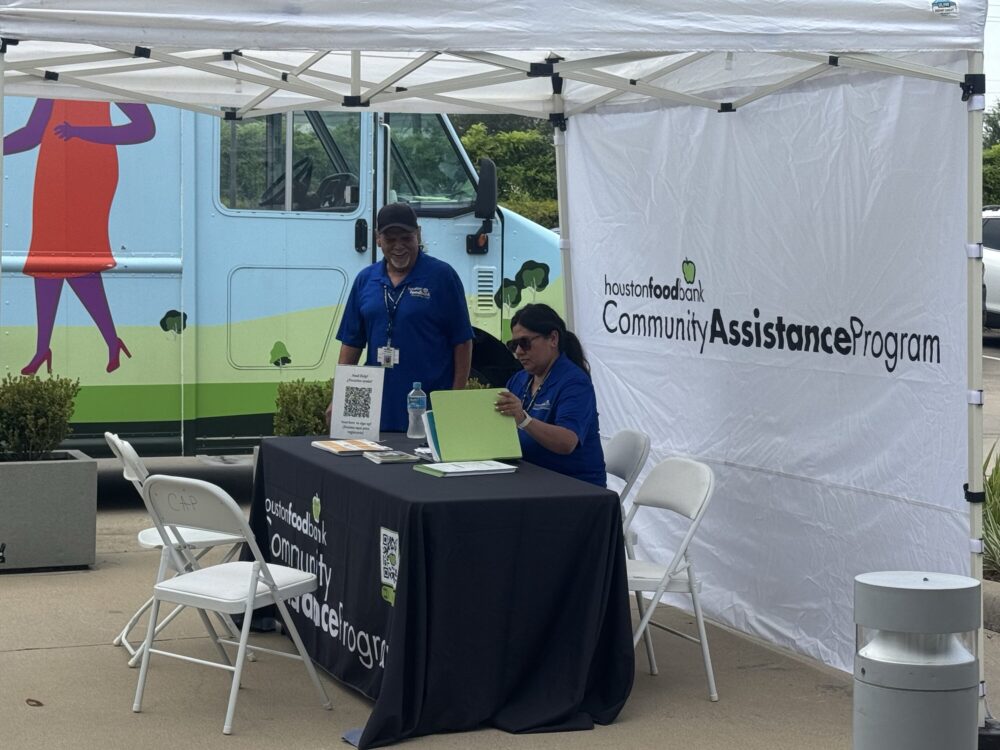
Hitt was also waiting to check in on her SNAP account at a mobile office truck from the Houston Food Bank. It was parked outside the main entrance of the housing community to provide residents with information about the program and invite anyone interested to fill out an application with the help of a state-approved professional.
Gracie Quiñonez, the food bank’s community assistance program operations manager, said SNAP can help families offset major expenses such as electricity and housing to create financial stability.
“I would say that access to SNAP benefits itself is crucial for people getting back on their feet,” Quiñonez said.
Keenan Vaughan/Houston Public Media
Gracie Quiñonez, right, the Houston Food Bank’s community assistance program operations manager, sets up a mobile information desk on July 10, 2026, in Houston.
Over the past year, however, people across the state and country have found it difficult to qualify for SNAP.
Texas has implemented new eligibility criteria for the program as outlined in the “One Big Beautiful Bill Act“, the massive tax and spending bill championed by President Donald Trump and passed last summer by the Republican-controlled Congress. It cut funding for SNAP by 20% and brought about several changes to the program, such as raising the age for work requirements from 54 to 64 and removing automatic work exemptions for groups such as veterans, homeless people and parents of children ages 14-17.
Eligibility impacts enrollment
The number of people eligible to receive SNAP benefits in the Houston metro area declined by about 155,000 from June 2025 to June 2026, according to an analysis by Rice University’s Kinder Institute for Urban Research, using data from the Texas Health and Human Services Commission.
The data also shows that children made up more than half of the 18% decline.
The region’s estimated SNAP enrollment of around 710,000 is the lowest recorded total since January 2022, the earliest month in the available data.
It’s a trend seen across Texas and beyond as more than 575,000 individuals statewide have lost SNAP eligibility over the past year. Nationally, more than 4 million are no longer receiving food stamps because of the changes to the program, according to NPR.
Keenan Vaughan/Houston Public Media
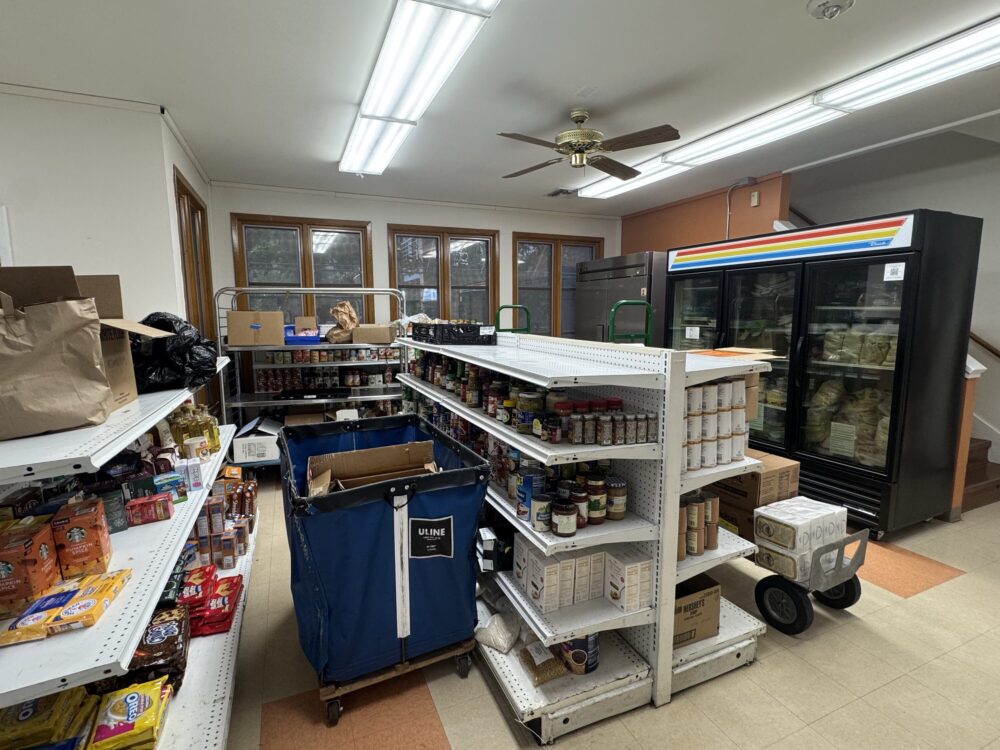
Pictured is a food pantry operated by Catholic Charities of the Archdiocese of Galveston-Houston on Jensen Drive in Houston.
To Celie Cole, CEO of hunger-relief network Feeding Texas, the true cause for alarm comes with the sluggish state of the economy.
“What we’re seeing across the state, and in Houston and other areas, is a really sharp decline in enrollment in SNAP at a time when need is really rising,” Cole said. “That concerns us because at a time when demand is high and food prices and fuel prices are so high, you would expect SNAP to increase because that’s the way the program was designed.
“You see enrollment generally decline when the economic conditions have improved,” Cole added. “We’re seeing the opposite now.”
In a statement, a spokesperson for the USDA said the number of people receiving SNAP benefits is “constantly changing and is not representative of any one policy.”
“SNAP is a means tested, appropriated entitlement,” the USDA spokesperson also said. “If a household is eligible, they receive the benefit. However, those same households are subject to recertification. Individuals might move to employment, become disinterested in participating, or experience another change in household circumstances, including a change in legal status.”
Filling a gap
Participants who are not working or taking part in a work program for at least 80 hours per month under the new rules for able-bodied adults without dependents are able to receive SNAP benefits for only three months during a three-year period.
Texas is also sharing data about millions of SNAP participants with the U.S. Department of Agriculture (USDA). Some advocates worry that could discourage immigrants without legal status, who are parents of U.S. citizens, from signing up their children for benefits.
As a result, more people are relying on stop-gap services from organizations like the Houston Food Bank.
“Especially with our food pantries, the demand of more people actually showing up to receive assistance,” said Teresa Turner, the supervisor for the food bank’s community assistance program.
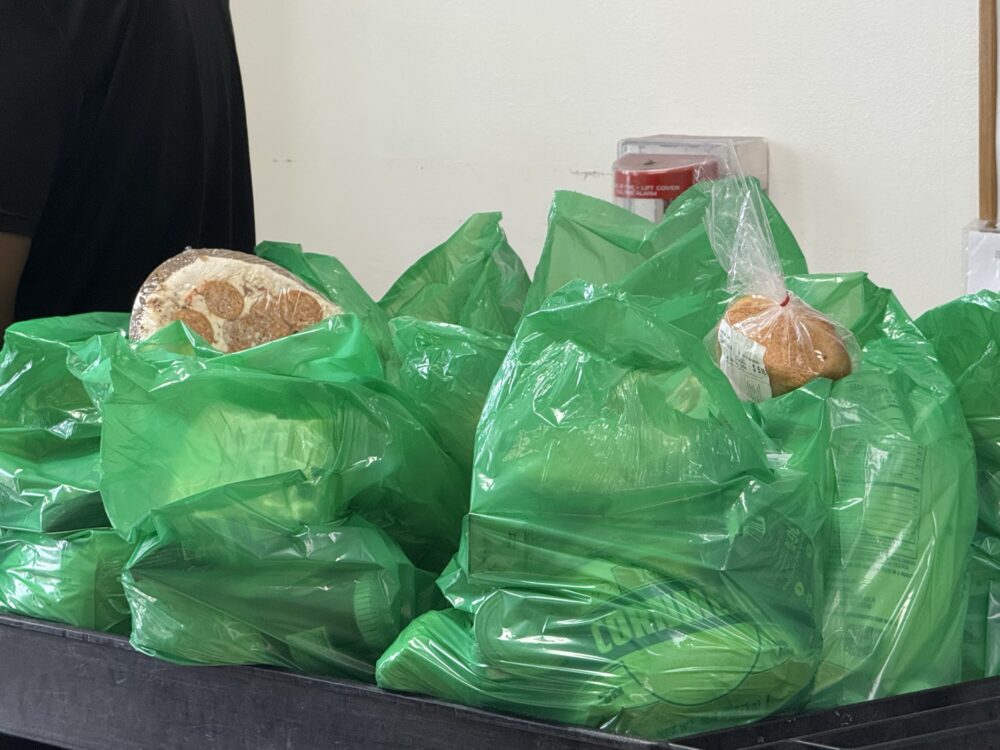
Keenan Vaughan/Houston Public Media
Pictured are bags of food at the Guadalupe Center Market operated by Catholic Charities of the Archdiocese of Galveston-Houston.
This summer marks the second edition of the Houston Food Bank’s SNAP Summer Tour after launching the event last year. New Hope Housing Reed was one of 14 total stops across the Houston area from June to August.
According to Turner, the amount of people showing interest in participating in the program is trending downward.
“With SNAP, like I said, it’s more restrictive, so more people are not applying as they were before,” Turner said.
Even those who are still in the program aren’t receiving the same benefits as they did before.
As of April 1, participants in Texas can no longer purchase sweetened drinks — which the state of Texas defines as beverages containing 5 or more grams of added sugar. Any amount of artificial sweetener is also not allowed.
The ban includes candy bars, gum and sports drinks like Gatorade or Powerade.
“It’s like 100-and-something degrees here in Texas during the summer,” Hitt said. “We should be allowed to buy things that hydrate better than water.”
Hitt said that while SNAP is helpful in ensuring she has enough money to keep putting groceries on the table, the new constraints make it more difficult for her to feed her children.
“Why are you telling me what I can buy and what I cannot buy for my family?” Hitt said.