
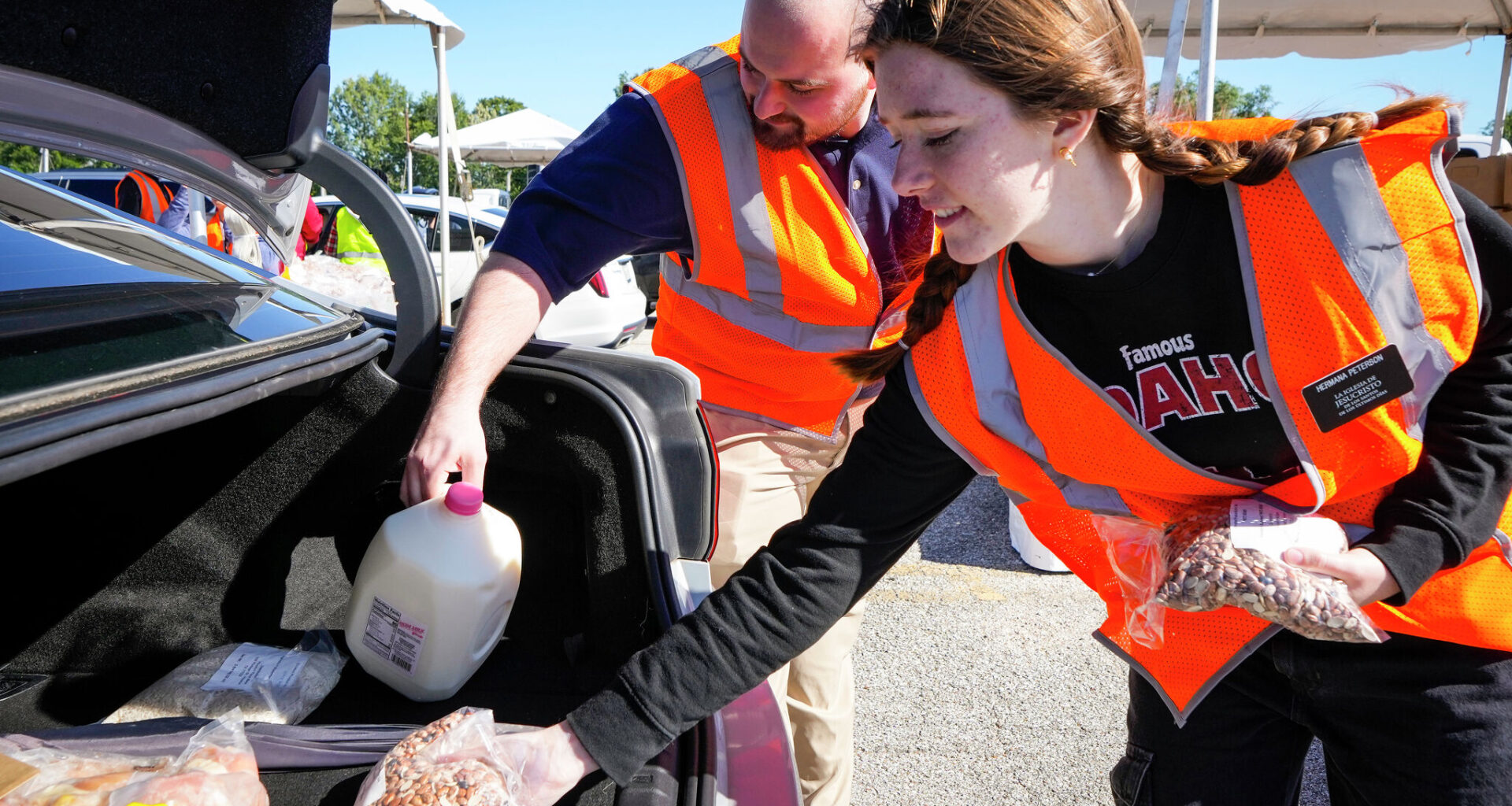
Houston-area SNAP enrollment fell 18% over the past year, dropping to the lowest level in available state data as local food pantries reported serving more people. Volunteers help hand out food during a food distribution event put on by the Houston Food Bank at HISD’s Barnett Stadium in Houston in 2025.
Brett Coomer/Houston Chronicle
Houston-area SNAP enrollment has fallen to its lowest published level since January 2022 as local food pantries report a surge in visitors following tighter federal eligibility rules.
About 710,000 people were enrolled in the Supplemental Nutrition Assistance Program across the nine-county Houston metro in June, down 18%, or about 155,000 people, from June 2025, according to Texas Health and Human Services data analyzed by Rice University’s Kinder Institute for Urban Research.
New federal rules expanded work requirements and narrowed eligibility for some recipients. Texas also faces new costs for administering and funding the program.
Article continues below this ad
Food banks say they are already serving more people and cannot replace benefits on the scale SNAP provides.
SNAP, the nation’s largest food assistance program, serves about 3.2 million Texans, according to an April 2026 presentation from Texas Health and Human Services. Texas began enforcing the expanded work requirements in February.
WHAT TO KNOW: Here’s what you need to know about changes to SNAP benefits starting Nov.1
Kinder Institute researchers warn that falling enrollment could worsen food insecurity across the Houston region.
Article continues below this ad
The Houston Food Bank saw a 24% increase in people seeking help from March to April, President and CEO Brian Greene said. The organization serves 18 Southeast Texas counties and describes itself as the nation’s largest food bank.
Why did SNAP eligibility rules change?
President Donald Trump signed the One Big Beautiful Bill Act in July 2025. The broad tax and spending law changed SNAP eligibility and shifted some program costs to states.
A month before Trump signed the law, his administration said the new requirements would help SNAP “serve the truly needy,” according to a June 2025 news release.
Who is affected by the new rules?
The law raised the maximum age for work requirements for certain adults without dependents from 55 to 65. It also ended benefits for some refugees and asylum-seekers who are not permanent residents and removed an exemption for some adults caring for children ages 14 to 17.
Article continues below this ad
Harris, Fort Bend, Montgomery and Waller counties account for about 350,000 SNAP households, or 22% of the state’s cases, according to the Kinder Institute. The four counties also account for 22% of Texas’ population.
Children make up 51% of Houston-area SNAP recipients and accounted for slightly more than half of the recent enrollment decline, the institute found.
Greene said confusion about the new rules may be driving some of the increased demand at food pantries. Some recipients also are seeking food assistance as a precaution, he said.
Many recipients struggle to find full-time jobs and instead piece together several part-time positions, Greene said. Some fear that failing to meet the monthly work requirement could leave them ineligible for benefits for an extended period.
How are the new rules affecting local pantries?
The Tomball Emergency Assistance Ministries food pantry has seen more older residents and the return of people who had not visited in years, pantry manager Colleen Chalker said.
Article continues below this ad
The pantry receives more than half its food from the Houston Food Bank.
Although donations have increased somewhat, the Houston Food Bank is distributing about the same amount of food as last year among more people, Greene said. In 2025, the food bank and more than 1,600 local partners provided over 143 million meals.
Relying on food banks to fill gaps left by SNAP restrictions is not sustainable, Greene said.
TEAM has maintained its food portions but often runs out of fresh items, Chalker said. The pantry has used ministry donations to buy more food as demand rises.
“In the long term, we can’t continue buying food because we won’t have the money,” Chalker said.
Article continues below this ad
Mission Bells Food Pantry and West Houston Assistance Ministries also are trying to maintain their portions and food quality, according to Mission Bells Director Vas Kenyen and WHAM interim CEO Sonya Scott.
Kenyen said grants from organizations such as the George Foundation have helped support Mission Bells. Scott said WHAM hopes donors and community partners will help it meet the increased demand.
“It’s not a me issue, you issue,” Scott said. “It’s a community issue, and the community will need to respond.”
How could federal cost shifts affect SNAP in Texas?
Beginning Oct. 1, 2027, federal law generally will require states with SNAP payment error rates of at least 6% to pay 5% to 15% of benefit costs. The change will shift part of the program’s cost from the federal government to states.
Texas had the lowest error rate among the six most populous states in fiscal 2025. Its rate was 9.34%, below the national average of 10.62%.
The rate measures the accuracy of eligibility and benefit decisions, including overpayments and underpayments. It does not measure fraud.
Errors can result from client mistakes, which officials say account for 30% to 40% of payment errors, or changes in a recipient’s circumstances after an accurate eligibility decision, Texas Health and Human Services Commission press officer Jennifer Ruffcorn said.
The law also will reduce the federal government’s share of SNAP administrative costs from 50% to 25%, creating another expense for states beginning in fiscal 2027.
The commission is making “targeted improvements across the eligibility system” to reduce its error rate, Ruffcorn wrote in an email. Those efforts include expanding case reviews, strengthening staff oversight and using third-party data and additional quality controls.
If Texas’ error rate remains above 6%, the state could owe between $1.7 billion and $2.1 billion during the 2028-29 budget cycle, commission officials told the Senate Finance Committee at a July 28 hearing.
Greene said lawmakers could respond to the added cost by tightening eligibility further.
Craig Gundersen, a Baylor University professor who studies food insecurity, said he does not expect Texas to make major changes despite the higher costs.
“States will have to make some other decisions,” Gundersen said. “They can cut back on funding for other programs, or they can increase taxes. There’s many different ways they can do this to pay for that.”
Several Democratic U.S. senators have called for a two-year delay in the cost shift. A farm bill proposed by Senate Agriculture Committee Chair John Boozman would delay it by one year.
Greene said the Houston Food Bank is discussing the changes with state lawmakers and members of Congress.