
Digital subscribers can listen to this article.
Subscribe today for unlimited access to Texas Monthly. Already a subscriber? Log in.
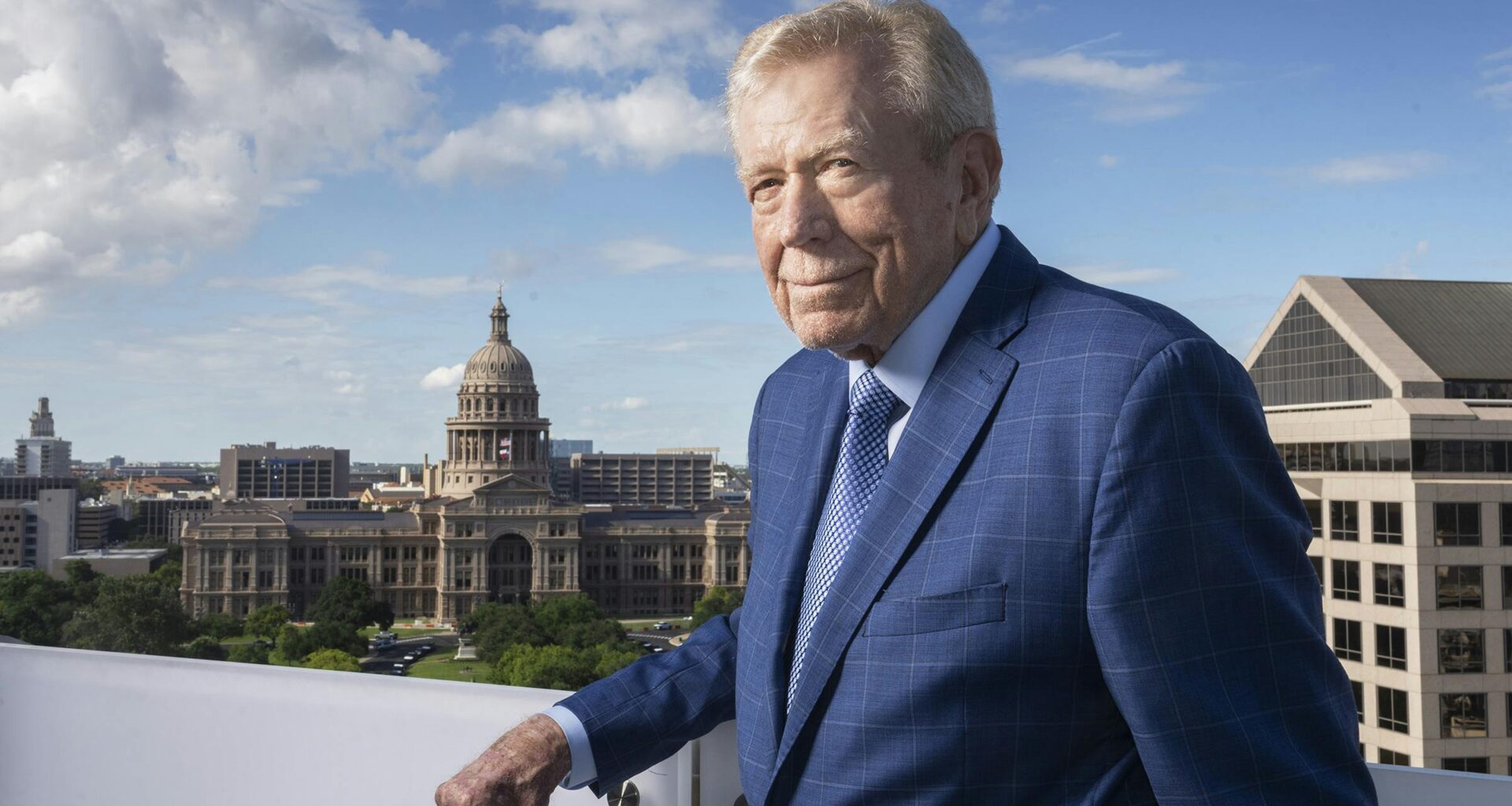
Texas has never had a political wunderkind quite like Ben Barnes. In 1960 he was elected a state representative before he’d finished law school, and he quickly put himself in the good graces of Governor John Connally and President Lyndon Johnson. He became Speaker of the Texas House at 26, lieutenant governor at 30, and, when he was just 32, heard Johnson declare, “Ben Barnes will someday be the next president of the United States from Texas.” But just two years later Barnes lost his bid for governor, and he never ran for office again. Instead, he began a lucrative career as a real estate developer and Democratic Party fixer, becoming wealthy enough to summer on Nantucket and buy Teddy Roosevelt’s former mansion in Washington, D.C.
In his new memoir, Get It Done (Grand Central Publishing), Barnes chronicles his life as a series of Forrest Gump–like escapades through American history. He is raised on a peanut farm near the Central Texas town of De Leon, ascends quickly to the heights of political power, crosses paths with everyone from Jimmy Hoffa to Elvis Presley to John Wayne, and ends up as the consummate political insider. He’s a good time on the page, an irrepressible storyteller and a shameless (and self-admitted) name-dropper; “I’m proud to say that for the next five decades Willie and I would remain close” is a sample passage. At age 88, he remains the kind of guy whom presidential candidates make it their business to seek out. In mid-June he visited Texas Monthly’s office to talk about politics then and now and the political mystery that he still hasn’t unraveled.
Texas Monthly: When I was telling a few of my colleagues that you were coming in, they said, “Wait, he already wrote a memoir.” And you did. Barn Burning, Barn Building, published in 2006. Why’d you write a second?
Ben Barnes: Because of my kidney. I had kidney disease and went through seven months on dialysis. Then one Friday afternoon, my assistant of twenty-five years came into my office and said, “I want to get off Monday. I’m going to the hospital. I’m going to be tested. And if I am a match, I’m going to give you my kidney.” And I said, “Susan, you got your grandkids, you don’t need to do anything.” She went down to Houston and called me and said, “I’m a match.” So they did the kidney. She’s been in very good health, and I’ve had a great three years. My kidney really caused me to write this book. There were just some things that I wanted to say. But I’m disappointed in the book a little bit, because I’m not as immodest as the book is. My publisher wanted it written like that.
TM: What parts of the book would you have wanted to be more modest?
BB: Well, how smart I was and all that. That’s got a little bit of fiction to it. “Luck” would be a much better explanation for my life than “ability.”
TM: You were just twenty-two when you first ran for state representative. That’s so young. What was going through your head?
BB: I can’t give you an honest answer to that question. If you gave me a piece of paper and said, “Write down in fifty words or less why you ran for the Legislature,” I don’t know that I could do that. But I got thrust into politics a lot deeper than probably I planned to. I mean, it just happened.
TM: You got elected Speaker at age twenty-six, which is even harder to imagine than being elected to the Legislature at twenty-two.
BB: I’d like to think about how qualified I was and that people voted strictly on qualifications. But I had been chairman of the rules committee, and as chairman of the rules committee, I got to assign offices. I knew where the bigger and better offices were. So I played it up. I took all these people and showed them their offices and gave the older members good offices. I think that had as much to do with me being Speaker as anything else. That might have been hard for me to admit fifty years ago, but I’ll admit it today.
TM: Was your youth an asset?
BB: A lot of people would come see me because it was kind of like going to the zoo. “Who is this kid? Twenty-six, twenty-seven years old, and he’s Speaker? Let’s go look at him.” So I got good crowds and I attracted people, but I probably was in too much of a hurry trying to do too many things.
I was consumed by politics and neglected my family and some of my other responsibilities. If someone invited me to make a speech, I felt an obligation to go make that speech. If somebody in Muleshoe, Texas, said, “Ben, we want you to come speak at the high school commencement,” I was going to try to figure it out. I would say, “Well, if you can change it to Thursday instead of Friday, and if you can do it at nine o’clock instead of six o’clock, I’ll come.” I just wore myself out, but I was young, so I didn’t get tired.
TM: Your career seems to have also been helped quite a bit by your friendships with John Connally and Lyndon Johnson. Why did they take you under their wings?
BB: Maybe “reciprocate” is not the right word, but I was doing things for Connally and Johnson, and they were doing things for me. I really helped Connally a lot in his first term as governor, because I knew the Legislature and he didn’t. Connally turned into a very conservative Republican, but back then he was a liberal-minded governor about education. We created new colleges and universities, and when you spend money, you have to pass taxes. I passed a tax bill every session that I was in the Legislature.
I got elected Speaker in ’65, and let me tell you, the reason Johnson became my friend is because he wanted to protect the seniority that Texas had in the [U.S.] House delegation. We had six chairmen and three vice chairmen, and he said, “You’ll have one-half of that pencil in your hand,” because the Speaker and the lieutenant governor appoint the committees that draw the legislative maps. So I gerrymandered those districts and protected that seniority. He thought I was one smart son of a, because I delivered those districts.
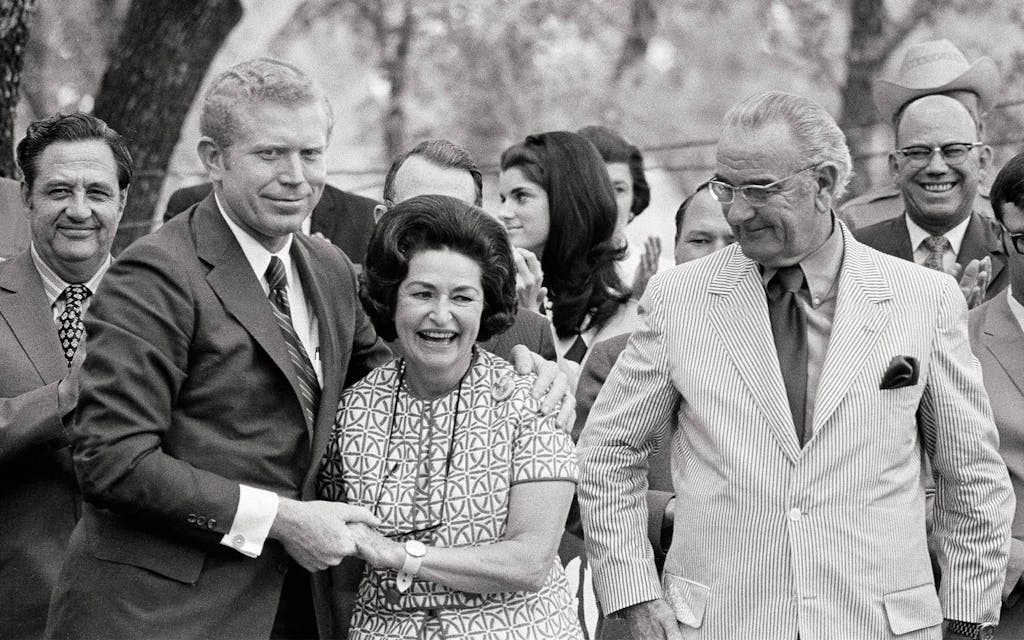 Ben Barnes, then just 32, attending the dedication of the Lyndon B. Johnson State Park with Lady Bird and LBJ on August 29, 1970.Ted Powers/AP
TM: Since you brought up gerrymandering, that’s obviously been going on a lot these days. Did you think that it was the right thing to do?
BB: I thought that it was important to my state, and I thought that I needed to help the only president from Texas who had been elected. But I don’t think it’s the right thing to do now. It’s absurd now, and it hardens people’s feeling toward one another. If I go have dinner with a Republican and my good Democratic friends see me, they want to know what the hell I’m doing with a Republican. And that’s very unhealthy for this country.
TM: Are you still friends with Republicans?
BB: I’m still friends with some Republicans. I was very good friends with John McCain, and I was friends with Lindsey Graham. But when Lindsey Graham wanted to get a tattoo of Donald Trump on his left arm, he totally changed. I can’t imagine him calling me today because I told him in person how disappointed I was with him. He knows a lot of Trump bullshit is bullshit, but John McCain just turned over in his casket three or four times with Lindsey acting like he’s doing. [Editors’ Note: This interview was conducted nearly a month before Graham’s death, on July 11.]
TM: And how did Graham react when you told him how you felt?
BB: Got real red in the face. Looked down. Didn’t look me in the eye while I was talking to him.
TM: Are things really less civil now, though? I’m thinking of the story in your book, about an episode after you were elected lieutenant governor in 1968 and were presiding over the Texas Senate. There were two senators who threatened to kill each other, and you locked them in your office with butcher knives. To me, that doesn’t speak to the most civil interactions in politics.
BB: One of my problems as lieutenant governor is I had about five senators that loved to drink at noon. They would go to the Headliners Club and have some martinis. So what I would do is I started making the Senate go to session at nine, and I’d keep them there until two o’clock. I just stopped afternoon sessions because things got bad.
Well, we still had two senators, Bill Moore and Babe Schwartz, who hated one another so bad it was just ruining the session. Finally, I got disgusted and I said, “Y’all come back to my office. Schwartz, here’s your butcher knife, and Moore, here’s your butcher knife. Now I’m going to lock the door, and y’all stay in here, and one of y’all kill one another because I don’t think we can have the session if y’all are both alive. Whoever’s living after this deal, come get me, and we’ll bury the other one.” I was being facetious to some extent. Anyway, they apologized and made up, and they really behaved themselves a lot better.
TM: It was around that time that Lyndon Johnson started talking about you as a future president.
BB: We had a dinner here in Austin with every former living governor and every former lieutenant governor. And Johnson got up and said, “Thomas Jefferson had red hair, and Ben Barnes has got red hair, and I’m going to let y’all in on a little secret. The next president of the United States from Texas is going to be Ben Barnes. We’re all with him tonight. And I want you all to remember I said that, and you go work for him because he’ll make a hell of a president.” That was out of the blue. I had no idea he was going to say that.
TM: Do you think Johnson meant it?
BB: Yeah, he did. His staff told me that he did talk about me being president. After my first term as Speaker, he appointed me a special ambassador to the United Nations. I go to Switzerland, and I stay there for six weeks and meet all these delegates. That’s pretty big stuff for a kid from De Leon. He was smart enough to know that he was giving me a wealth of education at taxpayers’ expense.
TM: But, of course, you didn’t become president. You ran for governor in 1972, and you lost in the primary. At the time, there was a bribery scandal involving a Houston banker named Frank Sharp that had engulfed the Legislature. You were never charged with a crime, but there were rumors that you’d been involved and that Sharp had mentioned your name to the authorities.
BB: I wasn’t involved in it, so we didn’t answer it. Everybody, all my guys, said, “Just stay calm.” I got my ass beat.
TM: That was a setback. But a lot of politicians have setbacks and make comebacks. You were just thirty-four years old. But you never ran for office again. Why?
BB: I promised myself after this kidney deal that I was going to always try to tell everybody the absolute truth. Well, here’s the truth: I think my ego had something to do with it. I gave Texas twelve good years. I worked my ass off. I changed a lot of things. I passed a lot of laws. I did a lot of good. And the people, on just hearsay and newspaper publicity, turned me out to pasture. They turned me out. And I just said, “I’m going to let someone else do that.”
TM: It seems like you’ve always enjoyed the inside game of politics.
BB: Yes, I have. I get the good side of politics, and I don’t have to put up with the bullshit side. I don’t have to go and stand out in the sun and wait for a program to start. And I don’t have to make sure that I shake every hand and am the last one to leave. I don’t have to do all that stuff.
I was down in Palm Beach four weeks ago at a governors’ conference, and I got paged that Governor Newsom was calling in. He said, “I just talked to John Kerry, and he said the one man I’ve got to meet and talk to is Ben Barnes. I’ve got a whole hour set aside. I just want to pick your brain.” So I met with him for an hour. I guess he’s a serious candidate for president. He wants me to believe that. I guess “flattering” is the right word for the fact that at eighty-eight years old I’m still sought after.
TM: How much do you talk to the Texas Democrats of today?
BB: Well, I talked to the Senate candidate.
TM: Talarico?
BB: Yeah, I talked to Talarico two or three weeks ago. I’ve talked to the governor candidate, the lieutenant governor candidate. Everybody calls and wants money. That’s what they call for. They’ll start off with, “I want to talk to you about my campaign, and I want your advice.” Well, what they want is my money.
But the Democrats for the last twenty years have had no chance to win in Texas. When I write a check to a Democrat statewide, it’s kind of like throwing it out that window, because I know they’re not going to win. Now, I think Talarico may have an outside shot. It all depends. They’re going to
really hit him with a lot of crap and I don’t know that any of it’s going to be true, but the Republicans are going to go after him. He’s got a tough campaign.
TM: What should he do?
BB: He’s got to explain some of his positions without changing the position. He’s got to get somebody smarter than me, maybe come up with some answers. A liberal can’t get elected in Texas just spelling a liberal line. You got to play the politics of it. Lloyd Bentsen beat Ralph Yarborough, our liberal senator, in 1970, and the main issue was prayer in schools. Yarborough wasn’t for prayer in schools, and Bentsen said, “Can you imagine we’re not going to let the kids pray in school if they want to?” That was a demagogue position, but it ended up being a hell of a big issue. It’s crazy that a United States Senate campaign was decided on prayer in schools, but you got to play that game sometimes in Texas.
TM: In your book, Lyndon Johnson tells you early on in your career, “Politics can change what needs changing.” That’s a very optimistic view of politics. It seemed like you believed it at the time.
BB: Yes, I did believe it.
TM: Do you still believe it?
BB: To some extent. But I got to see politics at the brightest hour for the Democratic Party. I got to see Medicaid and Medicare passed. I got to see civil rights and voting rights. I got to see a lot of the things that I believe in very strongly pass.
But we’re seeing the worst side of politics today. There’s never been a guy like Trump. But I’ve got enough faith that enough moderate-thinking, responsible people are going to get involved and take the ballot box and change this country back. I just got to believe that. I mean, I don’t have any immediate optimism. I think the Democrats will take back the House, but I think the Democrats screw up a lot.
Chuck Schumer’s going to get very mad at me when he sees this, but I’m for the seventy-five-year-old retirement age. I just think that we need to look at the next generation to find the leaders. My God, [Iowa Senator] Charles Grassley—I saw him the other day. He’s ninety-two years old. Charles doesn’t need to be the head of the judiciary committee in the Senate confirming the nominees for the Supreme Court. I damn sure don’t need to be. People my age don’t need to be.
TM: So does that mean you won’t be running for Senate against Ted Cruz in 2030?
BB: No, I won’t be running against Ted Cruz, but I may run a bluff and let people think I’m running, because I’d be the oldest candidate that has ever run. [Editor’s note: In fact, Strom Thurmond, at 93, was the oldest person to run for Senate.] It’s funny, I never thought I’d live to be eighty-eight years old. I don’t feel eighty-eight years old. It’s amazing—coming over here to Texas Monthly brought back a flood of memories. It’s a lot of fun to live and think back and relive moments. I find that that’s one of the real pleasures to get to live to this age. It’s been a hell of a rodeo.
TM: Over the past twenty-five years you’ve become famous for publicly revealing secrets. In 2004 you said you helped George W. Bush get into the Texas Air National Guard so he wouldn’t have to serve in Vietnam. More recently, you said you accompanied Connally on a trip to the Middle East in 1980 in which he sent messages to the Iranian government telling them not to release the hostages taken from the U.S. Embassy until Ronald Reagan was elected. So I feel duty bound to ask: Do you have a secret for me today that you want to reveal?
BB: I don’t. But I will tell you, I really hate that I cannot draw a more complete picture of the assassination of Jack Kennedy. I was an advance man for that trip. I’ve heard so many facts that I consider to be valid, but I’ve still not been able to close the loop. I’ve not been able to say, “I know that happened.” I’ve talked to a lot of people that have a lot of theories. I’ve talked to Ted Kennedy. Even on his deathbed, we talked about it somewhat. There’ll be some days that I’ll get up, and I think I know something, and I really need to go tell it. And then by nightfall I say, “Well, I’m not certain about that.” So that’s where I come down. That’s not the big secret. That’s one concern I have over a moment in history I lived that I can’t straighten out.
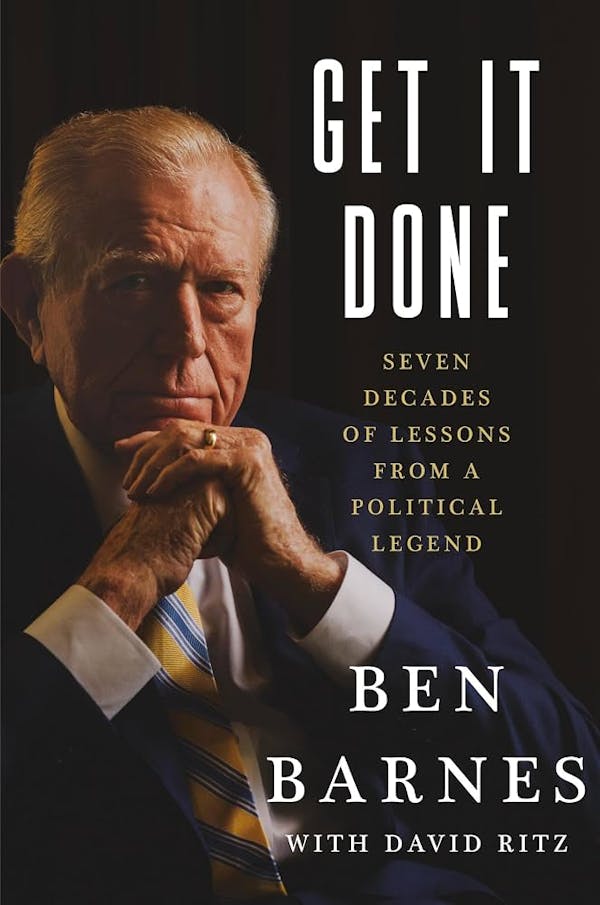
When you buy a book using this link, a portion of your purchase goes to independent bookstores and Texas Monthly receives a commission. Thank you for supporting our journalism.
This interview was edited for clarity and length.
An abbreviated version of this article originally appeared in the August 2026 issue of Texas Monthly with the headline “Ben Barnes Is Still Haunted by One Unanswered Question.” Subscribe today.
Read Next