
Navigating the salary cap is one of the most important tasks for a front office. Teams that can avoid total cap chaos by walking the tightrope of inking players to deals that match their value (or compensate for future value without breaking the bank) remain successful. Those who don’t often see struggles and front office changes.
As we do each year, PHR will look at every NHL team and give a thorough look at their cap situation for the 2026-27 season, though in a slightly different format than before. This will focus more on players who are regulars on the roster versus those who may find themselves shuttling between the AHL and NHL. All cap figures are courtesy of PuckPedia. We begin our series with a look at the Central Division, next up are the Stars.
2026-27
Upper Limit: $104MM
Current Cap Charge: $105,360,333
Cap Space: -$1,360,333
Potential Bonuses: $1.65MM ($750K a safe bet to be reached; some of the difference is playoff-related)
Dead Cap: $2.08MM (carryover bonus charge)
There is an in-house pathway to getting into cap compliance at the start of the season. If Dallas drops down to a 21-player roster, that will get them under the cap ceiling. They don’t have to make a trade to free up money if they don’t want to.
Expiring Contracts (RFA): D Lian Bichsel ($918,333 plus $500K in bonuses)
Bichsel is still getting established in the NHL as he has been limited to third-pairing duty through his first two professional seasons. That makes reaching his ‘A’ bonuses unlikely this year. There haven’t been many RFA contracts in the new cap environment that could serve as viable comparisons but safely pushing past the $2MM mark on a bridge deal should be doable.
Expiring Contracts (UFA): F Oskar Back ($825K), F Jamie Benn ($850K plus $1.15MM in bonuses), F Colin Blackwell ($850K), G Casey DeSmith ($1.05MM), F Joel Kiviranta ($1MM), D Tyler Myers ($1.5MM*), F Jason Robertson ($12MM), F Tyler Seguin ($9.85MM), F Sam Steel ($2.1MM)
*Vancouver is retaining an additional $1.5MM on Myers’ contract.
Robertson is obviously the big one. They settled on this deal to avoid arbitration but the next one is going to cost more. Believed to have turned down around $15MM per year from Seattle in a sign-and-trade proposal, it could cost somewhere around there (if not a bit more) to lock him up long-term. With these other expiring deals, this is something they should be able to afford.
Injuries have been an issue for Seguin the last two years but he has still been productive when he has played. He won’t land near this price point moving forward but a deal in the $5MM range is possible. Alternatively, he’s eligible to sign a one-year deal with incentives moving forward. Steel keeps getting a little more productive each year and has become a capable middle-six piece. The market for those centers has jumped to a price tag around double what he’s making now.
Benn will reach $600K of his bonuses if he plays in 40 games which seems likely while he’ll add $150K if the Stars make the playoffs (which also is a safe bet), plus another $100K for each round won. If he wants to stay in Dallas after this season, it’ll probably need to be another contract like this.
Back is a late bloomer but fared well in a fourth-line role last season. A repeat performance could put him in line to double his current price tag. Kiviranta signed this deal last month and it seems likely he’ll stay around this price point moving forward. The same can be said for Blackwell.
DeSmith has been quite solid in his first two seasons in Dallas which should change his market value. Two years ago, he was more of a low-end backup but now, he has played like an above-average one. With that in mind, he should be able to double this price tag at a minimum while tripling it on a short-term deal isn’t out of the question.
2027-28
Projected Upper Limit: $113.5MM
Current Cap Charge: $72.337MM (13 players signed)
Cap Space: $41.163MM
Potential Bonuses: None
Dead Cap: None yet but likely to be a carryover penalty from 2026-27
It’s safe to say that Robertson’s next contract will cover around 35-40% of their cap room but they should be able to afford to keep him around. That will result in them needing to have several low-priced contracts to round out their roster after re-signing Bichsel and a couple of the others but it’s a workable situation for GM Jim Nill.
Expiring Contracts (RFA): None
Expiring Contracts (UFA): D Kyle Capobianco ($875K), F Radek Faksa ($2MM), F Justin Hryckowian ($950K), F Arttu Hyry ($875K), D Nils Lundkvist ($1.75MM)
Faksa’s offensive production has been rather limited for a while now. Although he’s a solid defender, it’s hard to forecast a big raise for him, even with the big jumps coming to the cap. He should be able to stay in this range, however. Hryckowian’s first full NHL season was a solid one, chipping in with 31 points and 119 hits. If he stays around those numbers, a price tag around the $3.5MM mark could be doable as he’s the type of bottom-six player that has been getting bigger paydays in recent years. Hyry, on the other hand, is more of a depth piece who should stay somewhat close to the minimum salary.
Lundkvist hasn’t progressed a lot over his four years in Dallas while injuries have been an issue. He’s more of a number six option in an ideal world and will need to stay healthy at a minimum if he wants a shot at getting the bigger money that third-pairing blueliners are starting to get. Capobianco has bounced between being a depth piece and AHL depth in recent years which should keep him around the minimum salary as well.
2028-29
Forecasted Upper Limit: $123MM
Current Cap Charge: $65.887MM (8 players signed)
Cap Space: $57.113MM
Potential Bonuses: None
Dead Cap: None
With no significant contracts to deal with from their 2028 free agent class, this is a window for the Stars to look to add to their group after what’s likely to be a lean 2027 offseason once they re-sign their players.
Expiring Contracts (RFA): None
Expiring Contracts (UFA): F Matt Duchene ($4.5MM), D Miro Heiskanen ($8.45MM)
Duchene left some money on the table to get a four-year deal from Dallas, one that ultimately might be his final contract as he’ll be 38 before the deal ends. If not, he’s another candidate to go one year at a time from there. If he intends to keep playing, his market value might still be a little higher than this, even if his production starts to tick down.
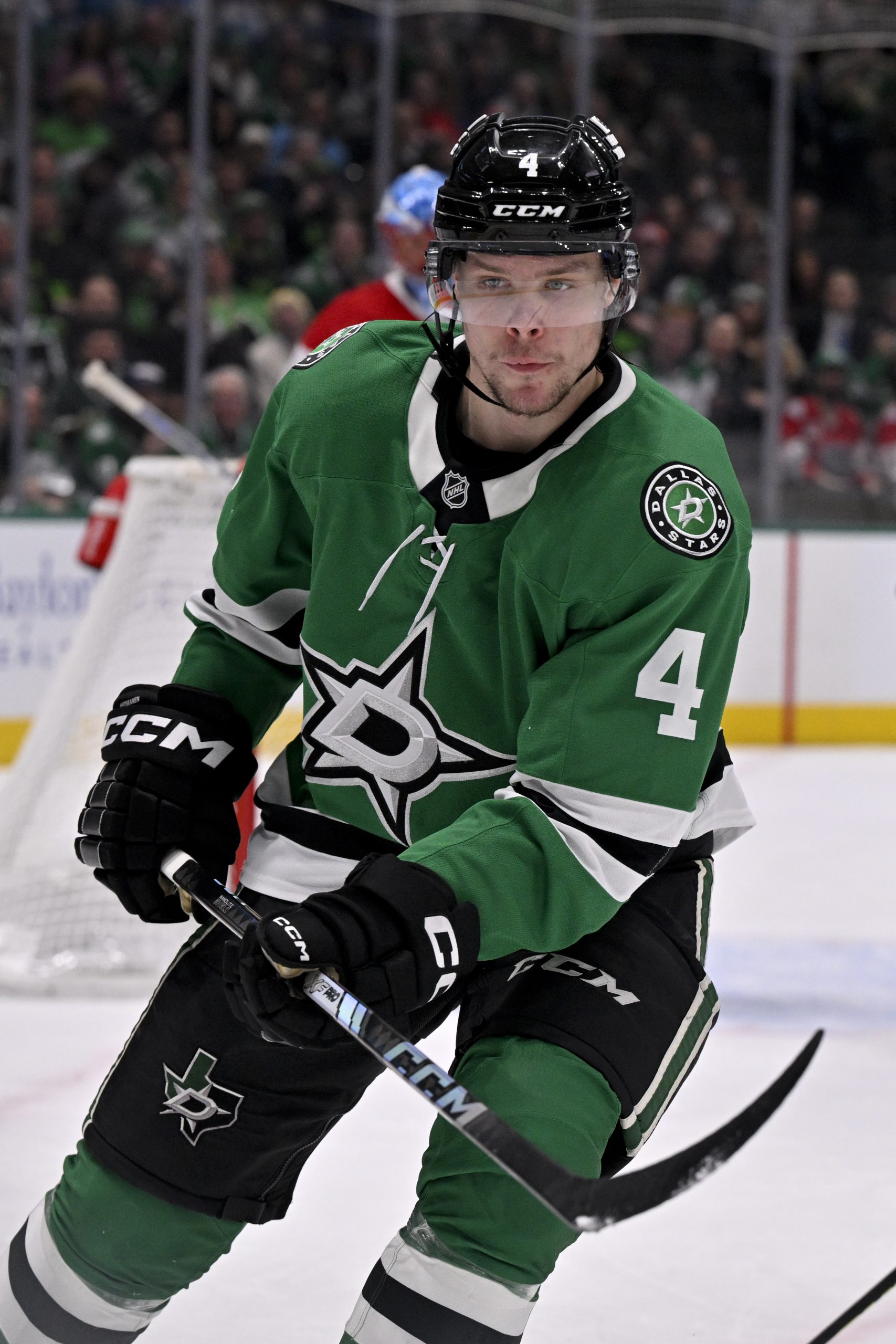 Heiskanen, on the other hand, is going to be a big one to contend with when his deal is up for renewal. An all-situations top-pairing player, he’s already quite a bargain on their books. The veteran will be 30 at the end of this contract. Given where the market appears to be heading, it’s quite possible that Heiskanen could command a max-term agreement (which will be seven years at this point instead of the current eight) at double his current price tag. A shorter-term pact could even run a little higher than that. At this point, Heiskanen will quite likely become the highest-paid player on the Stars should he ultimately sign another contract with them, beating out whatever Robertson’s next deal will be.
2029-30
Forecasted Upper Limit: $133.5MM (8.5% increase)
Current Cap Charge: $52.937MM (6 players signed)
Cap Space: $80.563MM
Potential Bonuses: None
Dead Cap: None
Basically, a new deal for Heiskanen will cover most, if not all of the projected cap increase. Barring other moves, of course, this is an offseason where they’ll be looking to keep the status quo over being able to afford another addition.
Expiring Contracts (RFA): None
Expiring Contracts (UFA): F Wyatt Johnston ($8.4MM), D Esa Lindell ($5.25MM)
Johnston has shown steady improvement and produced like a top-line center last season. Still just 23, there’s room for improvement as well. He should be hitting UFA eligibility in his prime and with the cap being much higher then than it is now, it’s certainly possible that he can double his current price tag on his next contract as well.
Lindell, meanwhile, will be 36 when this contract expires. While he’s a big minute-eater now, will that still be the case in 2030? If so, a short-term deal could come in several million higher than this. If not, however, and he’s more of a fourth option, he could still get a modest raise but at that point, term might be more important than anything else. Lindell is a valuable player but his limited production offensively doesn’t give him as much earning potential as others.
Signed For 2030-31 And Beyond
For that season, there will be a new CBA in place so trying to forecast the cap and cap space basically becomes a guessing game. Accordingly, we’ll go back to the old Deep Dive format for players signed beyond the 2030-31 campaign.
D Thomas Harley ($10.587MM through 2033-34)
F Roope Hintz ($8.45MM through 2030-31)
G Jake Oettinger ($8.25MM through 2032-33)
F Mikko Rantanen ($12MM through 2032-33)
Rantanen couldn’t agree to terms on a new deal in Colorado and didn’t want to in Carolina but he quickly did with the Stars. Recent movement market-wise will have this deal more on the team-friendly side before long as long as he keeps producing like a top liner as he should for several more years. Hintz, when healthy, is a solid second center but lacks the production to be a top-line pivot. Even so, he should be well-positioned to add several million per season to his current price tag when his deal is up.
Harley signed this deal early last season on the heels of two high-end performances that made him look like a top-pairing core piece for the long haul. Things didn’t go so well last season to the point he was nearly traded for Zach Werenski this offseason but at 24, there’s plenty of runway for him to turn things around. Relative to last season, this deal may be on the high side now but given that all of his prime years are ahead of him, that should change fairly quickly.
Oettinger has been a solid starter for the past half-decade although he’s coming off more of a mediocre campaign, especially by his standards. If that’s the level of play moving forward, this contract would be a concern. But given his overall track record, that’s unlikely to be the case and he’ll get back to at least being a solid starter. With the way the goalie prices are starting to rise, this deal should age just fine.
Outlook
By going one year with Robertson, they will have a much better shot at keeping him around long term when he becomes extension-eligible in January. But there is a fairly limited window for Nill to try to add a key piece, that being the 2028 offseason when the cap ceiling rises without any big expiring contracts. After that point, any increases to the Upper Limit are going to be spent on re-signing their top pieces to new market-value deals.
Photo courtesy of Jerome Miron-Imagn Images.