
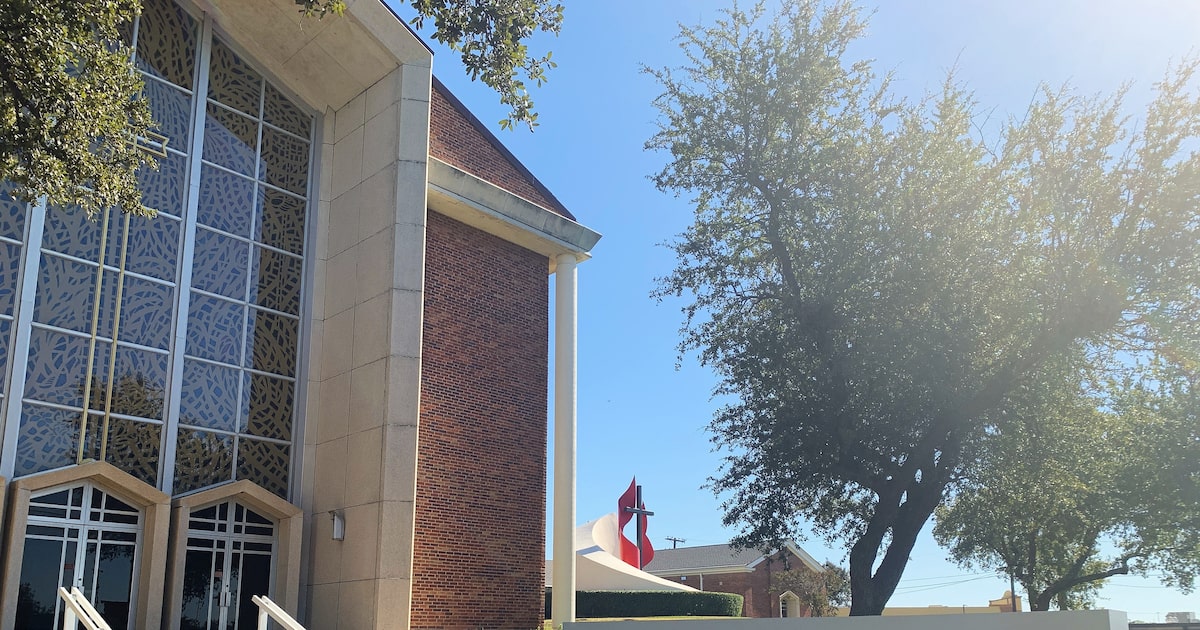

A neighbor I’d never met reached out this week to let me know of a looming loss in our part of town: Walnut Hill United Methodist Church, a fixture along Marsh Lane since President Dwight Eisenhower’s first year in office. I’d only been there twice — once, long ago, for a wedding; once, longer ago, for a funeral. But the news that it would not survive through the year’s end hit hard.
Not just because I’ve driven past it nearly every day for most of my 57 years; not just because it’s there and always has been. But because Walnut Hill UMC has been a good neighbor to the countless parents who’ve sent their children to The Creative School since the pre-school’s founding 70 years ago; and to the kids at the nearby public schools mentored and clothed by its congregants; and to the residents a mile away for whom they helped build their own house of worship.
Walnut Hill UMC was nearly destroyed the night of Oct. 20, 2019, when the tornado that tore through our stretch of northwest Dallas snapped off its steeple and shattered its stained glass and tore holes in its roof. We watched, every day, as they rebuilt that single-aisle, wood-paneled sanctuary anchored by a nearly century-old organ, only to discover this week that its resurrection was little more than a temporary reprieve.
“We are so heartbroken,” said Marilynn Darter, a congregant since 2003. “I was in tears Sunday. It was horrible. It was just” — a pause — “awful. Just very, very emotional. Everyone was hugging each other, asking each other, ‘Is this real?’”
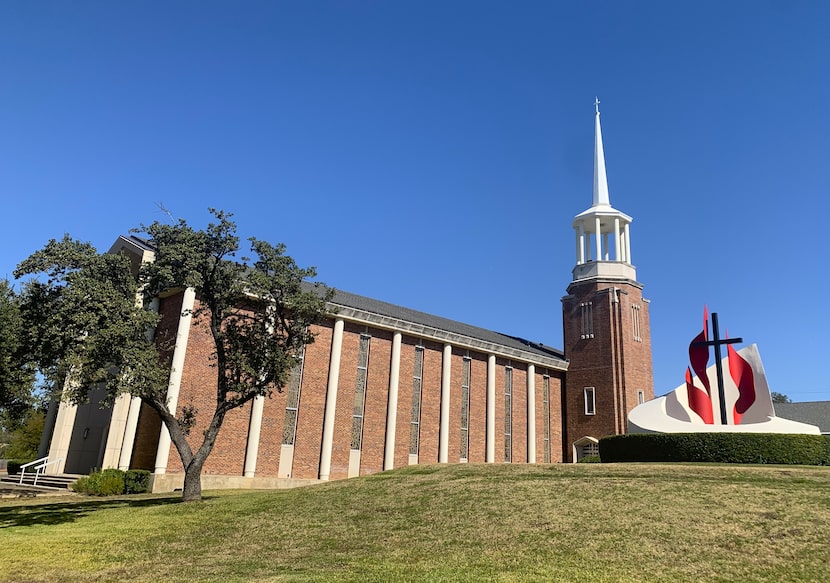
The steeple at Walnut Hill United Methodist Church was shorn off by the tornado that devastated much of northwest Dallas on Oct. 20, 2019. It was eventually replaced, its reconstruction overseen by longtime church member Don Moulton.
Robert Wilonsky
Congregants were informed of the church’s closure on Oct. 30, in a long email and Facebook post that began with the ending: “Worship and other church ministries will conclude at the Walnut Hill campus by the end of the year.” The closure was initially set for Nov. 30, until congregants talked church leaders into keeping it open for one more — one final — Christmas Eve. Perhaps there’s some poetry to be found in celebrating a birth with a funeral.
Opinion
There are plenty of studies and stories about “The Potentially Tragic End of Neighborhood Churches” to suggest this was inevitable. Houses of worship constructed during the suburban boom of the 1950s and ’60s are expensive to maintain, more so as their congregants flee to the faraway megachurches serving salvation with spectacle. Eric Folkerth, the senior pastor of Kessler Park UMC, said he’s seen it all over town, the punishing reality of trying to maintain older buildings with depleting congregants and coffers.
“Everyone is working hard to stay afloat,” he told me. “I don’t think the public understands how hard it is to sustain a neighborhood church.”
Buddy Smith, the longtime head usher at Walnut Hill UMC whose parents were among the nondenominational Creative School’s original benefactors, said hundreds once filled each of the church’s two Sunday morning services that have been trimmed back to one. Now, the 68-year-old drives from Bent Tree every Sunday to greet maybe 60, 70 people entering the sanctuary that has long been a favorite of couples wanting to exchange vows in “a beautiful retreat.”
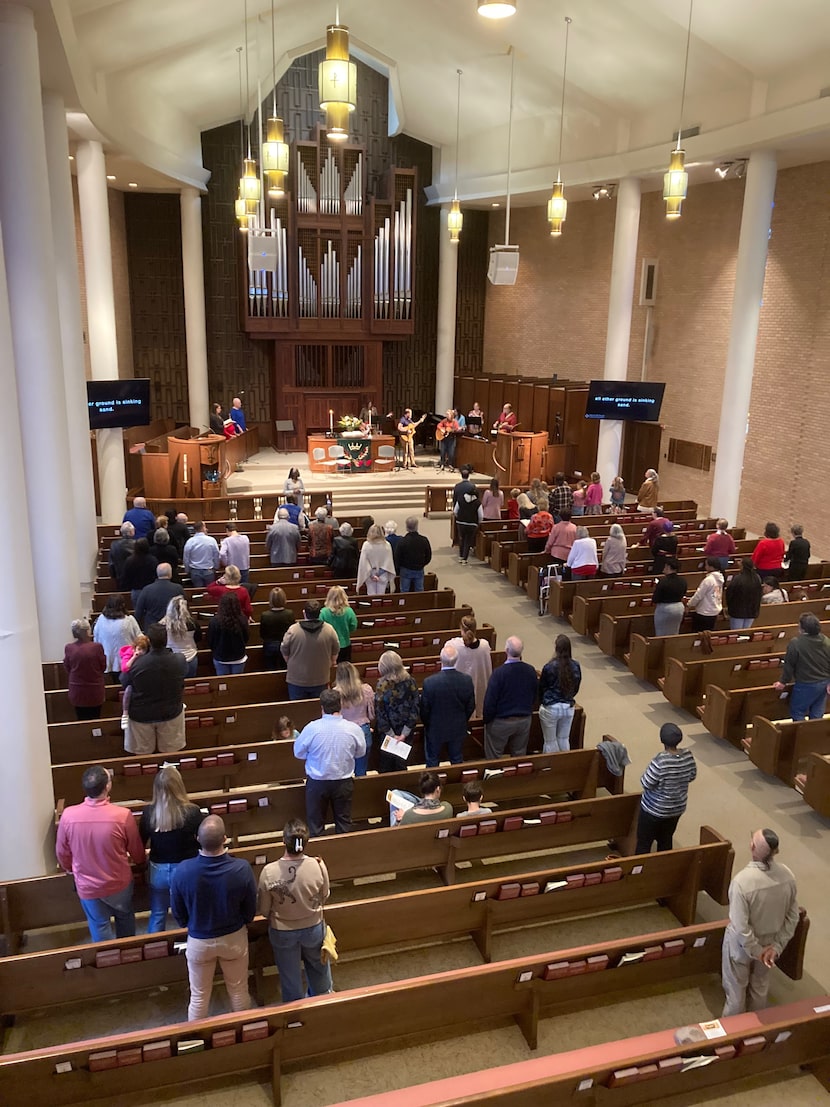
Where once hundreds packed services at Walnut Hill United Methodist Church, now dozens come on Sunday mornings.
Courtesy Don Moulton
Months after the tornado and in the midst of the pandemic, when the church held services in its parking lot, Walnut Hill UMC merged with the much larger Lovers Lane United Methodist Church at Northwest Highway and Inwood Road, which is also home to the private Wesley Prep. A consultant recommended the move in June 2020, as the merger allowed the churches to combine membership — and bank accounts.
But that lifeline seems to have only delayed the inevitable. Eddie Rester, who in April became lead pastor at Lovers Lane United Methodist, sent that email last week about Walnut Hill UMC’s closing, along with a video in which he lamented the decision.
“Over the past several months, we have prayed, listened, and sought wisdom from other multi-site congregations,” he wrote. “While this is a hard step, we believe it is the right one — not an ending, but the closing of one chapter and the beginning of another as we come together fully as one church family at Lovers Lane.”
Rester said in his email that The Creative School will need to find a new home when classes end next spring; he warned, too, of the “eventual sale” of the buildings and property. Congregants with whom I spoke worry it will go to the developers now constructing new homes on the old Dallas County government building site next door and along Betty Jane Lane behind the church, the latter a contentious case that goes to the Dallas City Council this Wednesday.
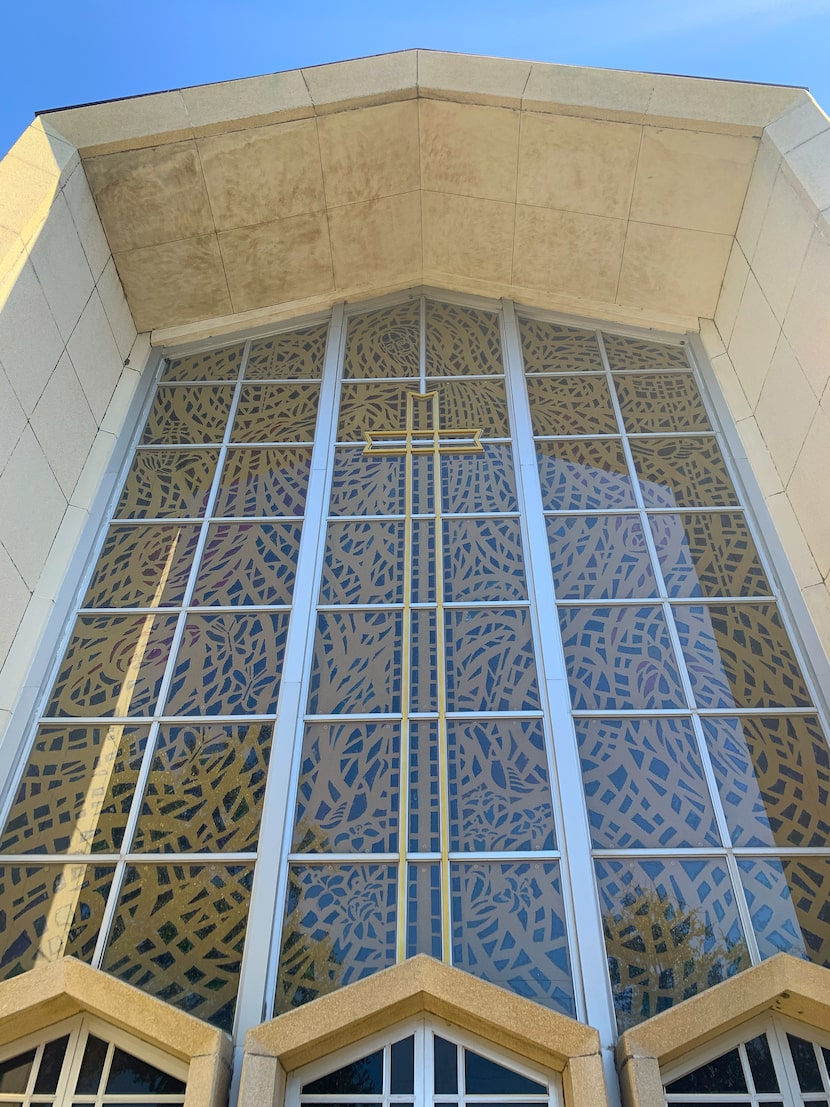
The stained glass windows at Walnut Hill United Methodist were carved in the early 1960s by a Fort Worth man who used the windows to tell the story of The Bible.
Robert Wilonsky
“To drive by the church one Sunday and find it flattened,” Smith told me, “would be crushing.”
Rester declined an interview request; so, too, did Walnut Hill UMC’s new senior pastor Charles Robinson, who in July became the church’s first Black leader. He moved here from Waco just in time to deliver the church’s eulogy.
Groundbreaking was held on April 26, 1953, according to this newspaper’s archives. A retired minister, Stanley Hayne, had spent three years surveying the area “to establish the need for a Methodist Church there,” after which the First Methodist Church decided to sponsor the fledgling congregation that first worshiped on the shores of Bachman Lake.
The church, which cost $67,000 to construct, opened its doors two weeks before Christmas 1953 with a celebration attended by, among others, SMU’s soon-to-be-president Willis Tate and a Methodist minister named Merrimon Cuninggim, then the dean of the university’s Perkins School of Theology and the man largely responsible for desegregation on the Hilltop. Within a decade, church leaders built the large sanctuary along Marsh to accommodate the throngs that have thinned in recent years.
Don Moulton, a 36-year member of the church and a former board member, reminded me this week that its congregants provide winter coats to students at Leonides Gonzalez Cigarroa, M.D. Elementary School on Webb Chapel Road, just a few blocks from Christ’s Foundry — a Spanish-speaking church that Walnut Hill UMC helped fund and design in 2007. I didn’t know until this week of the church’s deep ties to my alma mater, Thomas Jefferson High School, where congregants have spent years funding teacher-appreciation events and teaching life skills to its homeless students — Adulting 101, it’s called, said Principal Ben Jones. He didn’t know until I called that the church would be closing at year’s end.
“These churches are ways we connect with our neighbors, and now there will be one less anchor that demonstrates to our students that this neighborhood supports them,” said Jones, honored by the church during a Christmas Eve service two years ago. “Any time a community loses a church, you lose a community anchor.”
Amen.