
AUSTIN, Texas — The Texas Education Agency is expected to release its annual A-F accountability grades for Texas schools next week, with districts like Austin ISD awaiting scores that could determine future state intervention.
The TEA notes on its website that information and resources related to state accountability grades will be released on Aug. 14 at noon. Every year, grades are assigned to Texas public schools and school districts.
In Austin ISD, three middle schools have received four consecutive “F” ratings from the agency, and a fifth would trigger a state law requiring action by the state’s education commissioner, Mike Morath. Morath could decide to close the “F”-rated campus or appoint a board of managers to replace the district’s board of trustees.
STAAR testing data released this summer revealed that at the three campuses at risk, Dobie, Burnet and Webb Middle Schools, a minority of students are meeting grade-level standards.
This year’s testing data, however, is not the only consideration when assigning a grade to a campus.
RELATED| Austin ISD is one ‘F’ away from state intervention. Here’s what it could look like.
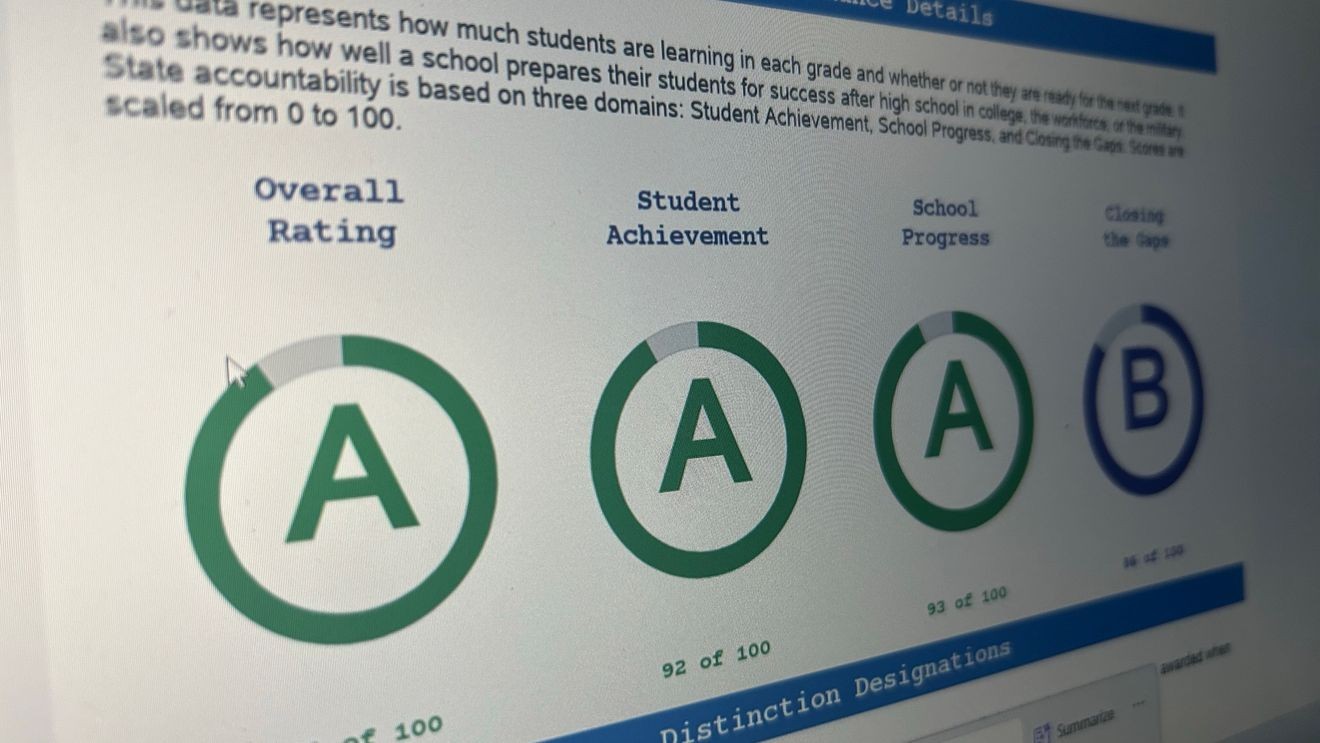
There are three components used by the TEA to grade Texas schools: student achievement, school progress, and “closing the gaps.”
Student achievement is based on the STAAR test scores at a given school. School progress is a measure of the academic growth at a school from the previous year and how well the school is performing compared to similar campuses. The higher score between student achievement and school progress is used in the overall score calculation and accounts for 70% of the grade.
“Closing the gaps” refers to meeting the needs of traditionally underserved populations of students and how well the groups are meeting state targets. This includes looking at students of different races and ethnicities, emergent bilingual students, students in special education programs, and students from economically disadvantaged families. This accounts for 30% of the accountability grade.
“It essentially gives you a picture of, is the school moving the needle for those particular groups of students, or are those students remaining behind their peers in terms of the different gaps?” said Jacob Kirksey, an associate professor of education policy at Texas Tech University.
For example, last year’s accountability grade for Dobie Middle School consisted of student achievement and school progress ratings of “F,” while the school received a “C” in the “closing the gaps” category. Overall, it received a score of 59 out of 100.
The district is able to appeal a grade it believes to be incorrect. The TEA notes in its 2026 accountability manual that “a successful accountability appeal is usually limited to such rare cases as a data or calculation error.”