
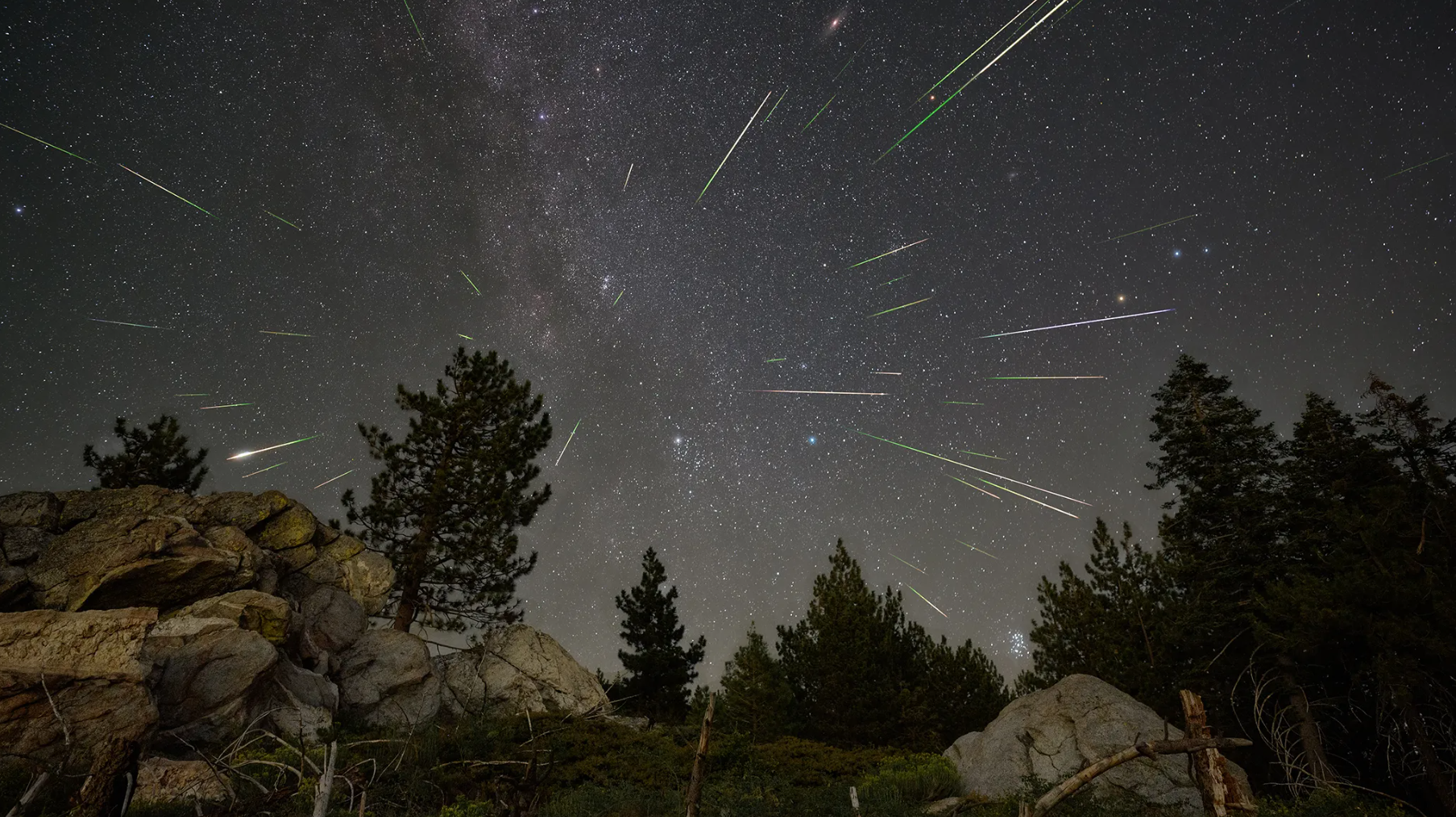
Lone Star State stargazers are in for a cosmic treat next week when the Perseids meteor shower — one of the most spectacular celestial displays of the year — is set to peak in Texas skies.
The meteor shower rolls through the night sky every year during the summer months, with about 50 to 100 viewable meteors per hour, according to NASA. Although the stellar event typically starts in mid-July, it doesn’t peak until mid-August. Why?
Because that’s when Earth’s annual journey around the sun leads us straight through the 109P/Swift-Tuttle comet’s dusty, rocky tail. During that time, meteors that spin off from the comet appear “swift and bright” and trail long “wakes” of light and color as they burn through the Earth’s atmosphere.
To locate the meteor shower in the night sky, find the “radiant” point. According to NASA, that’s the constellation Perseus, which is where the meteor shower derives its name.
While the Perseus constellation isn’t as easy to locate as other constellations, it helps that it’s situated near the Cassiopeia star formation, which resembles a bright “W” or “M” in the night sky. To get the best view, NASA recommends looking toward the Northern Hemisphere during the pre-dawn hours.
Throughout August in Texas, prime viewing time is between around 5:30 a.m. and 6:30 a.m. If you want the full experience, plan to visit one of the state’s designated dark sky parks, such as Big Bend, Enchanted Rock and Caprock Canyons.