
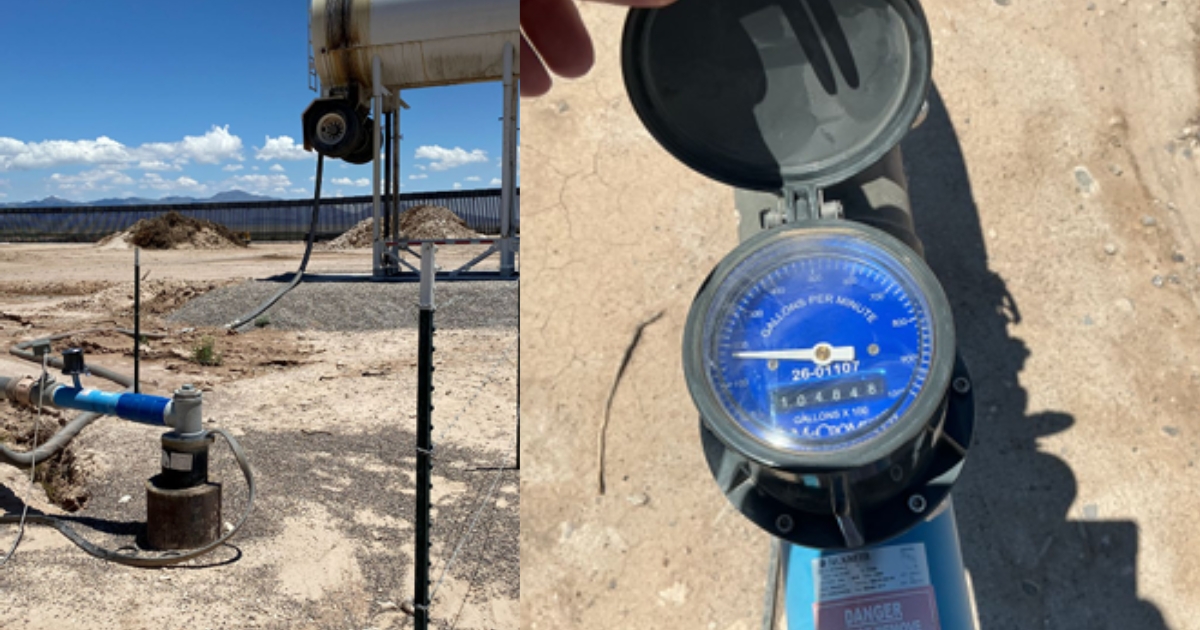
EL PASO, TEXAS (Border Report) — Groundwater wells drilled without state authorization for border wall construction in southern New Mexico are still pumping millions of gallons despite lacking permits, according to the New Mexico Office of the State Engineer.
The disclosure comes as the U.S. Border Patrol’s El Paso Sector announced this week on its official Facebook page that construction of the Lordsburg border wall section has been completed.
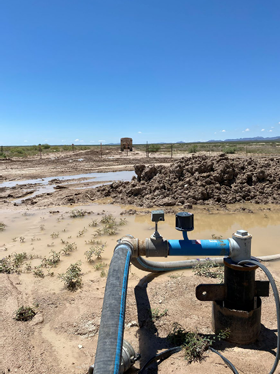 Evidence of unauthorized use of the water well is included in the inspection report. (Photo Courtesy: New Mexico Office of the State Engineer)
In the meantime, New Mexico state officials said the unpermitted wells remain in operation and continue supplying water used for construction, even though no permits have been issued or requested for drilling or groundwater withdrawal.
“Wells were drilled without authorization, and OSE understands they are still currently being utilized for border wall construction,” agency spokesman John Sloan said in a written response to Border Report.
The state official added that none of the wells in question have a permit or a pending application for drilling, plugging, or groundwater use.
State inspectors have documented the unauthorized wells during multiple field inspections along the U.S.-Mexico border, from Sunland Park to Deming. The inspection locations were in Doña Ana County (2), Luna County (2), Grant County (2), and Hidalgo County (4). Those wells are drawing millions of gallons of groundwater from the Hachita, Playas, Mimbres, and Lower River Grande basins.
CBP halts border wall wells drilling
One inspection report reviewed by Border Report shows that a flow meter on a well in the Hachita Underground Water Basin in the Lordsburg area recorded almost 9.3 million gallons of groundwater withdrawn. The meters also show that the well was pumping 200 gallons per minute.
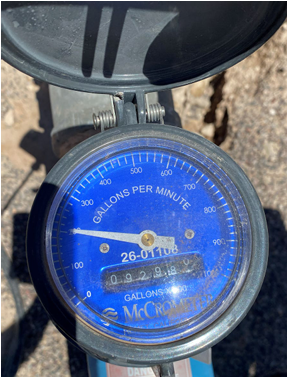 An unauthorized groundwater well in New Mexico’s Hachita Underground Water Basin area has drawn at least 9.2 million gallons of groundwater. (Photo Courtesy: New Mexico Office of the State Engineer)
The findings come days after CBP halted new well drilling following complaints from ranchers and state officials who warned that pumping groundwater in drought-stricken Luna and Hidalgo counties could threaten private wells, livestock operations and natural springs.
State officials confirmed to Border Report that they have not received any permit applications for the disputed wells, despite reinforcing the need for state permits in their formal Notice of Violation letters to the border wall contractors.
“None of the wells currently have a permit or pending application associated with them for the drilling, plugging or use of water for any purpose,” Sloan said.
The agency also confirmed that inspectors have continued surveying the border region, documenting unauthorized drilling and groundwater use associated with the federal border wall project.
Inspection reports obtained by Border Report show several wells were fully equipped and pumping water when state inspectors visited in late July.
Another well in the Hachita Underground Water Basin had already pumped more than 10.4 million gallons — about 32 acre-feet of groundwater — according to its flow meter.
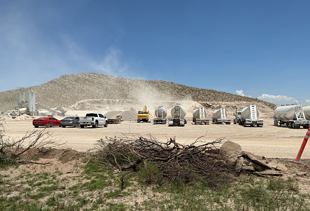 Multiple water truck containers were used at building sites for dust suppression. (Photo Courtesy: New Mexico Office of the State Engineer)
Inspectors observed a portable generator powering the well while water trucks continuously filled for dust suppression on the construction project.
The well is in the same area where the Lordsburg section of the border wall was completed, as announced this week by the U.S. Border Patrol on one of its social media platforms. According to U.S. Customs and Border Protection’s “Smart Wall” maps, crews are installing 60.1 miles of secondary border wall in the Lordsburg, area. The CBP website, however, still lists the project as being under construction.
A second operating well, within 50 feet in the same area, had withdrawn nearly 2.9 million gallons, according to state inspectors.
Other inspection reports describe additional completed wells equipped with pumps, generators and storage tanks, while inspectors documented active drilling at multiple sites in the Mimbres Basin near Columbus.
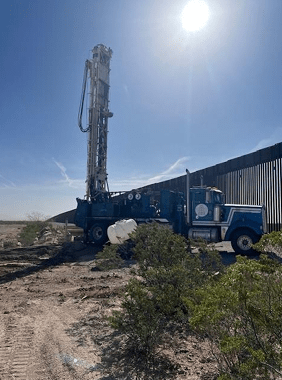 Drill Rig found near the border wall after a concerned citizen’s complaint in southern New Mexico. (Photo Courtesy: New Mexico Office of the State Engineer)
The records also show state inspectors encountered drilling crews working under Department of Homeland Security directives rather than New Mexico water permits.
During one March inspection, representatives of Barnard Spencer Joint Venture told inspectors they believed permits were unnecessary because the wells were being drilled within the federally controlled Roosevelt Reservation.
82 charged with trespassing on military property
State officials allowed drilling to continue temporarily only if an exploratory well application was submitted within 24 hours and no groundwater was diverted until water rights were established or the state’s permitting authority was resolved. According to Sloan, no such permits were ever issued.
The Office of the State Engineer has issued Notices of Violation to two well-drilling companies over the unauthorized work. If the wells are not properly plugged within 30 days, the state said it may pursue additional enforcement action, including further compliance measures.
The state agency noted that CBP does hold permits for other legally authorized wells elsewhere along the border, but none of the disputed wells identified during the recent inspections has been approved.
State officials also confirmed they are monitoring groundwater conditions after receiving numerous complaints from nearby landowners concerned the pumping could affect private wells and natural springs.
“The OSE is actively working to monitor groundwater levels and effects on nearby water rights holders due to the use of the unpermitted CBP wells,” Sloan said.
Internal inspection records also raise concerns beyond permitting. One report from the Lower Rio Grande administrative area near Sunland Park documents an active drilling operation inside the Mesilla Valley Administrative Area, where groundwater withdrawals are tightly regulated because they can affect flows in the Rio Grande and New Mexico’s obligations under the Rio Grande Compact.
Inspectors warned that unpermitted pumping in the area could impair existing water rights and interstate water deliveries.
The state said it remains in discussions with CBP over current and future water use for the border wall project while evaluating additional steps to ensure compliance with New Mexico water law.
“The agency is actively evaluating next steps to ensure compliance with all New Mexico laws regarding the appropriation and use of water,” Sloan said.
Border Report asked CBP if the it planned to seek permits for the existing wells.
In a written statement sent to Border Report, a CBP spokesperson confirmed that the agency is coordinating with the State of New Mexico and the U.S. Department of Agriculture to develop “a broader groundwater management strategy.”
White House authorizes military control of land along the border
As an initial step to minimize or avoid impacts on groundwater resources, CBP recently instructed the barrier construction contractors to pause installation of any new groundwater wells.
Field inspections performed by the state’s District 3 staff covering the Hachita Basin also revealed some contractors and subcontractors were of the opinion that they did not need a state permit to build a well within the Roosevelt Reservation, a strip of federal land along the U.S Mexico border in California, Arizona, and New Mexico established by President Theodore Roosevelt in 1907 to prevent smuggling and secure the border.
Recently, the stretch of land has been used to facilitate the construction of the border wall and transferred to the Department of Defense to increase military surveillance and migrant apprehensions.
Aracely Lazcano can be reached at alazcano@borderreport.com.