
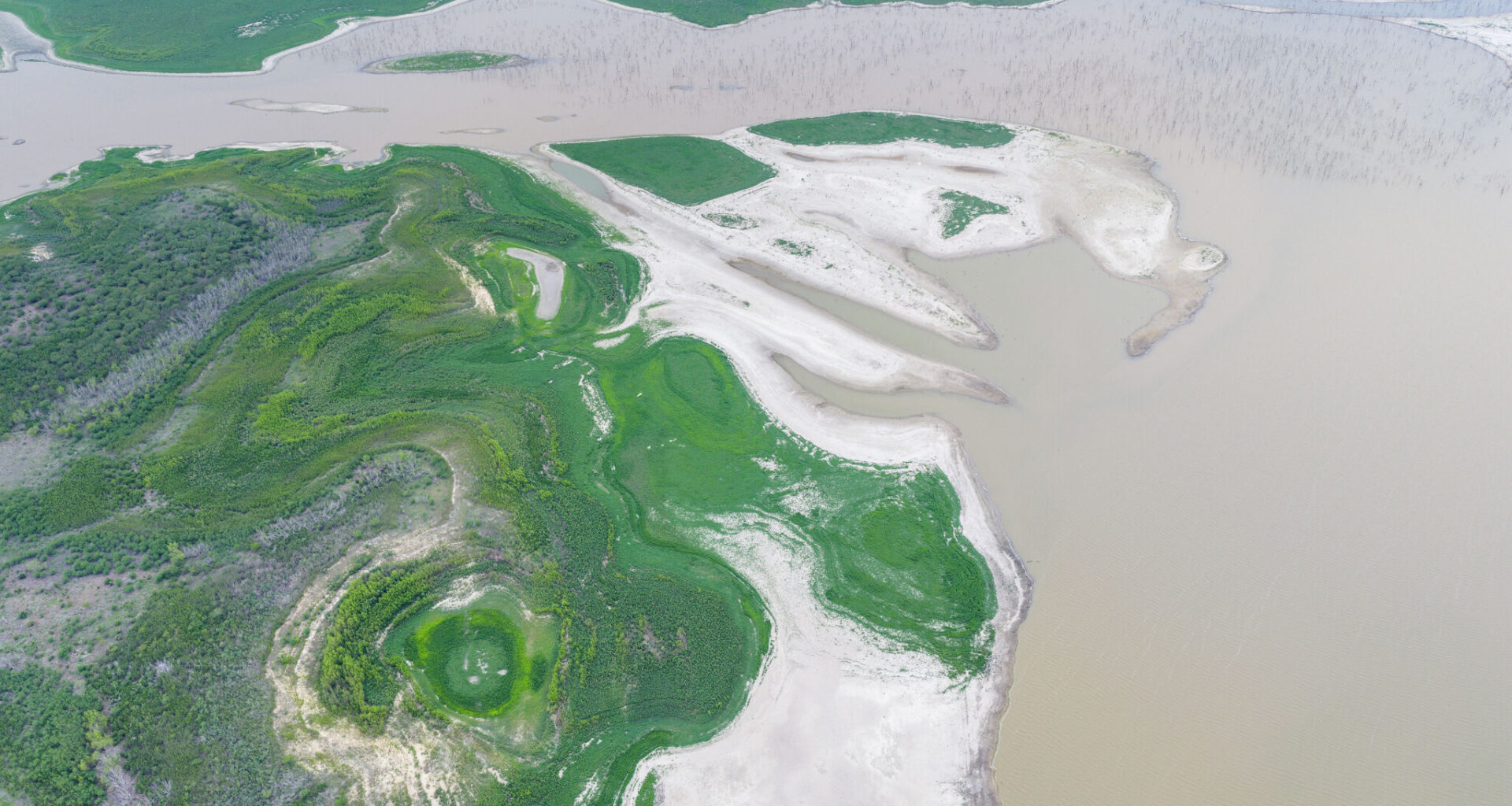
As of Friday, August 7, Lake Corpus Christi stood at 85.5% full, according to Water Data for Texas, a water tracking product of the Texas Water Development Board. It’s the highest level seen at the lake in nearly four years. Meanwhile, though levels at the region’s largest reservoir — Choke Canyon Reservoir — is also significantly higher than they were four months ago, the rise there not only reached its plateau, it has begun to dip slightly compared to earlier this week.
Nonetheless, after also taking Lake Texana into account, the Coastal Bend’s reservoirs now have a combined 540,104 acre-feet of storage and stand at a combined 49.6% full — a 190% increase from the 186,000 acre-feet reported in February, according to Water Data For Texas.
Lake Corpus Christi, in particular, has benefited the most from the stormwater runoff that has made its way downstream along the Nueces, Frio and Atascosa rivers after heavy rains deluged a wide swath of the state from the border at Eagle Pass, east toward Uvalde, Kerrville and the Ranchlands communities of Tilden, Three Rivers and George West.
Six months ago, in February, Lake Corpus stood at 10.9% full, or just 28,172 acre-feet out of its 256,062 acre-feet total capacity. With unseasonably warm temperatures and the persistence of a relentless, five-year-long drought, those levels would continue to plummet to a low of 8.4% by the beginning of April. During the same timeframe, Choke Canyon dropped from 8.9% full in February to a historic low of 7.4% by May 5, according to Water Data for Texas.
The unabated nosedive of the Coastal Bend’s so-called “western reservoirs” had Corpus Christi officials making stark declarations that the region could reach a Level 1 water emergency as soon as September. That would have marked the point that the region’s water supply was six months away from being unable to keep up with demand.
Instead, a reasonably wet May and June saw the two reservoirs blip slightly upward. But it wasn’t until July’s rains began to trickle in that the change became substantial. The reservoirs rose high enough that on Tuesday, Corpus Christi City Manager Peter Zanoni to officially declare Stage 3 water restrictions lifted. Not long after, the cities of Rockport, Portland, Mathis joined Corpus Christi in loosening water restrictions to Stage 2.
A week ago, on July 31, Lake Corpus Christi stood at 37.8% full. By Monday, August 3, the reservoir had climbed to 60.2% full. By Friday, it had climbed another 25 percentage points to 85.5% full.
However, the rise at Choke Canyon — which has more than 2.5 times the capacity of Lake Corpus Christi, has been far more negligible. A month ago, Choke Canyon held just 54,996 acre-feet of water out of its total 662,820 acre-foot capacity. A week ago, Choke Canyon had risen to 24.9% — the highest level since 2023. But already, the reservoir is losing water. As of Friday, Choke Canyon had lost 1,329 acre-feet and fallen to 24.7% full.