
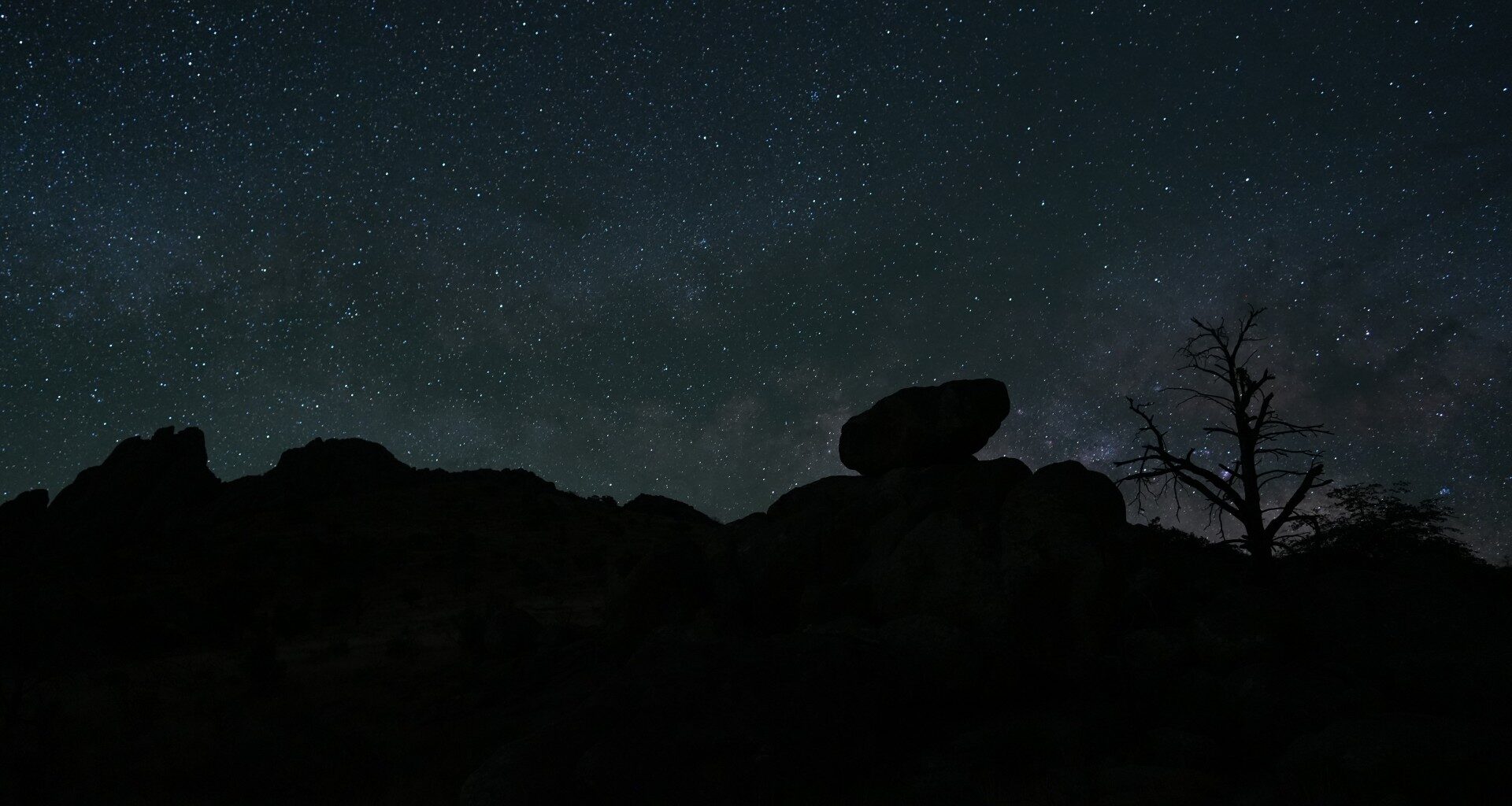
The annual Perseids meteor shower peaks overnight on Aug. 12.
According to the American Meteor Society, the Perseids are named for the constellation Perseus because the meteors appear to radiate from that part of the sky. The streaks of light are caused by debris left behind by Comet 109P/Swift-Tuttle burning up in Earth’s atmosphere. This year’s meteor shower will have optimal viewing as a new moon falls on Aug. 12.
There are dozens of meteor showers throughout the year, with the Perseids, Quadrantids (January) and Geminids (December) being the most notable.
Austin Astronomical Society outreach chair Nielsa Lachapelle told the American-Statesman that nearly 500 members have joined the nonprofit organization to share their love of astronomy and stargazing year-round.
“Some people like to look up at the sky and think about how it puts things in perspective, like how we’re just a small speck in infinite space,” Lachapelle said, adding that she has gravitated toward astrophotography. “Some people like the challenge of the ever-evolving science and technology behind it.
Lachapelle said astronomy is an accessible hobby because it doesn’t require much time, effort or money for beginners.
“You don’t have to spend any money at all to do any kind of astronomy. You can just go outside and look up at the stars and keep track of where the constellations are,” Lachapelle said.
The best places to watch the Perseids meteor shower or go stargazing in Texas are Bortle Class 1 locations, the darkest category on the Bortle scale, which measures night-sky darkness and light pollution. According to Texas Parks & Wildlife, Big Bend National Park and the Greater Big Bend Dark Sky Reserve near Terlingua are the only Bortle Class 1 zones in the state.
For those searching for stargazing spots closer to Austin, Lachapelle said places such as Enchanted Rock, Buescher State Park, Pedernales Falls State Park, Colorado Bend State Park, Blanco State Park and South Llano River State Park also offer great viewing.
The farther you can get from the city lights, the better. Night owls are also in luck — the optimal viewing window for the Perseids is between midnight and 4 a.m.
Star parties are another way astronomy lovers gather for group viewings. Depending on cloud cover, the Austin Astronomical Society frequently hosts star parties at state parks and at Area512, its telescope maintenance and storage facility.
The nonprofit is hosting its annual “Austin Under the Stars” public star party at St. Stephen’s Episcopal School at 7:30 p.m. on Aug. 15. Visitors can look at space objects through astronomy equipment, experience dark sky displays, see laser tours of the sky throughout the night and more. The event is also BYOT (bring your own telescope), though plenty will be available on site.
There will be Perseids star parties at select Texas state parks, weather permitting. Visitors must purchase a day pass to attend.
Perseids star parties on Aug. 12
Perseids star parties on Aug. 15