
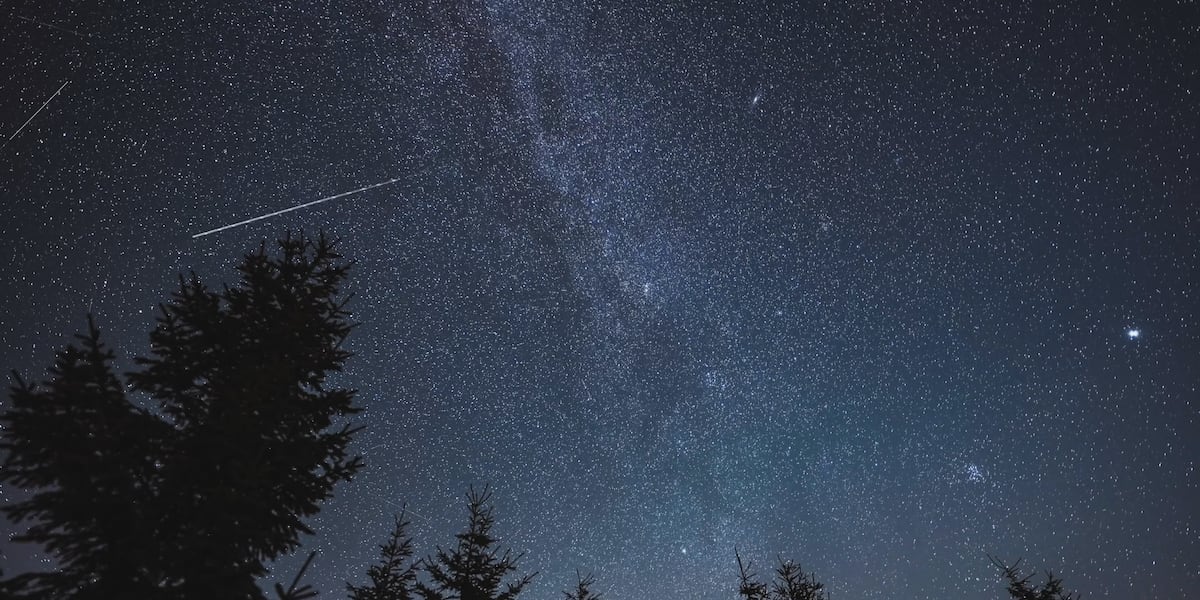
EAST TEXAS (KLTV/KTRE) – One of the year’s most spectacular celestial displays is set to peak this week, offering East Texans a front row seat to a dark sky light show.
The Perseid meteor shower, an annual summer event known for its bright, fast moving meteors and occasional “fireballs,” will reach its peak late Wednesday night, Aug. 12, into the early morning hours of Thursday, Aug. 13, according to the American Meteor Society.
Astronomers project that skywatchers under ideal conditions can expect to see an average of 40 to 50 meteors per hour during the peak. This year, conditions are optimal because the moon is new on Aug. 12, leaving the night sky completely dark.
For the best viewing experience in East Texas, escaping the city lights of Tyler, Longview, and Jacksonville is essential.
For those watching from home, the American Meteor Society suggests the following:
Evening vs. Morning: Early evening stargazers should look toward the north midway up the sky to see long-lasting meteors shooting upward from the northeastern horizon. After midnight, the radiant rises higher, and by 4:00 a.m., it stands two-thirds of the way up the sky, making about 90 percent of the shower activity visible.Patience is key: It takes about 20 to 30 minutes for human eyes to fully adjust to the dark.Avoid blue light: Smartphone screens will instantly ruin night vision.No telescope needed: Meteors move at speeds of 37 miles per second, which is far too fast for telescopes or binoculars. The naked eye offers the widest field of view.
The annual shower occurs as Earth passes through the dust trail left behind by Comet 109P/Swift-Tuttle. The debris collides with the atmosphere, burning up and creating the bright streaks visible from the ground.
While the peak occurs on the night of Aug. 12, the American Meteor Society notes that the activity period lasts from July 17 through August 29, with rates climbing steadily as the peak approaches.
Copyright 2026 KLTV. All rights reserved.