
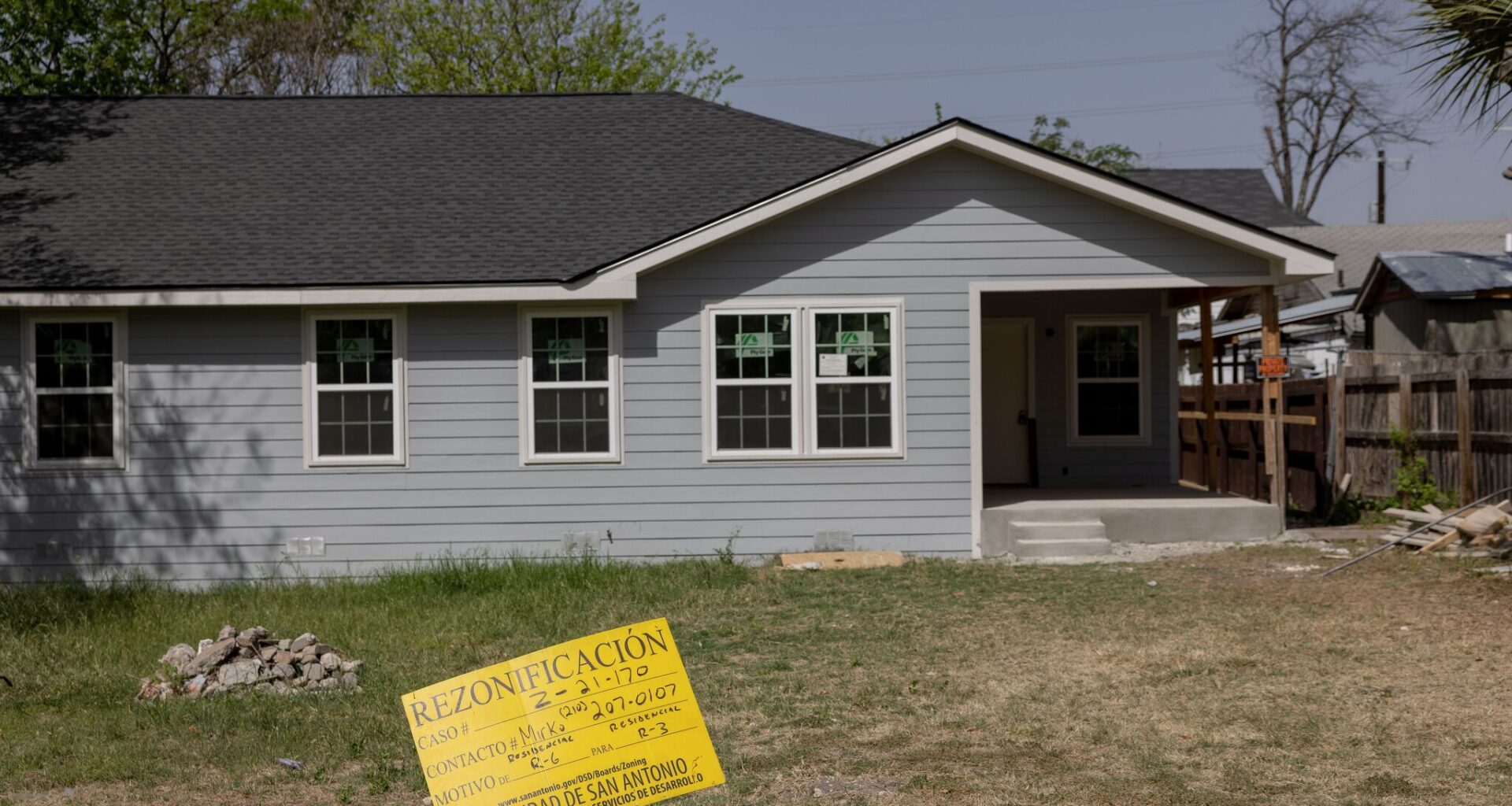
Buying a starter home in major Texas cities just got easier, according to a new Redfin report.
The real estate brokerage and home search platform found that San Antonians, and residents of other major Texas metropolitans, need less income to afford their first home.
Home buyers in the Alamo City need an income of $62,859 to afford the typical starter home, down 3.7% compared with the year prior. This means a home buyer can afford to buy a home while making $20,791 less than the median income in San Antonio.
Redfin defines an affordable home by a buyer’s monthly housing payment not exceeding 30% of their income. The average income in San Antonio is $83,650, meaning that a home buyer would be spending 22.5% of their income to afford a starter home.
“Affordability has improved modestly for entry-level buyers, but starter homes come with tradeoffs, and finding the right one is a challenge,” Yingqi Xu, a senior economist at Redfin, said.
It is prospective home buyers in Austin who are seeing the biggest improvements in starter home affordability, the Redfin report found.
Austin buyers need an income of $92,607 for a median-priced home, $16,452 less than the median Austin income of $109,059. This necessary income was down 6.1% compared with the year prior.
The increased affordability for starter homes extended across the state to the Fort Worth-Dallas area and Houston.
Fort Worth and Dallas buyers needed to earn $77,886 and $83,096 to afford a starter home, down 4.9% and 5.1% compared with the year prior. This was, respectively, $15,216 and $20,048 less than the median income in those cities.
The U.S. market as a whole saw a 1.5% decline in the income necessary to purchase a home compared with a year ago. This marks eight months of consecutive decline since November 2025, driven by price growth in the real estate market slowing.
The median U.S. household earns $87,599, around $17,000 more than the $70,693 needed to purchase a starter home, according to the Redfin report. And, the gap is growing. Just a year ago, Americans earned around $13,000 more than what was necessary for a home purchase.
Potential buyers are interested in starter homes that are move-in ready, Xu said, with less demand for fixer-uppers.
“The first-time buyers who are in the market are already stretching their budgets to afford monthly mortgage payments, so they’re hesitant to take on expensive renovations,” Xu said. “The buyers who are typically in the market for an inexpensive home don’t have much financial cushion for renovations.”