
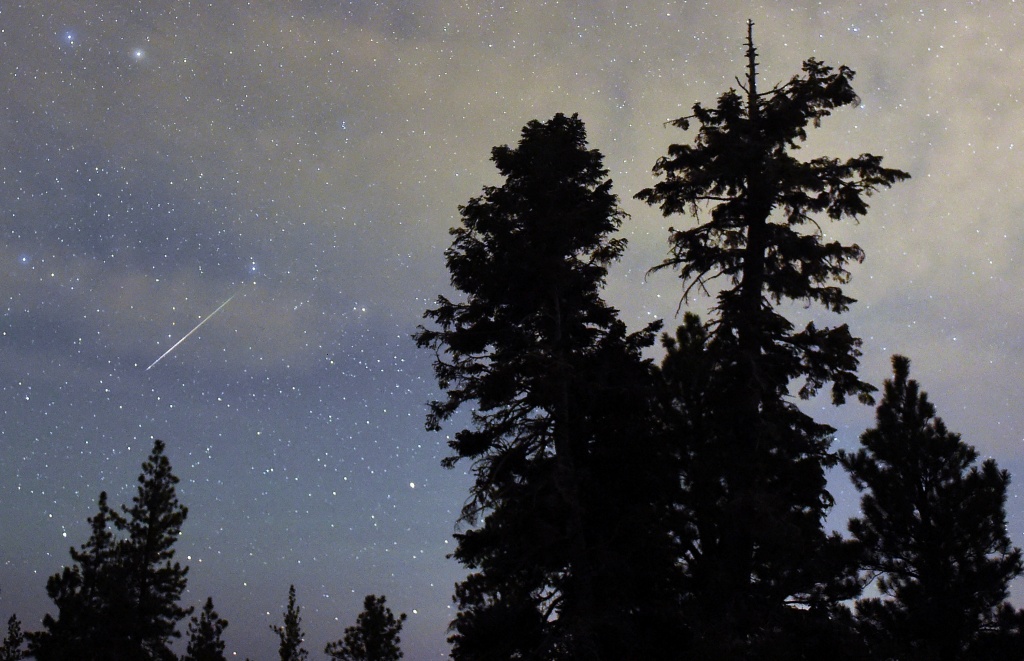
The time is ticking before San Antonians can catch what NASA scientists consider one of the brightest meteor showers of the year. Here’s what to know as the event arrives this week.
Skygazers can look forward to the Perseid meteor shower peaking on the night of Wednesday, August 12, and into the early morning of Thursday, August 13, according to NASA.
Researchers consider it one of the better experiences to watch because “they are reliably active” and produce an exceptionally bright display, with meteors leaving glowing trails as they pass. The showers occur annually and always in the summer months.
The latter two events will occur closest to San Antonio and are roughly an hour and a half away from the city. All are free once the park entrance fee is paid.
“The best way to watch the Perseid meteor shower is to find a location with dark skies, give your eyes 20 to 30 minutes to adjust to the darkness, and simply look up,” NASA recommends on its site. “Then sit back, be patient, and enjoy one of the year’s premier celestial shows.”
Where does the Perseid meteor shower get its name
The shower is named after the constellation Perseus, which is visible in the northern sky. According to NASA’s website, observations of the Perseids date back more than 2000 years.
Greek mythology considers Perseus “the warrior who slayed Medusa and rescued Princess Andromeda, whose namesake constellation shares the sky nearby,” researchers say.
Folks do not need to look for Perseus to see shooting stars. They can appear anywhere overhead when the shower is active.
Perseid meteor shower viewing map
The Perseid meteor shower can be observed with the naked eye; no special equipment is needed. However, the website Time and Date has an interactive map where you can enter your city to see what time the Perseids are expected to become active.