
Back-to-school season usually means shopping for backpacks, notebooks and new school clothes, but CARY is reminding families that a successful school year starts with something that can’t be bought in a store: support.

For 28 years, the Council on At-Risk Youth, or CARY, has been working inside Austin-area schools to help young people avoid crime and violence while building the skills they need to succeed.
For 28 years, the Council on At-Risk Youth, or CARY, has been working inside Austin-area schools to help young people avoid crime and violence while building the skills they need to succeed.
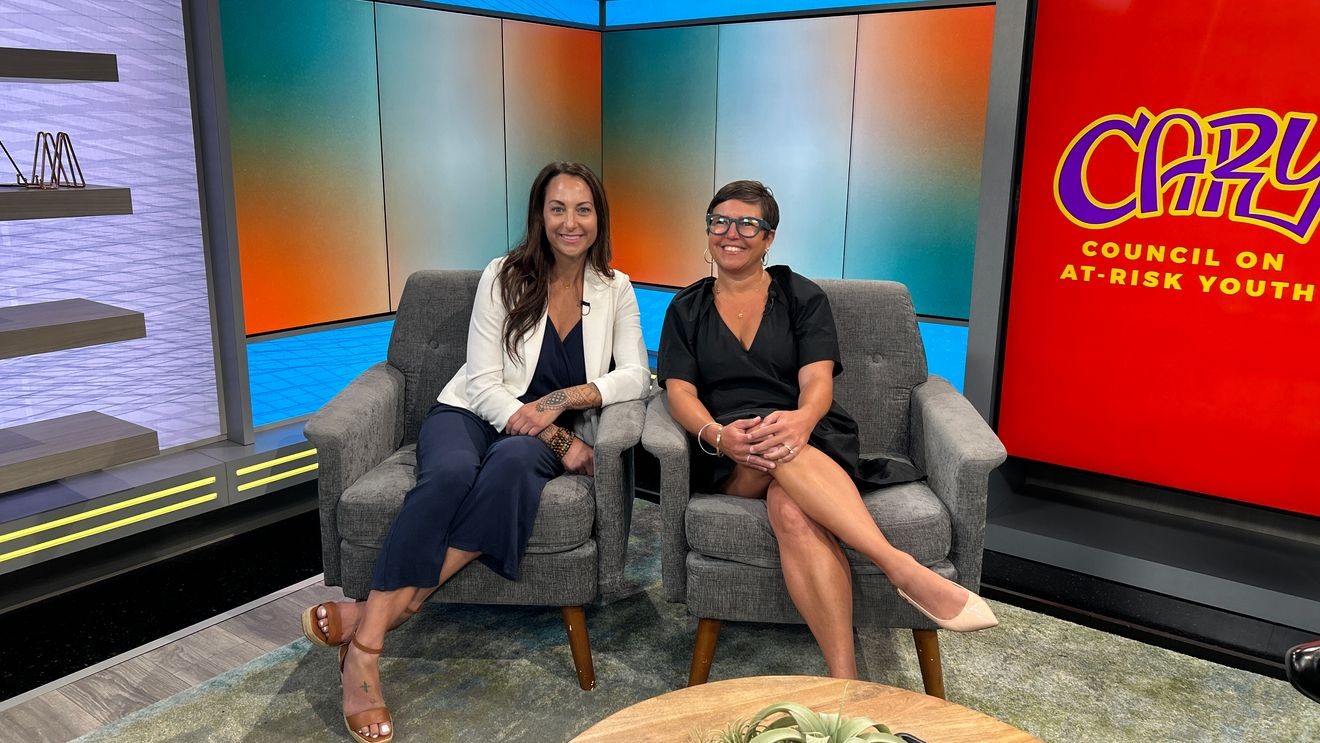
CARY Executive Director Shana Fox and Development Director Ashley Ibsen joined We Are Austin’s Trevor Scott to talk about how the organization supports students socially and emotionally while helping them build confidence, resilience and a brighter future.

CARY Executive Director Shana Fox and Development Director Ashley Ibsen joined We Are Austin’s Trevor Scott to talk about how the organization supports students socially and emotionally while helping them build confidence, resilience and a brighter future.
“CARY is so proud to be celebrating 28 years of being in the schools,” Fox said. “Our mission is to empower at-risk students with these skills to avoid crime and violence.”
Fox said that work can have benefits that extend far beyond preventing crime and violence, including increased attendance, improved grades and a safer overall campus environment.
CARY works directly with students through counselors and social workers on campus. The organization focuses on students who may be struggling with behavioral issues, attendance or other challenges, while looking beyond the behavior itself to understand what may be happening underneath the surface.

CARY helps students start the school year with confidence and connection
“I would attribute CARY’s success to the counselors that are on campus to help support their students,” Fox said. “Each and every one of the CARY students knows that there’s one person, at least on campus, that is there to help support them and guide them and give them tools that you can’t see all the time.”
That support includes CARY’s own curriculum, one-on-one therapy, group therapy and role-playing exercises that allow students to work through difficult situations and recognize potential triggers.
“Our social workers really do take them through a lot of social emotional learning,” Fox said.

CARY helps students start the school year with confidence and connection
Ibsen said CARY’s approach is centered around supporting the whole child, including their social and emotional needs.
“Oftentimes that is the biggest building block that needs to be formed to help all the education happen,” Ibsen said. “So when you talk about the whole child, that is what we’re trying to help support in our schools.”
When students begin to feel seen, heard and supported, Fox said the impact can spread beyond the individual student.
“It’s micro in that, you know, it’s internal first,” Fox said. “And they feel that. And the pride, I think, their families see that, their peers at school, their teachers and administrative support and leadership on campus. And then that has a community ripple-wide effect.”
Fox said CARY’s end-of-year surveys with administrators and parents repeatedly show positive results, including improvements in campus environments and attendance.
“We know that one person makes a huge difference,” Fox said. “And so we’re giving these kids that already have a lot of leadership qualities the right path to take them on.”
The start of a new school year is an especially important time for that intervention. Ibsen said transitions can reveal gaps in a student’s support system, while middle and high school are critical developmental periods for preventative efforts.
“Any time there’s change, there’s a real opportunity to kind of see where there’s any gaps,” Ibsen said. “And then also developmentally, we’re working with students that are in middle school and high school, and all of the data and evidence shows that that is the age to really intervene with preventative efforts.”

CARY helps students start the school year with confidence and connection
Rather than waiting until young people have made permanent decisions that could affect their future, CARY works to reach students earlier and give them tools to navigate challenges.
For Fox and Ibsen, CARY’s 28 years in the community also have personal meaning.
Fox said the organization’s longevity is “a demarcation of CARY’s absolute dedication to the community and the students that we have the privilege of serving.”
For Ibsen, the work is personal because she is a parent herself.
“I personally feel so drawn to this work,” Ibsen said. “I have kids of my own. I understand the struggles that are real.”
She said one of the most rewarding parts of the job is visiting schools and seeing the students CARY serves.
“I get to go to the schools and hear from some of the kids that all just call me Miss CARY,” Ibsen said. “And they just—I love seeing their faces, and they light up, and it makes it all worthwhile.”
As students head back to school, CARY is also inviting the community to get involved. Families and community members can follow the organization on social media, volunteer at local schools and attend CARY events.
The organization’s next major fundraiser, Hats In For CARY, is scheduled for October 22 at Austin’s Park. The event will include games and activities while raising money to support CARY’s work with students.
For CARY, preparing students for a successful school year means looking at the bigger picture—and making sure every young person knows they have someone in their corner.
Learn more at cary4kids.org!

Learn more at cary4kids.org!