
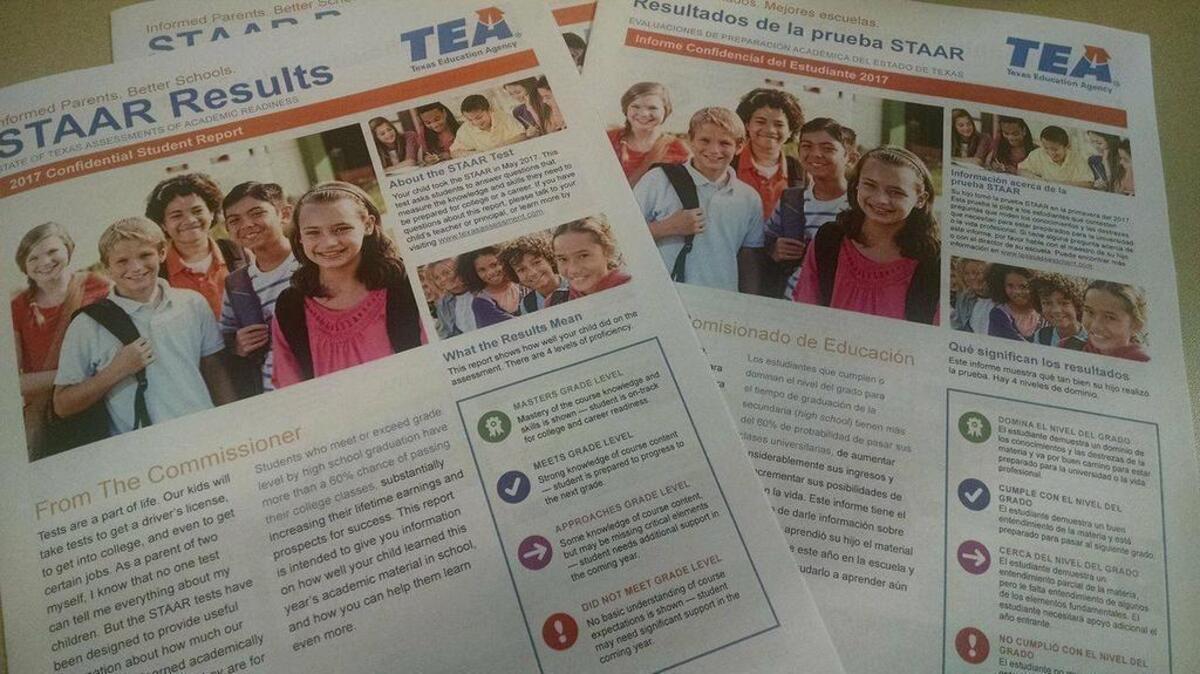
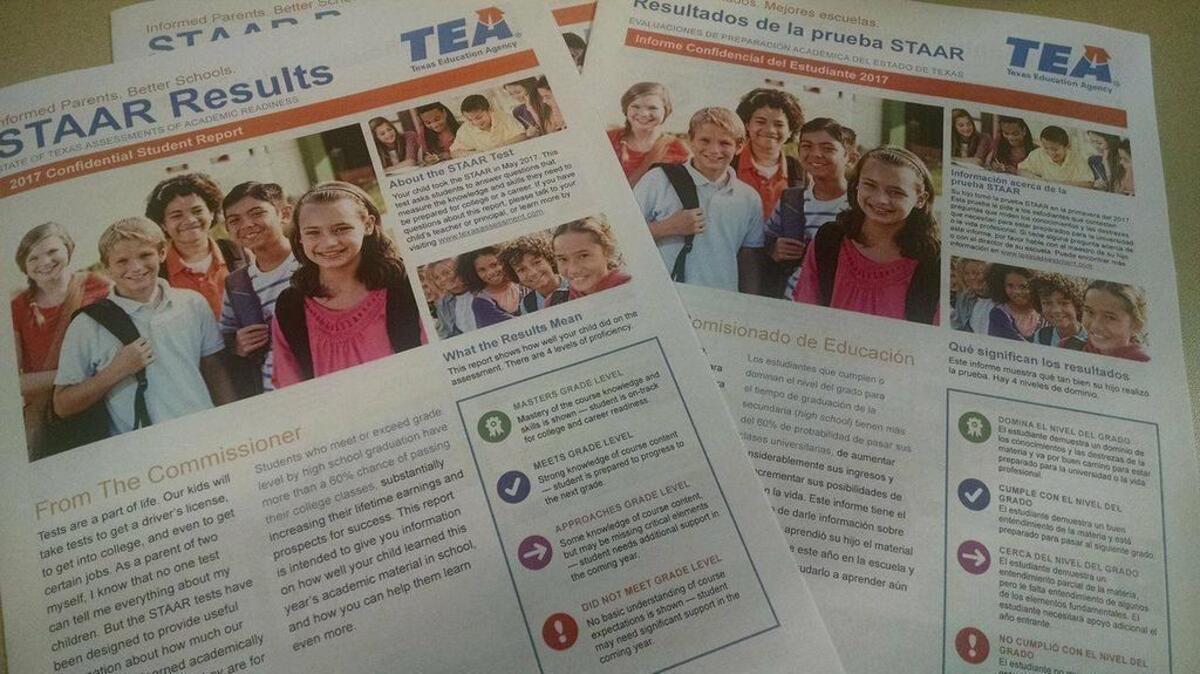
The State of Texas Assessments of Academic Readiness, known as STAAR , are a series of state-mandated standardized tests used in Texas schools to assess a student’s achievements and knowledge.
Diane Smith
Star-Telegram
Students in grades 3-8 at schools across Fort Worth saw gains on this year’s STAAR exams for the third year in a row, according to a yearly report released Monday by the Fort Worth Education Partnership.
Across 12 districts and 10 charter networks, the number of students who met grade level across all subjects increased by 2 percentage points from last year, up to a total of 39% of students meeting grade level on STAAR tests. This year’s two-percentage point increase comes after the same increase from 2024 to 2025. Since 2021, that number has risen from 28% to 39%.
In reading, 48% of students met grade level, the most of any subject. That number is up two percentage points from last year and up five from two years ago. In math, 36% of students met grade level, 32% in science and 24% in social studies.
Brent Beasley, Fort Worth Education Partnership’s president and CEO, said the increase is encouraging, but there is still much more room to grow.
“A 4-percentage point increase over the last two years may not seem like much, but this means that there are thousands more children meeting grade level in Fort Worth today than there were two years ago,” Beasley said. “That means thousands more children on the path to academic success and the life-changing opportunities that creates. Of course, 61% not meeting grade level is still not acceptable. We have a lot of work to do, but we are moving in the right direction.”
According to the report, campuses serving the highest amount of economically disadvantaged students improved at a faster rate than more affluent ones. Seventy-eight percent of campuses that have more than 90% of economically-disadvantaged students made gains.
“They are outpacing everyone else’s growth,” Beasley said. “The growth in this city is being driven by campuses that serve the most economically disadvantaged students.”
The report combines the STAAR exam results of every campus in Fort Worth. In eight of the city’s 10 council districts, the number of students on grade level improved. District 7 was the only one that decreased, while District 10’s percentage stayed the same.
Beasley credited Fort Worth’s gains to teachers across the city.
“There is something special about the work of both teachers in the classroom and the community at large coming together with a singular focus on what is most important,” Beasley said. “That is the difference maker. The community is talking about what it values and about being a partner in the work, and school systems are implementing measures that have been proven to be best practices for students.”
Citywide STAAR exam results also mirror the results of Fort Worth ISD students, who increased in almost all grades in both reading and math during the spring 2026 semester, according to STAAR data released by the Texas Education Agency last month.
Across the city, fourth graders did the best on this year’s STAAR exams. Forty-three percent of fourth graders met grade level, while 41% of third-graders met that mark. Fifth graders were at 39%, with sixth and eighth graders at 38%, and seventh graders at 37%.
In total, 65% of campuses in Fort Worth had more students meet grade level than they did last year.

Fort Worth Star-Telegram
Samuel O’Neal is the K-12 Education Reporter at the Fort Worth Star-Telegram, covering public schools and policy that impacts them. He previously worked as a staff writer at the Philadelphia Inquirer and is a graduate of Temple University.