
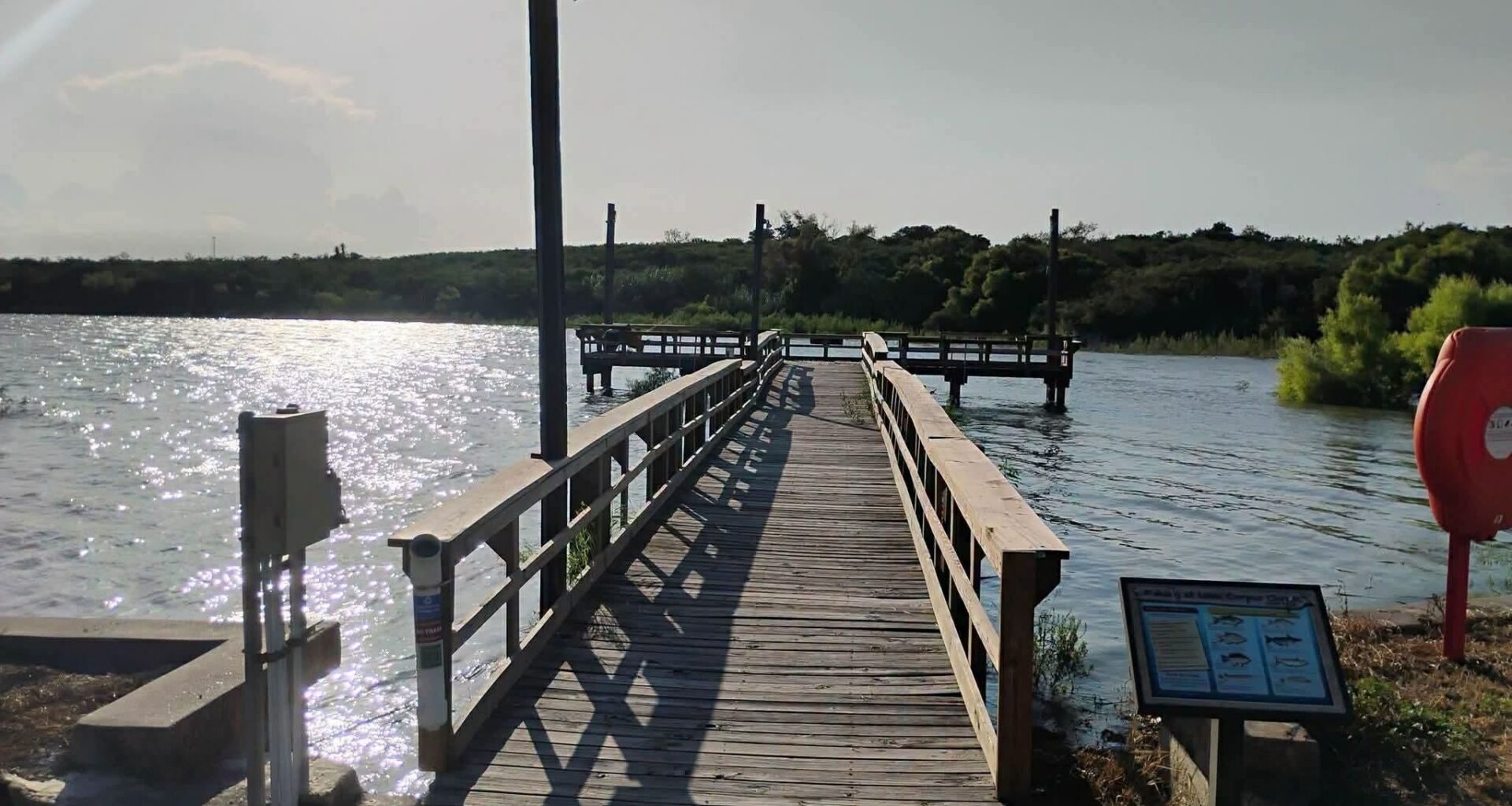
The second-largest reservoir in the Coastal Bend is continuing to rise after heavy rains deluged South Central Texas last month.
Lake Corpus Christi officially surpassed 90% full on Monday, August 10, according to the U.S. Geological Survey (USGS). It’s the first time in nearly five years that the manmade reservoir has been so full, according to Corpus Christi Lake Watch. The lake will continue to rise, though at a slower pace now that the Nueces River is no longer at flood stage, according to KIII 3NEWS Chief Meteorologist Carly Smith.
As of Tuesday morning, Lake Corpus Christi stood at 91.7% full with some 234,975 acre-feet of water — a little more than 21,000 acre-feet shy of its total conservation capacity. More than 1,900 acre-feet of water have flowed into the reservoir since Monday, a rise of nearly 1%. To put that in perspective, that’s about 39% more water than Corpus Christi residents consumed in all of July, not including commercial, wholesale or large volume users, according to data provided by Corpus Christi Water.
But the comparison to this day one year ago is truly staggering. On August 11, 2025, Lake Corpus Christi was just 19.3% full with 49,483 acre-feet of water. Since the start of the month, Lake Corpus Christi’s water levels have shot up more than 126,500 acre-feet as more than 41 billion gallons of water have poured in from the swollen Nueces River.
Late Monday, Smith said the Nueces River is continuing to flow at about 1,000 cubic feet per second (CFS). That elevated flow means Lake Corpus Christi will continue to rise, though at a much slower rate than when last month’s stormwater runoff surged across the Coastal Bend via the Nueces, Frio and Atascosa rivers. At the height of the flood, the Nueces River flowed at 16,900 CFS and peaked in major flood stage at 39.3 feet at Three Rivers on Saturday, August 1, USGS data show. The river exited flood stage on August 7.
Further upstream, Choke Canyon Reservoir has also risen, though at more than 2.5 times the size of Lake Corpus Christi, it’s still far from being close to full. As of Tuesday, August 11, Choke Canyon was 24.6% full. Data show that levels in the larger reservoir are no longer rising and have actually fallen slightly since peaking at 24.9% full on July 30.