
State Rep. Jared Patterson, a Republican from Frisco, blasted early August start dates Sunday, calling them “among the dumbest things we do as a state” and arguing schools should wait until September.
“It doesn’t make sense for student athlete safety, it doesn’t make sense for the economy, it doesn’t make sense for ISD budgets, and it doesn’t make sense for the electric grid,” he wrote on X. “Teachers shouldn’t go back until Sept 1, and students after that. Stay in school longer through May. Even early June would [be] better than mid-August.”
He also teased another attempt at changing the law.
“Legislation is coming (again),” Patterson concluded.
U.S. Rep. Craig Goldman, a Fort Worth Republican who previously served in the Texas House, quickly backed the idea and said he and former state Rep. Matt Krause had tried for years to move the school calendar later.
“Start date should be the Tuesday after Labor Day and last day of school should be the Friday of Memorial Day weekend,” Goldman wrote on X. “The problem is, it makes common sense and you know what happens when you bring that into government?”
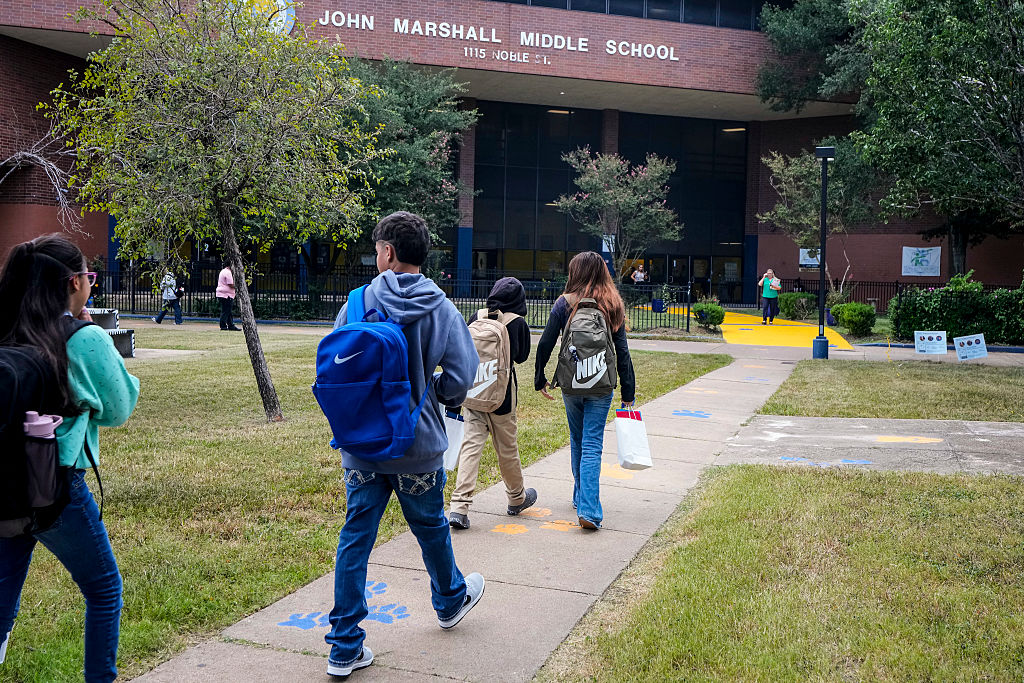
The renewed push comes as students across Texas return to class in the middle of August—or, in some districts, even earlier. Houston ISD welcomed students back Monday, Aug. 10, while Chron previously reported some Texas districts started classes as early as July 21 this year. State law generally says districts cannot begin instruction before the fourth Monday in August, though exceptions, including District of Innovation and year-round status, allow many districts to start earlier.
This isn’t the first time Texas lawmakers have tried to rein in earlier school start dates. In 2017, then-state Rep. Matt Krause proposed legislation, according to Community Impact, that would have prevented Districts of Innovation from exempting themselves from state requirements governing when the school year can begin and end.
There’s another side to the calendar debate: More time in the classroom can also mean more opportunities for students to catch up.
Houston ISD became a District of Innovation under state-appointed Superintendent Mike Miles, giving the district more flexibility to start classes earlier. The Houston Chronicle reported in 2024 that Miles expanded the academic calendar from 172 to 180 instructional days, arguing students needed additional classroom time to catch up academically.
Houston-area districts have also experimented with even longer calendars. Houston Landing reported in February 2025 that Aldine ISD continued using a state-backed program that adds as many as 30 instructional days at participating campuses in an effort to combat summer learning loss. Similar experiments in Alief and Spring ISDs were eventually abandoned because of funding issues, staff turnover and complaints from parents about the unusual schedules.
Patterson’s argument, however, puts the Texas heat front and center.
Houston Chronicle meteorologist Justin Ballard reported in June that Houston’s hottest seasons have increasingly stretched beyond the traditional summer calendar. Seven of the city’s 10 warmest years on record have occurred since 2011, while Houston logged 145 days at or above 90 degrees in 2025 as stretches of extreme heat increasingly appear earlier in spring and linger deeper into fall.
That means moving the first bell until September wouldn’t necessarily guarantee cooler weather—but Patterson appears ready to reopen the debate over whether sending millions of Texas students back in August and cutting summer short makes sense at all.