
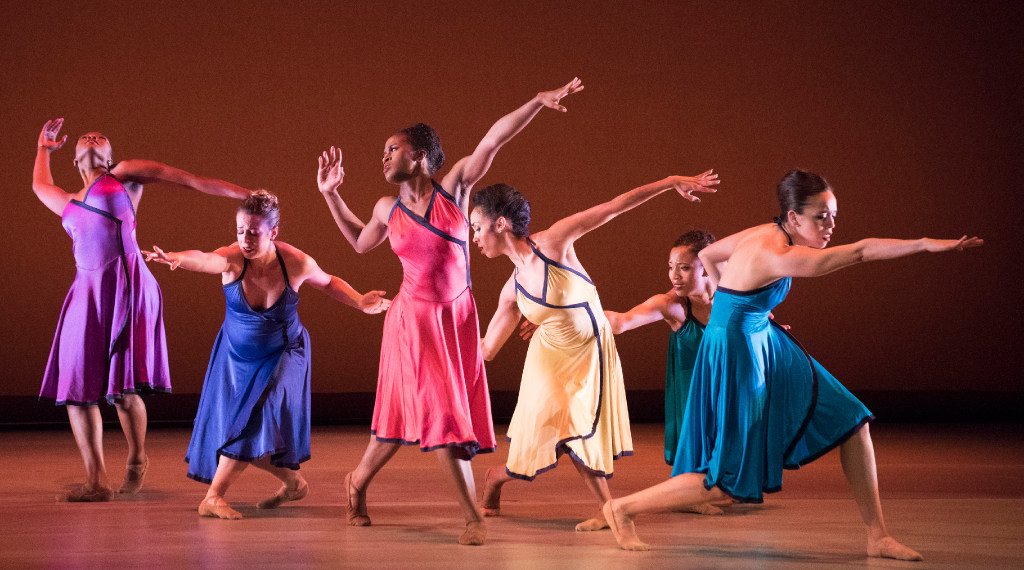
Dallas Black Dance Theatre performs Darryl B. Sneed’s …And Now Marvin during a dress rehearsal at the Dee and Charles Wyly Theatre on Thursday, Feb. 16, 2017.
Special Contributor
Dallas Black Dance Theatre has ratified the first collective bargaining agreement with its unionized dancers, the parties jointly announced Tuesday, ending two years of strife that cost the company more than $800,000.

Ironically, the dancers who joined the American Guild of Musical Artists in April 2024 will not benefit. After they filed unfair labor practice charges with the National Labor Relations Board, they were fired by executive director Zenetta S. Drew, who has since retired, and replaced with a new group of performers.
The dispute led the Dallas City Council to cut about $248,000 in funding to DBDT for the 2024-25 season. In December 2024, the company and the NLRB reached a $560,000 settlement to compensate the fired dancers. In fiscal 2025, revenue fell to $3.1 million and the nonprofit lost $2.5 million, according to Form 990 of its tax return.
Article continues below this ad
Recommendations by a task force appointed by the DBDT board of directors led Drew to announce her retirement a year ago and a national search for her replacement began. Kristie Patton Foster was hired as executive director and took over the job in June.
The collective bargaining agreement, which covers the company’s main troupe of dancers, runs for three years through 2029, according to the joint news release. It was approved by the DBDT board Friday and the AGMA board Monday.
Members of the DBDT junior company, called Encore!, are not part of the union or the agreement.
“The company came to the table ready to work,” AGMA national organizing director Griff Braun, who helped negotiate the agreement, said in an interview Tuesday. “Driving all of this was the reputational harm that had come to this important institution during 2024. I think everybody, including AGMA and the dancers, wants to turn that around. We all felt like this contract was the key to that.”
Board chairman Jack Skinner agreed there has been fallout for DBDT from the labor dispute. He blamed “delayed maintenance” of the organization.
Article continues below this ad
“That maintenance piled up and caused an issue,” he said in an interview Tuesday. “There was some loss of trust internally, but I think we’ve rebuilt a lot of that. It’s been a lot of work from the board, from the organization, and that’s why we put the task force forward, to take an external look at what we were missing and how to modernize.
“The dancers gave us a lot to think about. Because at the end of the day, it’s about what we deliver to our society, our staff, our patrons and our community … The agreement means coming into our 50th anniversary season we’ve got a path forward so we can focus on the next 50 years of DBDT.”
Former Dallas Black Dance Theatre dancers perform Overcurrent, choreographed by Derick McKoy, Jr., Wednesday, Dec. 18, 2024, during a benefit dance concert, “Emergence,” at Latino Cultural Center in Dallas.
Chitose Suzuki/Dallas Morning News
“We understand the significance of this moment and the path that brought us here,” the dancers on the negotiating committee said in a written statement. “We’re proud to have negotiated a first contract that provides meaningful protections for today’s dancers while strengthening the company for those who will come after us.”
For the first time in DBDT history, the dancers have a contract that guarantees employment to at least 12 performers for at least 41 weeks a year; includes increases in minimum salaries, built-in raises and a seniority-based wage scale; codifies existing benefits like health insurance and retirement contributions; and strengthens parental, personal and sick leave.
Article continues below this ad
Salaries start at $800 per week for dancers in their first year with the company, Braun said. The contract goes into effect Monday when dancers report for the start of the 2026-27 season.
The agreement also creates a joint labor-management committee and establishes work rules, safety protections, anti-discrimination and anti-harassment provisions and a grievance and arbitration process.
Though the current dancers did not vote to unionize, they were grandfathered into the collective bargaining unit under the company’s settlement with the NLRB, Braun said. They voted to approve the agreement, which took 11 months to negotiate, two weeks ago.
“They were in this unusual position, so part of our job was to get to know these dancers, essentially organize them and bring them into this process, get their input and empower them to bargain this contract,” said Braun, a Dallas native and a former dancer in New York. “The last thing we wanted was to bargain a contract without the input of the artists who would be working under it … The hard part was getting through that first stage of organizing a second time. Once there was the buy-in from the dancers, things moved along.”
The turning point in negotiations with DBDT management came with the creation of the task force and the change in leadership, Braun said.
Article continues below this ad
Drew had been a critical force in the company’s expansion, growing DBDT’s budget from $175,000 in 1987 to more than $5 million in 2024. Under her leadership, the company began performing all over the world while expanding its footprint at home, including its educational programs.
But there was also a lot of turnover at the top after founder Ann Williams retired as artistic director in 2014. Three replacements have come and gone. Former company member Richard A. Freeman Jr. has been in the post since 2024.
Choreographer Claude Alexander III works with company members during a rehearsal for The Way of the Clave at Dallas Black Dance Theatre on Tuesday, Feb. 8, 2022, in Dallas.
Smiley N. Pool/Staff Photographer
The task force recommended new management practices, including term limits for board members and a more proactive, hands-on oversight role for the board. Skinner, a technology executive, took over as board chairman.
Problems between the company and its dancers started in April 2024 when AGMA notified DBDT that the dancers had authorized the union to represent them. When the company declined to recognize the union, the dancers turned to the NLRB for help.
Article continues below this ad
Over the next few months, the union filed a series of unfair labor practice charges against DBDT and issued an order that prevented union members from licensing dance pieces to the company or otherwise working with DBDT. This affected the company’s ability to perform certain pieces in its repertoire or license new ones.
The order was lifted Monday by the AGMA board.
DBDT fired rehearsal director Sean J. Smith in July 2024, then the entire main company of dancers a month later. Management said an Instagram post by the dancers had violated company policies. Auditions, which drew protests, were scheduled for new dancers. Protestors also picketed outside DBDT’s season opening performances featuring the new troupe.
The company opens its new season with DanceAfrica on Oct. 9 and 10 at Moody Performance Hall.