
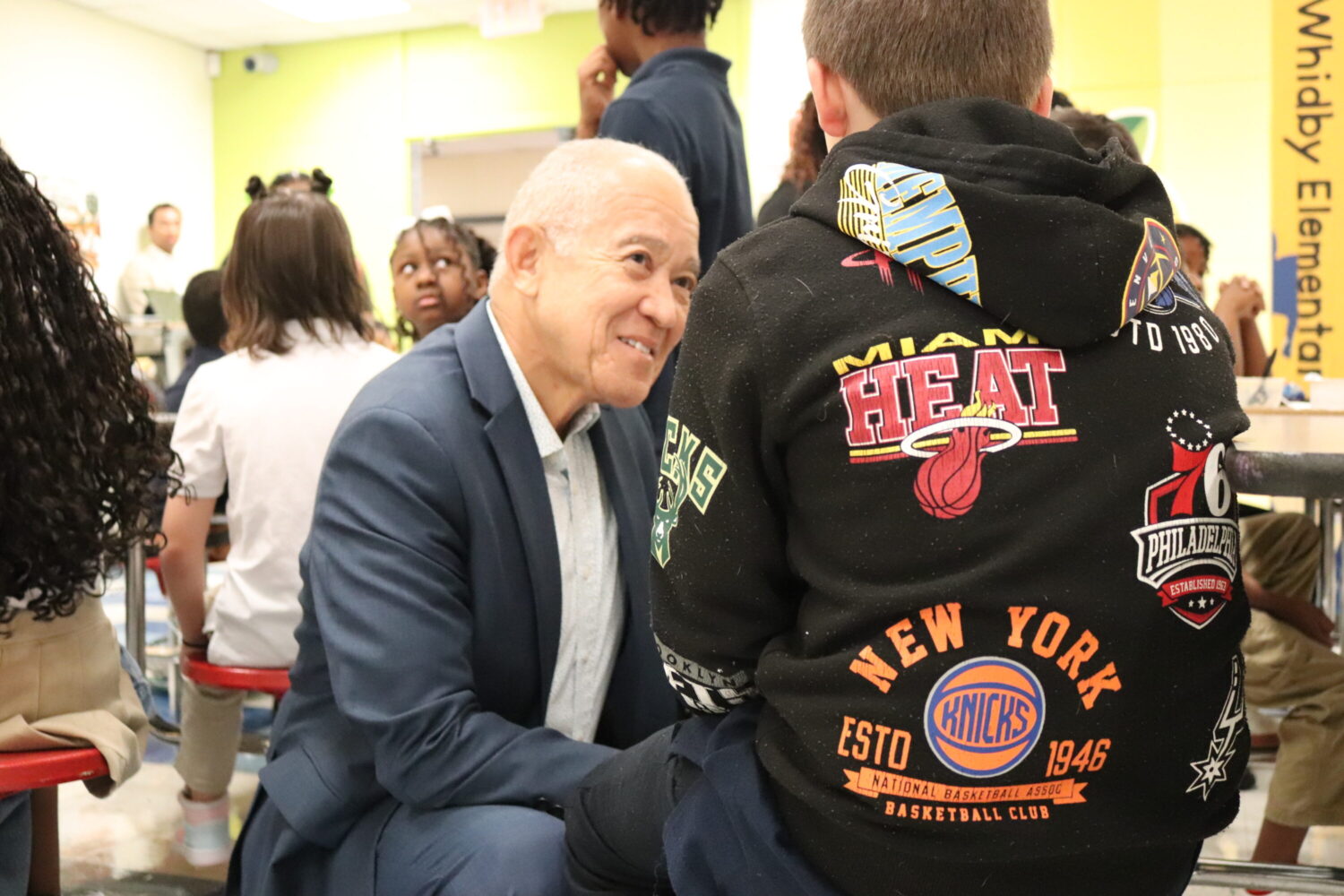
Bianca Seward/Houston Public Media
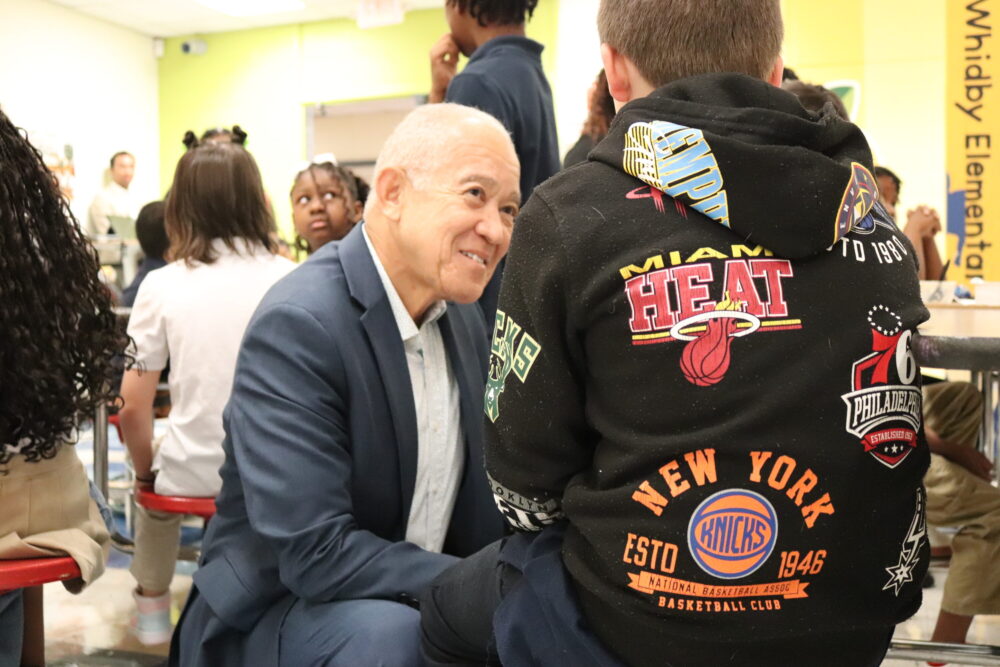
State-appointed Houston ISD Superintendent Mike Miles visits Whidby Elementary on the first day of the 2026-2027 school year.
Monday marked the first day back to school for more than 160,000 students across Houston ISD. At Whidby Elementary in the southern part of the city, kids entered the school through a gold and blue balloon arch and were welcomed by state-appointed Superintendent Mike Miles on the other side.
For thousands of students and parents, the new school year brought excitement, some tears as well as new campuses and new programs.
In an interview with Houston Public Media, Miles shared his thoughts for the upcoming school year, the fourth year of the Texas Education Agency’s , and answered questions about some of the biggest changes coming to the district.
Sign up for the Hello, Houston! daily newsletter to get local reports like this delivered directly to your inbox.
Among those changes is a controversial restructuring to the way special education services are delivered to students in the district and a new $4.5 million education program called “Future 2,” which is being implemented at and aims to prepare students for a world with artificial intelligence (AI).
Many of the plans were met with backlash from the public. Over the course of several public school board meetings, dozens spoke out against the changes and how quickly they were being implemented. The district announced it would be in May, just a month before school let out and summer vacation started. The change prompted an ongoing by the U.S. Department of Education’s Office of Civil Rights, and the Texas Education Agency (TEA) found the district in violation of the rights of students with disabilities in its own separate investigation.
The list of “Future 2” schools were announced in April. Two of those campuses also will this year.
Miles says HISD has the right environment to launch innovative programs.
“That’s why a lot of different programs succeed here where they won’t in other places,” Miles said.
Bianca Seward/Houston Public Media
“Over and above what is legally required”
When the district announced it would consolidate special education programs to select campuses for the 2026-27 school year, the overhaul was expected to affect an initial estimate of 5,000 students. A core concern from parents was the changes required families to transfer from their current campuses listed in their students’ Individualized Education Plan (IEP) to different schools.
Several parents filed formal complaints about the changes with the TEA, which after its own investigation each student’s IEP for “potential harmful effects of any proposed placement or service delivery change” and ensure the district holds meetings with families to review and revise IEPs before students are moved to a new campus.
On Monday morning, Miles told Houston Public Media the district was “almost done” with the TEA-mandated meetings. However, not every affected family may be given a meeting. The district says a location change without a program placement change would not warrant a meeting, a position many families in the special education community dispute.
The special education department of Houston ISD has been under a state conservatorship for nearly six years, which requires state conservators to directly oversee the program and its changes and progress. When asked if the sweeping changes the district made to special education services were done in consultation with their state conservators, Miles said the district works “closely” with their conservators and the TEA.
“I think you’ll see that we’re meeting compliance, and we’re actually, what we’ve done this summer, and it’s been a huge effort, is we’re going over and above what is legally required,” Miles said.
He added when parents raise concerns and grieve, the TEA will investigate.
“But you see, the program is still going,” Miles said. “That means it’s legally OK to [continue], and we’re going over and above to help our parents with the changes that are happening.”
However, the TEA has set an October deadline for HISD to comply with the corrective orders it issued before considering more serious action against the district. Meanwhile, the federal investigation remains ongoing. The Office of Civil Rights has not yet released its findings or any potential orders for the district.
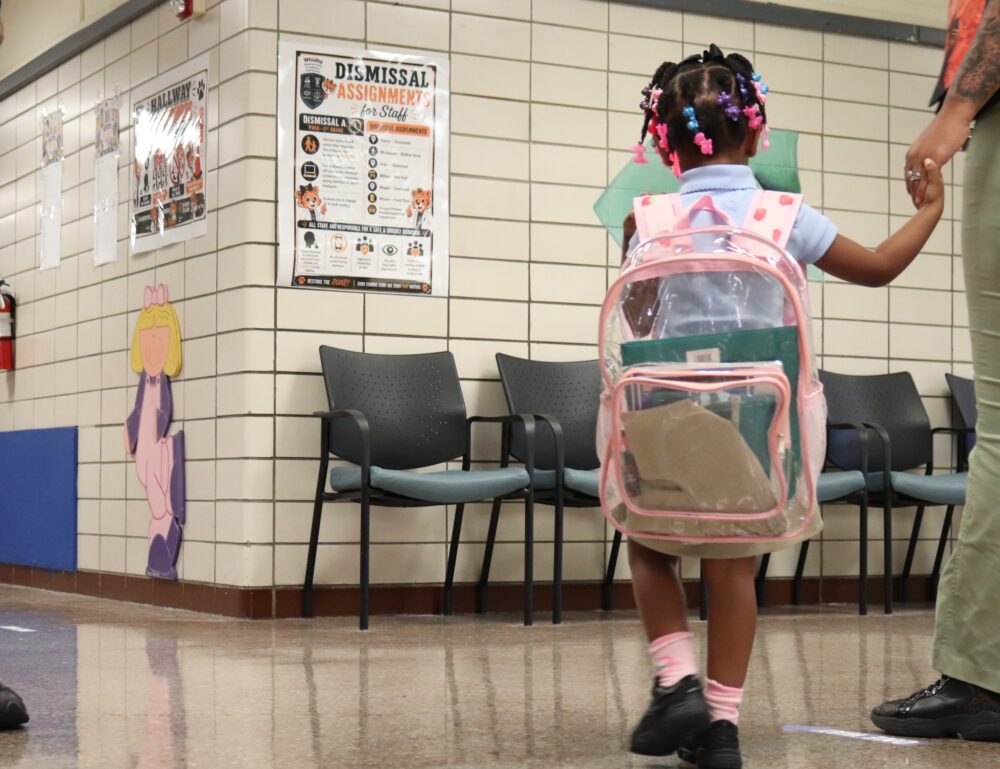
Bianca Seward/Houston Public Media
Students arrive to Whidby Elementary for the first day of school on August 10, 2026.
Future 2 schools
In the spring, the district announced with limited details a new educational program to be piloted by nine schools called Future 2. The schools spend the mornings on traditional core classes – math, language arts, science – and then shift focus in the afternoon to teaching students to build skills for a world with AI.
Miles pushed back on some public criticism that the schools would add more screen time for students as well as concerns from parents the district was embracing AI too quickly. In a recent interview with Craig Cohen on , Miles said the afternoon at Future 2 schools would be devoted to “experience and activities.” He added the district plans to send Future 2 school students on field trips every three weeks.
“All of those experiences and their activities are not on a screen – they’re not using AI,” Miles said. “They’re developing skills to get ready for an AI-enabled world.”
At the end of July, Houston ISD announced two of the Future 2 schools – Clemente Martinez and Gregg elementaries — would add yet another AI element to the classroom for some children. Students with high test scores on reading and math assessments will be allowed to use the AI-powered program “TimeBack” from Alpha School.
On its website, Alpha School describes the “TimeBack” program as a way to – quite literally – give time back to students. The two-hour learning model, formally known as “2 Hour Learning,” was rebranded in 2025 as a $100 million project to build an AI platform that helps students learn “10x faster than traditional classrooms,” the company states.
However, the TimeBack program has received criticism for overstating its effectiveness.
When Unbound Academy and Unbound Academic, that use its two-hour learning model, applied for charter applications in and , respectively, the proposals were rejected for lack of evidence the program is effective.
Miles said the district had analyzed the program and thinks it “might be promising.”
The program is an expansion of AI use in the district.
“We already use AI-enabled platforms like Zearn and Amira and most districts do,” Miles said. “This is more. This is a different program that’s supposed to push kids who are already proficient, and give them just personalized learning. So we want to experiment with that.”