
DALLAS — Texas summer heat can be especially intense in major cities, where an effect known as an urban heat island can cause some neighborhoods to be significantly warmer than others.
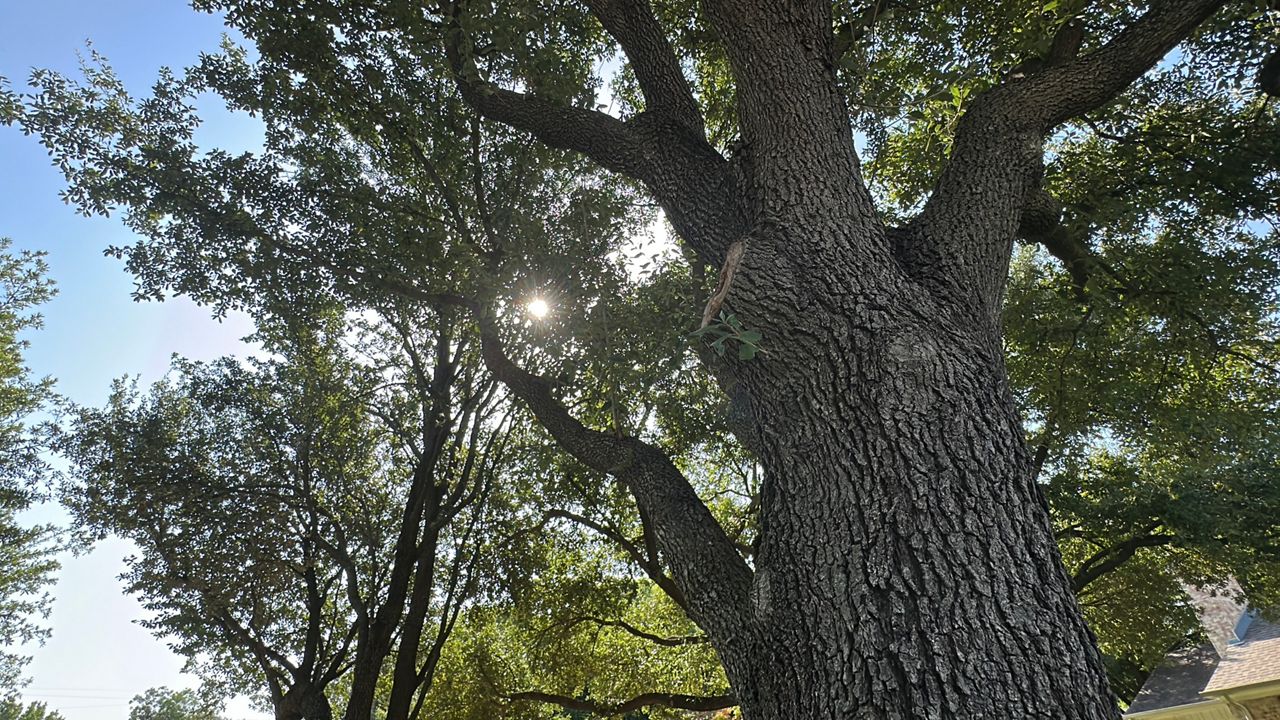
In Dallas, city officials are working to reduce the effect through efforts like planting more trees and expanding shaded and green spaces.
A Dallas Climate Action urban heat island study found that parts of the city experience higher temperatures than others. The study, which collected data from 2020 through 2024, cited large areas of concrete and a lack of trees as major contributors.
The nonprofit Climate Central has identified Dallas as one of 12 U.S. cities where more than 80% of the population experiences at least 8 degrees of additional heat associated with the urban heat island effect.
The heat can have consequences beyond discomfort.
“Higher health issues,” said Brett Johnson, an urban biologist with Dallas Parks and Recreation. “It means you have higher energy costs, and it can also lead to greater degradation of our assorted infrastructure.”
Large expanses of asphalt and concrete can absorb and retain heat, while a lack of tree cover reduces shade, Johnson said.
Dallas Parks and Recreation is working on longer-term solutions, including planting about 12 to 16 trees a year at each of its more than 30 sites, according to Johnson. The department is also considering additional shade structures and green spaces as shorter-term measures.
“We try to find that balance between open space, providing the trees,” Johnson said. “And again, where can we have the most effective shade?”
But expanding the urban tree canopy takes time. Johnson said extreme weather can also affect mature trees and new plantings.
“In 23 and 24, we had winter nights. We got below zero. Our big, mature trees, a lot of them didn’t like that,” he said. “And it takes about two to three years for a tree to realize it’s dead.”
Dallas also has many older trees, Johnson said, making their preservation another part of the effort.
As summer temperatures continue to challenge communities across Texas, city officials say reducing the urban heat island effect will require a long-term approach — one that includes more trees, shade and green space.