
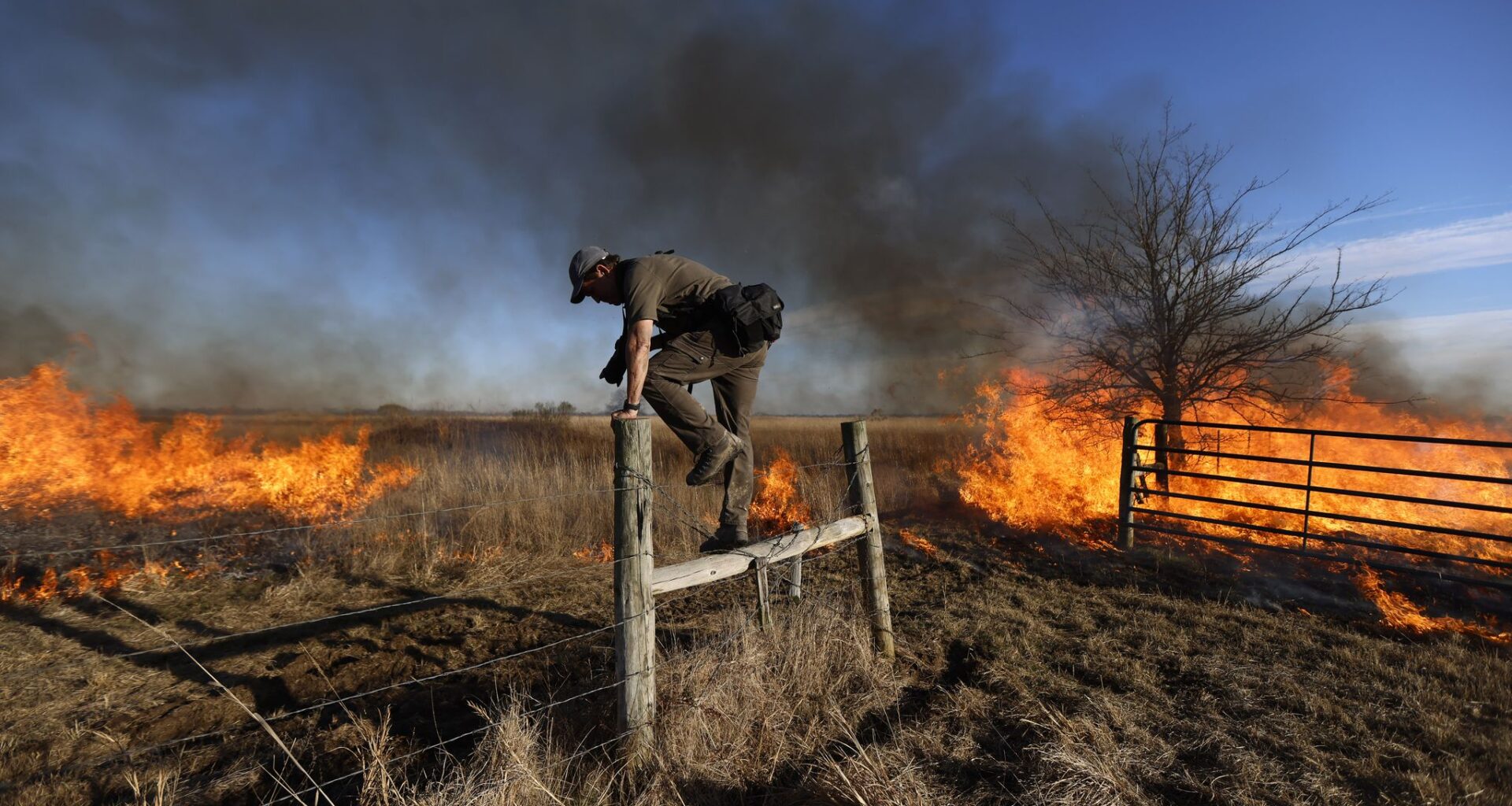
Tarrant County issued a burn ban Thursday for 90 days as wildfire threats continue across the region. Similarly, Dallas County has also been under a 90-day burn ban since July 27.
Tom Fox/Staff Photographer
With North Texas facing an elevated wildfire threat today, some residents may not realize their everyday behaviors could contribute to starting a fire.

Nine in 10 wildfires are caused by people, according to the Texas A&M Forest Service. Common causes include burning debris on a windy day, dragging tow chains on the ground or driving on tall grass.
Tarrant County issued a burn ban Thursday for 90 days as wildfire threats continue across the region. Similarly, Dallas County has also been under a 90-day burn ban since July 27.
Article continues below this ad
Here’s information about the region’s wildfire threat and how to stay safe.
Why is wildfire danger increasing?
Laura Stevens, Texas A&M Forest Service public information officer, said the region’s recent hot, dry and windy conditions have led to an increased risk for wildfires starting. Despite having some rain earlier this summer, Stevens said Dallas-Fort Worth has dried out recently.
“The temperature keeps growing, the moisture levels in the fuels are drying out and creating a more elevated risk for wildfires,” Stevens said. “The longer we go without rain or precipitation, the moisture level in the fuel will continue to dry out.”
Related: Hot, windy Thursday raises fire threat across North Texas
Article continues below this ad
Texas has seen several recent wildfires, including the Jack County fire northwest of Dallas-Fort Worth, which was fully contained Aug. 6. The Bufford Creek Fire in Stephens County is actively burning west of Dallas, but is now 95% contained after spreading to about 3,240 acres, according to the Texas A&M Forest Service’s map.
The Lone Star State reported 6,304 wildfires in 2025, burning about 132,366 acres, according to the Texas A&M Forest Service.
Related: Wildfires burn across western US and Canada as residents are evacuated
How can people help prevent wildfires?
The National Weather Service recommends avoiding several wildfire-causing behaviors, including leaving a campfire unattended or tossing lit cigarettes on the ground, especially near grass.
Article continues below this ad
Before burning any debris, Stevens said to check if your county is under a burn ban and confirm the day’s weather conditions.
“You always need to look at the forecast for the rest of the day because your burn pile may go longer than just an hour,” Stevens said.
Other behaviors to be cautious with is operating any kind of equipment that can create a spark, such as mowing the lawn or pulling off into a patch of grass on the side of the road.
“[It can be] something as simple as mowing your lawn and the blades from your lawnmower hit a rock,” Stevens said, “If the grass is really dry and you’re mowing at five o’clock in the afternoon, the hottest part of the day, that can create a fire.”
Additionally, with hunting season right around the corner, Stevens said North Texans need to be especially cautious about preventing wildfires, such as when clearing debris from a deer lease.
Article continues below this ad
Related: Ranch broker discusses strategies for protecting property from wildfire
What should I do if I see a wildfire?
If you see a fire, Stevens said to call 911 and provide the most accurate location. For instance, if walking on a local trail, tell emergency responders the name of the trail, and how far the fire is from the entry point.
Stevens said a fire’s rate of spread, or how fast it grows, depends on factors like vegetation, wind, weather and types of fuel. Fuel is something that is burnable, which can include things like brush, dry leaves, grass or trees.
On days with high wind speeds, this can cause fire to consume fuel faster, which increases its rate of spread.
Article continues below this ad
“The quicker we get there, the less likely there is for the acreage to grow, destruction to happen,” Stevens said. “We can’t respond unless we know the information, so the more information we have, the better.”
Related: How to keep your North Texas home safe during a fire threat