
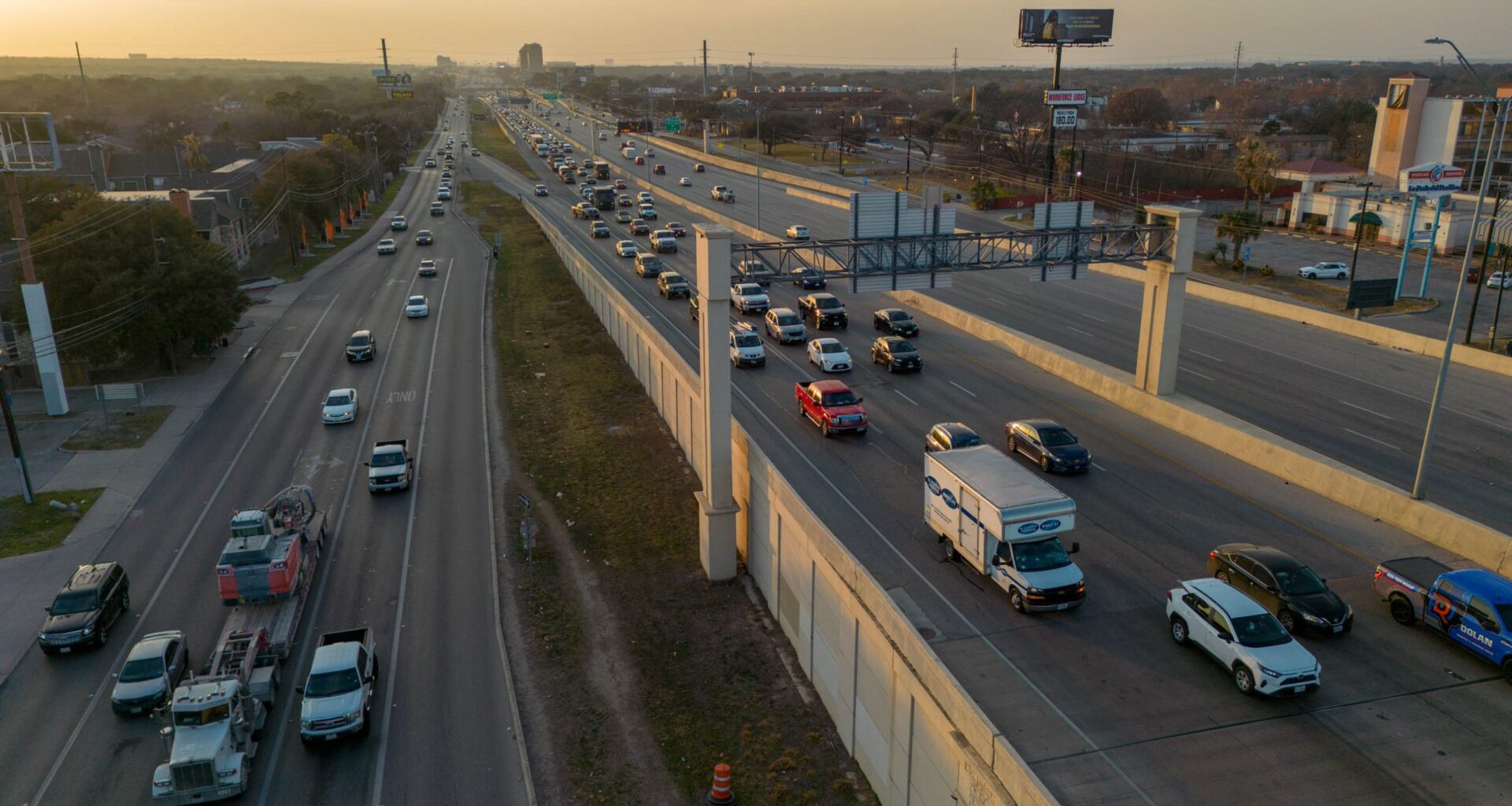
In the wake of a June 12 flood that covered a Loop 410 access road and highway underpass in water and left 13 people dead, the city of San Antonio sought experts’ recommendations on changes needed to keep residents safe.
On Thursday, a 138-page report from engineering consultants at Kleinfelder Inc. produced at least one solution that’s outside of the city’s control: Raising the TxDOT-owned frontage road on westbound Loop 410.
The road was designed in 1979, according to the report, and Assistant City Manager John Peterek told reporters Thursday that the city hasn’t seen any evidence it’s been overcome with water prior to last June, when 15 vehicles were swept away in the flood.
But the access road features a low elevation point that’s always been vulnerable to overtopping with water during a 25-year flood — meaning there’s a 4% chance it could happen in any given year — according to Kleinfelder Program Manager Justin Murray.
In the case of the June 12 flooding, Murray said, the depth and velocity of water in that area exceeded what even the best available modeling had predicted.
“Ultimately, the westbound frontage road … was inundated by more than four feet [of water] during the event,” said Murray, who pointed to dense vegetation north of the frontage road and limited modeling technology as top reasons the predictions failed.
While Peterek said the city is working to address the vegetation issue, which is on land with unclear ownership, Murray concluded that the road is more dangerous than previous modeling suggested, and likely needed to be raised to higher elevation.
“The Loop 410 sag point, which is the low point that has been there since 1979, is vulnerable to overtopping, not just in a 25-year event, but also a 10-year event,” Murray told the City Council on Thursday.
‘Trapped, with no alternate escape routes’
In the short-term, Peterek said the goal is to start treating the access road like a low-water crossing, in which the city or TxDOT closes the roadway preemptively when heavy rain is expected.
“TxDOT seems open to turning that spot into a low-water crossing,” he told reporters. “It’s an immediate step that can happen before the roadway is changed and the site point is removed.”
But the consultant’s report painted a harrowing picture of why the road is so dangerous — leading experts to believe that another solution is needed.
“Once the sag point on Loop 410 [westbound frontage road] becomes inundated,
there are no immediate detour options available along the roadway itself,” the report says.
In the case of the June 12 flooding, “vehicles entering [the road] at the early stages of flooding but unable to cross the sag point became effectively trapped, with no alternate escape routes available.”
Pulling off the project will take immense coordination between the city and the statewide agency that have had a strained relationship in recent years.
The report says raising the road would likely entail “acquiring additional drainage easements and implementing channel improvements to minimize impacts on adjacent properties and downstream landowners.”
It goes on to suggest that “improvements located outside TxDOT’s right-of-way could be sponsored by the city to help streamline the environmental review and right-of-way acquisition processes that TxDOT must follow.”
Peterek said that in early conversations, TxDOT seemed “open” to the idea, but that it will almost certainly take years of work.
“Our creekway is next door, so we’re going to be a willing partner to help adjust what we need to adjust,” he said.
TxDOT Lead Public Information Officer Jennifer Serold said in a statement Thursday that the agency continues to collaborate with local officials in regards to the past summer’s flood, and that the consultant’s recommendations “will be reviewed, considered and evaluated for possible implementation in the future.”
But she added, “it’s important to emphasize that this was a historic event, bringing an extraordinary amount of rainfall in a very short period, overwhelming natural waterways and drainage systems across the region.”