
SAN ANTONIO — The engineering firm tasked with looking into the deadly Beitel Creek flooding in June presented its report to the San Antonio City Council on Thursday.
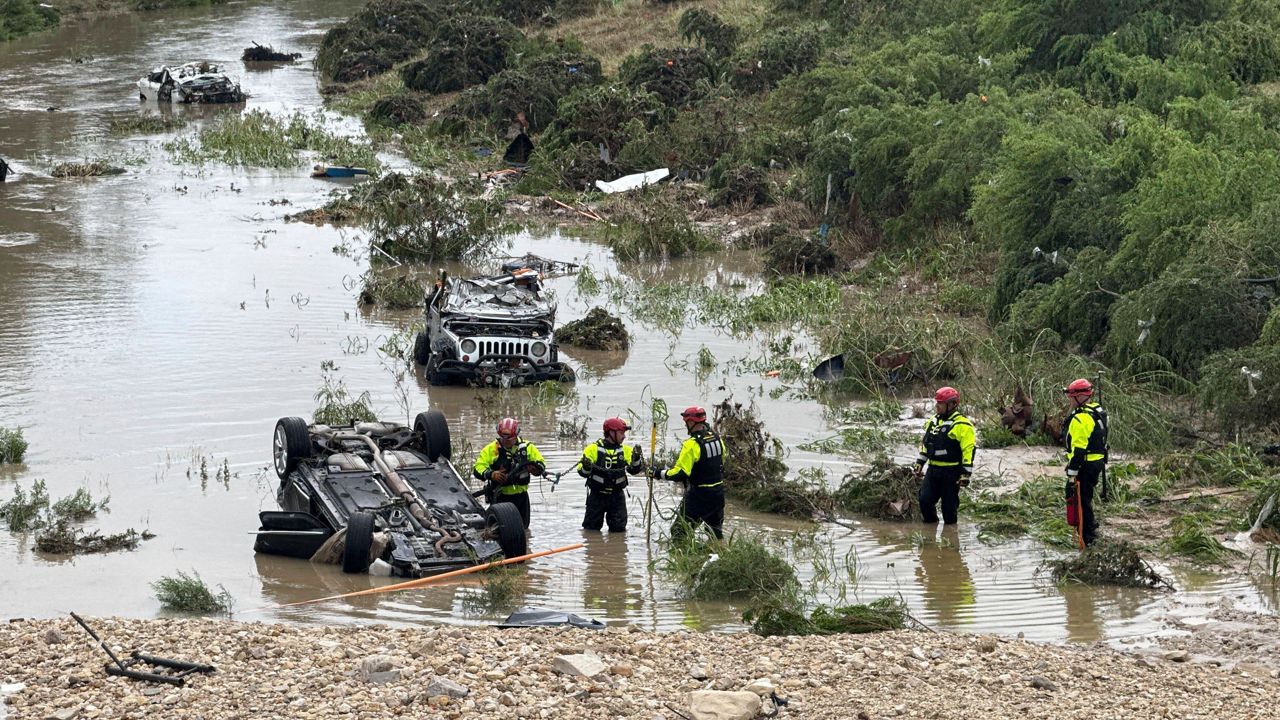
Earlier this year, fast-rising floodwaters pushed more than a dozen cars into the Beitel Creek, and across the city, 13 people died as a result of the severe storms on June 11 and 12. More than 70 people across San Antonio were rescued, and 11 of the 13 people who died were swept into the creek.
Kleinfelder, the engineering firm hired by the City of San Antonio, published an extensive analysis of the flooding that included its conclusion that there was no way for officials to have expected flooding like this could occur along Beitel Creek. The firm also found that there was “insufficient information” on the construction of the roadway that flooded to determine if a risk of flooding was assessed.
The 138-page report called the flooding a “25-year event,” and it also included some recommendations in order to “minimize the future loss of life.”
The firm recommended putting up advanced warning signage along Loop 410 WBFR and at the Loop 410 WBFR/Austin Highway underpass, including a flood gauge at the sag points in those roadways and potentially flashing lights to alert drivers to potentially hazardous conditions.
The report also recommended that the City of San Antonio work with the Texas Department of Transportation (TxDOT) to update the latter’s Hydraulic Design Manual “to include the assessment of risk to the public from flooding within their right-of-way. These assessments should give consideration to frequency of flooding, depth, and velocity at a minimum.”
Another recommendation was elevating Loop 410 WBFR to reduce the flood risk and people becoming trapped during high-water events. This would require both the city and TxDOT to collaborate on a design to raise the roadway.
The report also highlighted the need to enhance emergency response protocols to close and redirect traffic at locations like Loop 410 WBFR. It also recommended the city place new gauges downstream and invest in some new sensors in order for quicker response times.