
Transitioning Lubbock Power & Light into the competitive market came with a $100 million price tag. But Chief Public Affairs Officer Matt Rose said if the utility hadn’t had an aging, small fleet of power plants, it could’ve been higher.
Matt Rose
Gov. Greg Abbott is promising to reduce Texans’ bills through a plan to break up what he calls “city monopolies” like those held by CPS Energy, Austin Energy and other municipal utilities.

In a surprise announcement in San Antonio, Abbott claimed his plan would reduce San Antonio bills by 13%, though he could not say how he arrived at that figure.
Article continues below this ad
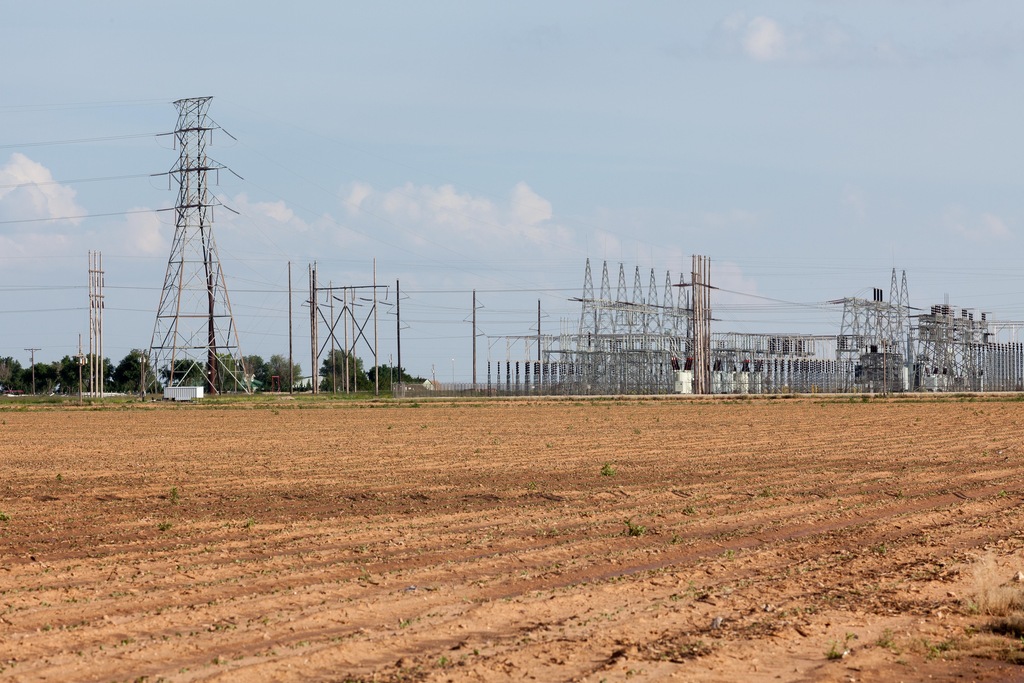
After transitioning into the competitive market, Lubbock Power & Light stepped down from being an electricity provider to become a transmission and distribution utility. It owns and operates the local power lines.
Matt Rose
Matt Rose, chief public affairs officer for Lubbock Power & Light, speaks to local residents in spring 2024 about transitioning the municipally-owned utility into the competitive market.
Matt Rose
Another city’s experience suggests it’s unlikely the move would accomplish such savings.
Lubbock Power & Light, a municipal utility that entered the competitive market in 2024, offers a glimpse into what ratepayers can expect after transitioning from one provider to having more options.
“It gives you the ability to theoretically get a lower rate if you know what you’re looking for,” said Matt Rose, chief public affairs officer for Lubbock Power & Light. “But it’s not going to cut your bill in half overnight — and nobody should promise that.”
Article continues below this ad
San Antonio Express News Logo
Make us a Preferred Source on Google to see more of us when you search.
Add Preferred Source
RELATED: Abbott wants to break up CPS Energy. San Antonio business leaders are rattled.
Abbott said more than 5 million Texans live in areas with a single municipal power provider, with 60% of those customers living in San Antonio and Austin. His proposal is largely aimed at those two cities, but the plan he said he’ll ask the Legislature to approve could have wide-ranging implications for more than 70 city-owned utilities across the state.
In Lubbock, the transition came with a bill of more than $100 million as the utility prepared about 110,000 customers to enter the competitive market.
Article continues below this ad
Matt Rose, chief public affairs officer for Lubbock Power & Light, speaks to local residents in spring 2024 about transitioning the municipally-owned utility into the competitive market.
Matt Rose
Most of that was a $77 million fee to terminate a power contract that provided 187 megawatts to help power its overall 650-megawatt load. It cost another $20 million to $22 million, Rose said, to put in the advanced metering infrastructure, or smart meters, needed in a market with multiple providers. For smaller utilities, he said, such costs could be insurmountable.
CPS Energy, though, is the largest municipally owned energy utility in the nation. It serves more than 1.36 million electric and gas customers in San Antonio and parts of seven additional counties. While it has more cash to absorb such transition costs, Rose said “their costs are going to be astronomically higher than a midrange utility or smaller utility just because of their scale.”
“That’s going to come with a huge price tag, and that needs to be taken into account,” he said. “Ultimately these costs don’t just get evaporated up into the ether. They’re always going to be borne by customers.”
Article continues below this ad
Rates about the same
When Lubbock opened up its market in spring 2024, less than 70% of its customers chose a provider, despite a rigorous education campaign. About 30% of residents ended up with one of three default providers — Reliant, TXU Energy and Octopus Energy — and received a steady default rate for three months before being transferred to a month-to-month rate.
Customers can save money if they sit down and shop for a rate, but if they skip the process or don’t fully understand it, they can end up with a rate of 22 cents per kilowatt-hour in the summertime. Companies may advertise a low rate that is available only at a specified level of usage or offer a rate that doesn’t include fees.
“You can find yourself on a pretty bad sliding scale going into summertime, where your consumption is going up two to three times, but so is your rate because it’s not locked in,” Rose said.
Article continues below this ad
RELATED: Abbott wants to break up CPS Energy. San Antonio business leaders are rattled.
If Lubbock hadn’t entered the competitive market, its summer 2024 rate would have been slightly less than 17 cents per kilowatt-hour. Two years into the open market, the larger providers in the city now offer rates ranging from about 15 cents per kilowatt-hour to 17 cents per kilowatt-hour.
After transitioning into the competitive market, Lubbock Power & Light stepped down from being an electricity provider to become a transmission and distribution utility. It owns and operates the local power lines.
Matt Rose
CPS Energy’s average rate was 13.1 cents per kilowatt-hour in the 12 months through April, with the average residential customer bill totaling $191.77. In his pitch, Abbott pointed to what he said were lower rates in cities like Houston that are in the competitive market, but CPS bills are already well below Houston’s average residential bill of $224.68.
Article continues below this ad
That didn’t surprise Rose.
“We all have the same types of costs. We’re all having to buy transformers. We’re all having to buy the same types of equipment,” he said. “One company may be a little bit cheaper because they’ve got an economy of scale, but we’re all buying the same stuff and so there’s no magic wand out there.”
There’s also the concern of assets and debt. For Lubbock’s aging, small fleet, that wasn’t a problem.
But CPS Energy is facing about $10 billion in debt, with much of that coming from its generation fleet. If the utility lost customers to competitors, its revenue could decline while much of its debt and fixed costs remained.
Article continues below this ad
READ MORE: Abbott’s move against CPS is about subverting local control, not affordability
While Lubbock was still burdened by a “tremendous amount of work, cost and effort,” Rose said the utility was uniquely situated to move into the competitive market. That was partially because its residents had a choice for decades — but only between two providers.
Lubbock’s choices
Lubbock Power & Light and Xcel Energy were previously the sole providers of power to Lubbock, offering residents an “inefficient form of competition,” Rose said.
Article continues below this ad
The city’s system was connected to the Southwest Power Pool, which runs from Lubbock to Canada, rather than to the grid managed by the Electric Reliability Council of Texas, which manages 90% of the state’s electric load.
In 2010, Lubbock’s municipally owned utility purchased Xcel Energy’s infrastructure and became the sole provider of energy to the area. But because it was part of the Southwest Power Pool and at the southern end of its coverage area, the only company it could buy power from was Xcel Energy. That drove the decision to move the system over to ERCOT.
Lubbock residents attended an informational session in spring 2024 about transitioning the municipally-owned Lubbock Power & Light into the competitive market.
Matt Rose
That process was approved by the Public Utility Commission in 2018. Lubbock built more than 100 miles of transmission lines to connect it to the ERCOT grid. Rose said that by the end of 2023, all of its customers were integrated into ERCOT.
Article continues below this ad
It was during that multiyear process of talking to residents that the utility heard “overwhelming interest” in entering the competitive market again. Lubbock Power & Light stepped down from being a provider and instead became a transmission and distribution utility because it continued to own and operate the local power lines.
While residents do have more options now, the rates they pay have remained relatively unchanged.
“There are offerings in the market of a little under 12 cents, so you know customers can go pick that company,” Rose said. “A lot of times your rate is going to be completely indicative of the amount of bells and whistles that you’re going to get with your contract.”