
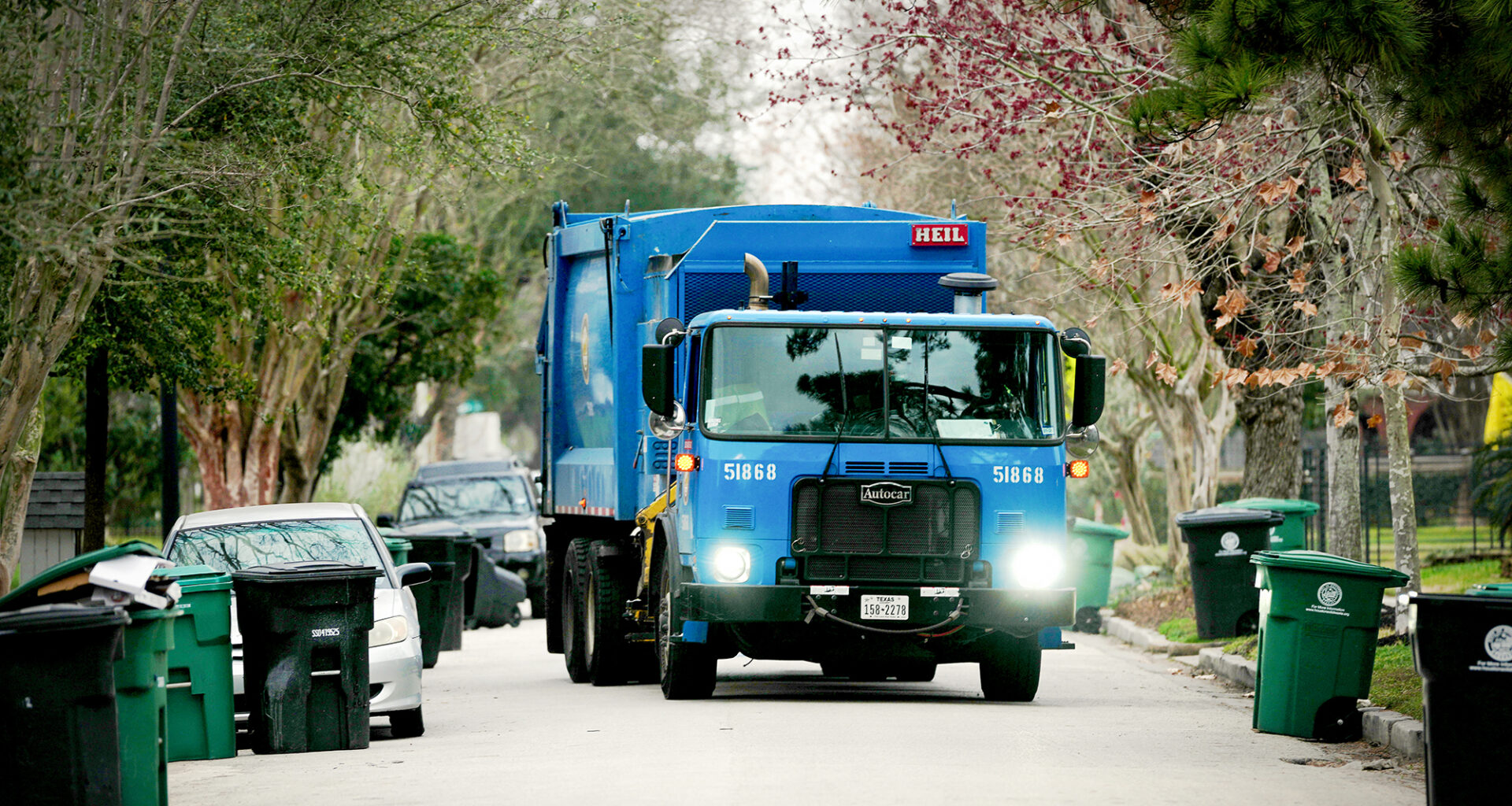
One of the city’s new solid waste vehicles collects trash on Merrill St in the Heights on February 19, 2026.
Jill Karnicki/Staff photographer
Houston Mayor John Whitmire speaks about his proposed 2027 budget and a new trash fee proposal during a presentation at City Hall in Houston, Tuesday, May 5, 2026.
Raquel Natalicchio/Houston Chronicle
Most Houston residents will begin seeing a new $5 fee on their water bills in August and September to help fund the city’s Solid Waste Management Department.
The first of its kind in Houston’s history, the monthly fee marks a major shift in how the city pays for a department that has struggled for years with late and missed pickups. The fee is part of a broader budget overhaul that Mayor John Whitmire proposed this summer. The restructuring moves solid waste out of the city’s tax-funded general fund and into its utility system, where it will be funded by water bill revenues and the new fee.
Here’s what to know about the city’s new trash fee:
Article continues below this ad
1. Why is Houston charging a trash fee?
Whitmire proposed what he calls an “administrative fee” to help improve the city’s long-struggling trash, recycling, yard waste and heavy trash services while closing a $180 million deficit in the city general fund, which is fed mostly by property and sales taxes and funds most core services.
His overhaul moved the Solid Waste Management Department out of the general fund and into Public Works, instead funding waste services with water and sewer revenues and the new fee.
The fee is expected to generate about $24 million this fiscal year, a fraction of the department’s $134 million budget. Utility revenue will largely cover the remaining cost.
Article continues below this ad
READ MORE: Houston City Council passes Mayor John Whitmire’s $7.5B city budget, paving way for a $5 trash fee
2. Who has to pay the new trash fee?
Houston households that receive city trash service will pay the fee as a separate charge on their water bills. Randy Macchi, Houston Public Works director and head of the solid waste department, said residents will begin seeing the charge in August and September.
About 47,500 households that use private trash collection through homeowners associations will not pay the fee. Instead, those households will continue receiving a $6 monthly city subsidy to help offset the cost of private service.
READ MORE: Houston may add a trash fee — but not for some affluent areas. They’ll keep getting city subsidies.
Article continues below this ad
3. How bad are Houston’s waste services?
Houston has struggled for years with missed and delayed garbage, recycling, heavy trash and yard waste collection. A Chronicle analysis found Houston took a median of eight days to close solid waste 311 cases from 2023 through 2025, compared with two to three days in Dallas, San Antonio and Austin.
Yard waste has been particularly unreliable. As of March 2025, crews were completing only 26 of 96 scheduled weekly routes because of staffing and equipment shortages.
READ MORE: Houston struggles with trash pickup more than other Texas cities. Here’s what 311 data shows
4. What are residents supposed to get for the extra $5?
Whitmire’s administration has said the new funding will stabilize the solid waste department and make trash and recycling service more reliable. Initial plans call for restructuring operations, improving routes and training department leadership, while longer-term goals include upgrading equipment and expanding recycling and composting services.
Article continues below this ad
City council also directed the Whitmire administration to set aside $3 million to combat illegal dumping.
But the city has yet to release the detailed solid waste performance measures Macchi promised earlier this summer, leaving residents without clear benchmarks for measuring improvement.
READ MORE: Houston lags behind other major Texas cities in recycling. Will the new trash fee improve that?
5. Will Houston’s trash fee eventually increase?
The fee is $5 per month for now, though the city Finance Department laid out a plan to gradually raise the fee to $25 per month by 2031.
Article continues below this ad
An independent study commissioned by the city recommended starting the fee at $32 per month, increasing to $45 by 2031.
Any increase above $5 would require another city council vote. Whitmire has not committed to the increases outlined by his finance department, saying the city will not impose what he calls a “genuine garbage fee” until services improve.
That has concerned critics of the proposal, who say failing to offset the cost of the solid waste budget risks burdening the city utility system at a time when Houston has enormous water and sewer needs.
6. Is there financial assistance for people who can’t afford the fee?
Council members raised concerns during budget deliberations about the fee’s impact on seniors and other residents with limited incomes. City council ultimately required the administration to study whether utility funds could reduce, offset or eliminate the fee in future years for people with disabilities, qualified veterans and senior citizens.
7. What happens next?
The biggest question is whether Houstonians see better service after they begin paying the new fee. City officials say the restructuring will provide more stable funding and lead to more consistent trash and recycling collection, but they have yet to release detailed performance measures.
Council Member Amy Peck has said she would push the council to repeal the fee if services do not improve.