
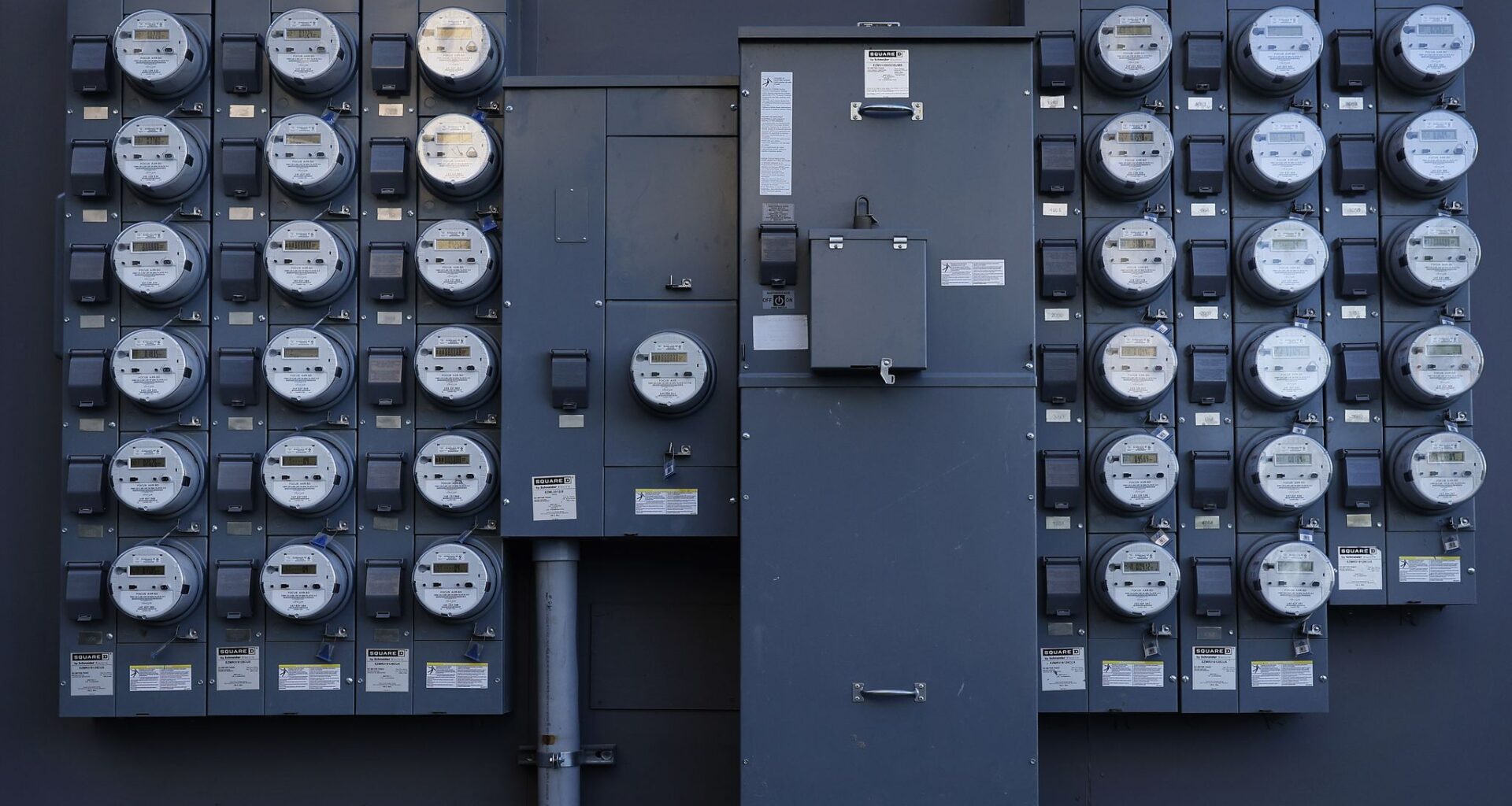
Rows of apartment electrical meters line the wall near downtown Dallas.
Tom Fox/Staff Photographer
Nearly $515. That was Ines Cervantes’ electricity bill for service in July. The month before, her bill was nearly $460.

The 69-year-old lives in a three-bedroom house in Oak Cliff, only about 1,300 square feet. Before the last few months, her electricity bill ranged from $275 to $350, she said. She wasn’t able to pay the full amount due for the last few months, so her balance for August ballooned to $970.
“My light bill shouldn’t be almost $1,000,” Cervantes said.
Article continues below this ad
A few weeks after receiving the bill, she successfully applied for federal payment assistance through Dallas County. Still, Cervantes said she regularly skips grocery runs to save money and afford electricity.
“One month I might not pay the gas bill or the water bill and push that out, and then it’s two months for the internet bill.” she said. “That’s how I do it. I juggle everything.”
Household electricity spending swelled in the D-FW region between 2021 and 2024, according to the most recently available census data. At the same time, energy insecurity — difficulty paying energy bills or using heating or air conditioning because of financial issues — has also climbed across Texas.
More than 40% of Texas households were energy insecure in 2024, according to data from the Energy Information Administration. That’s up from about 34% in 2020. In 2024, Texas’s energy insecurity rate ranked third in the nation.
“We’re already seeing so much strain in people’s ability to pay their electricity bills,” said Margo Weisz, executive director of the Texas Energy Poverty Research Institute. “And we only see the problem getting worse with those energy burdens going up.”
Article continues below this ad
As more people across the U.S. pay more for electricity, Texas and D-FW residents have been hit particularly hard.
Across the U.S., the share of households paying more than $200 a month for electricity increased by about 9.4 percentage points from 2021 to 2024. In Texas, that share increased by 13 percentage points, and in the D-FW metro area, it increased by more than 15 percentage points.
What’s driving up costs?
A wave of improvements to electricity transmission and distribution across the state account for a large portion of those price increases, Weisz said.
Article continues below this ad
Those improvements largely split into grid maintenance and expansion, said UT Dallas Professor Erin Litzow, who studies environmental, development and energy economics.
After Winter Storm Uri left more than 200 Texans dead and exposed severe energy vulnerabilities statewide in 2021, the state government directed electricity companies to improve power generation, transmission and distribution.
Much of those costs have been shouldered by residential customers, who are helping electricity distributors pay off securitization bonds the state sold in years following the 2021 winter storm.
Read more: Welcome to Texas. Now meet our cockamamie electricity system.
Growing electricity demand, actual and projected, is contributing to higher electricity spending as well. As North Texas’ population booms, distributors like Oncor are expanding their infrastructure to accommodate new residents and businesses. Moving forward, the explosion of data centers in the state could also drive utilities to build out capacity, Litzow said.
Article continues below this ad
Costs aren’t the only reason energy insecurity has worsened. An increasingly warm climate means families will more frequently need air conditioning despite not being able to afford it, Litzow said.
Inflation has also left families with less income to spend on their electricity bills, Litzow said. When they’re more strapped for cash, people might also spend less on weatherization improvements that could make their homes more energy efficient.
“They’re often very lumpy costs — so there’s not a lot of financing available for them,” Litzow said. “Imagine you’re a cash-constrained household. You’re not going to have $15,000 lying around to do that kind of work on your home.”
Cervantes said she last had work done on her home to improve energy efficiency about 15 years ago with help from Dallas County’s weatherization assistance program. While she said they did a good job insulating her home and appliances, her house could use another touch-up. In a few months, Cervantes hopes she’ll again be eligible for the program, which is available to residents every 15 years.
Shifting the cost trajectory
Technological shifts could soften electricity cost trajectories, Weisz said. If large-load electricity users, like data centers and big factories, invested in onsite generation and storage, they could offset some of the build-out costs currently burdening ratepayers across the state.
Article continues below this ad
Local strategies to more conservatively use electricity could also bring down consumer costs, Weisz said. Those include energy efficiency programs for homes and adjustments to energy consumption based on real-time shifts in demand, also called demand response.
But the energy market hasn’t offered strong enough incentives for utilities to adopt these changes en masse, Weisz said. There is little indication that the current cost increases will abate soon.
“Right now, I would say there’s no end in sight,” she said.
In addition to weatherization help, Cervantes is looking to other public bill assistance programs for help. She’s also planning to research more affordable electricity plans she can switch to.
Article continues below this ad
“I think there’s still options out there,” Cervantes said. “It’s just, right now I feel like I’m in a bind.”