
Since opening in 2011, the Power Station in Expo Park has offered some of the boldest and most ambitious contemporary art programming around, often bringing in large-scale, conceptually oriented work that might be too challenging for a broad museum public.
Housed in a renovated Dallas Power and Light substation building similar to the one that Corky Cunningham redid for the late Morton Meyerson, the abundantly lit industrial space, punctuated by burly riveted structural I-beams, perfectly reproduces the spare, muscular environment of the former industrial spaces in New York’s SoHo that helped shape contemporary art as we know it today.
It’s a marked change of pace, then, in both physical scale and historical perspective, to see “Cabinet Pictures,” the new show devoted to the kind of small paintings kept since the Renaissance in private rooms to be seen by a handful of viewers. On view are nearly four dozen paintings by 10 artists, none exceeding 15 inches across, and arranged in groups on six different colored walls, across the ground and second floors.
Each artist is represented by multiple works spread across the display walls, and each wall presents the artists in a slightly different order, so that going from wall to wall is like shuffling and reshuffling a deck of cards. Each wall invites close, deliberate viewing.
News Roundups
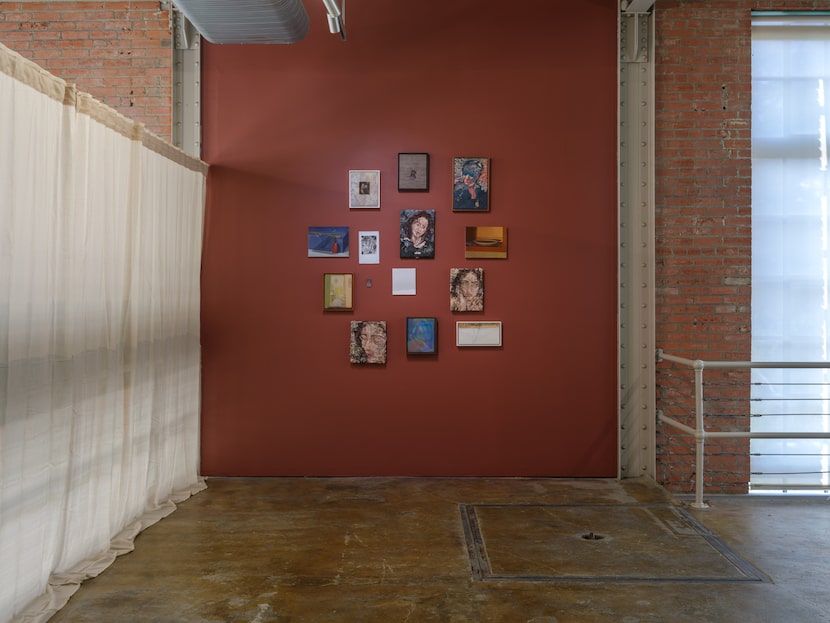
“Cabinet Pictures” at the Power Station packs a lot of artwork into a small wall space.
The Power Station
The upstairs red wall, however, offers a different experience. There, 13 works hang closely together in a dense salon-style cluster (as opposed to the single row more common in the modern era), and one’s eye can move rapidly in all directions, apprehending how the paintings fit together.
Aside from the ravishing works of Dallas-based Marjorie Norman Schwarz (who has some larger, door-sized works up at the moment across town at 12.26, for comparison), the artists hail from far and wide, with similarly disparate styles and media.
What unites them is that they make work to a cabinet scale — just as would have been the case in a historical cabinet, where works were chosen to please a collector’s eye rather than illustrate an art-historical thesis. According to curator Rob Teeters, the works share “a common consistency of maintaining a high level of attention to the craft of the painted picture.”
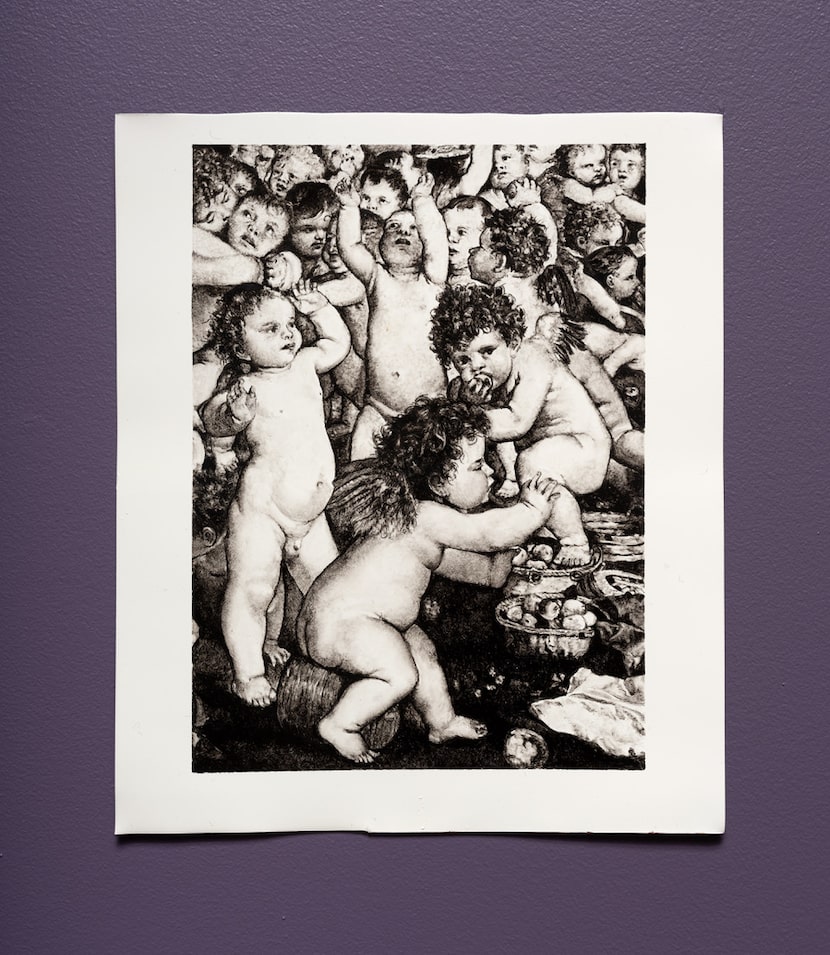
Louis Eisner’s detailed works, such as the 2025 oil painting “The Worship of Venus,” are among the exhibition’s highlights.
The Power Station
The wonderfully detailed oil-on-copper paintings by Louis Eisner recall the heyday of the cabinet in their old-fashioned medium. Eisner’s high level of contrast and sharp white background stand out when placed next to darker, more shadowy works by other artists. Nate Antolik’s much more muted still lifes, for instance, are right out of the quiet, introverted playbook of Giorgio Morandi (who is quoted in the announcement).
A similar range in tonality makes for dramatic side-by-side comparisons between, on the lighter side, Ellen Siebers’ pale figure studies and the late Pat de Groot’s gray Provincetown ocean views, and on the darker side, Karol Palczak’s dusky still lifes and Nicholas Bierk’s moody landscapes, which recall George Inness and 19th-century American Luminism.
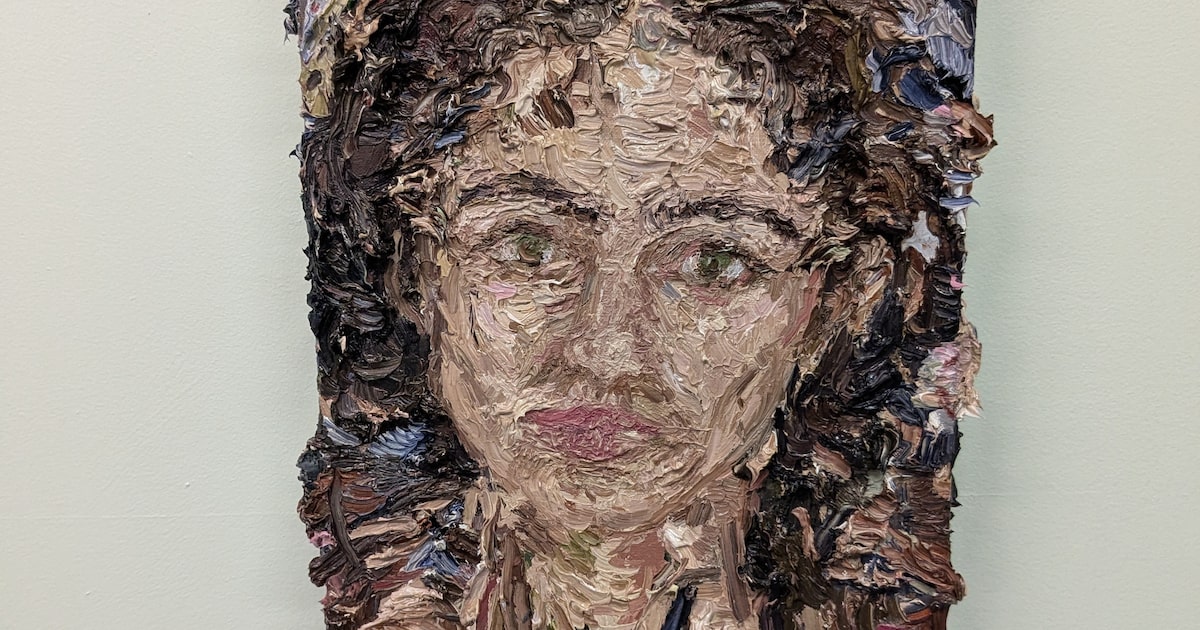
In texture as well, there is a contrast between the goopy, frosting-thick impasto surfaces of Joanna van Son’s portraits, which evoke a painterly tradition of sensuous pleasure, and Yui Yaegashi’s minimal, anti-illusionistic brushwork, which plays on the canvas itself in the manner of Robert Ryman.
Despite the stimulating contrast with the bright, open industrial space of the Power Station, viewing the show is otherwise a lot like being in a cabinet. No labels, no wall texts and (on my recent visit) no other visitors to get in the way of an exciting, almost scandalous closeness with the artworks. It’s a pleasure — the opposite of being jostled by tourists in an overcrowded museum.
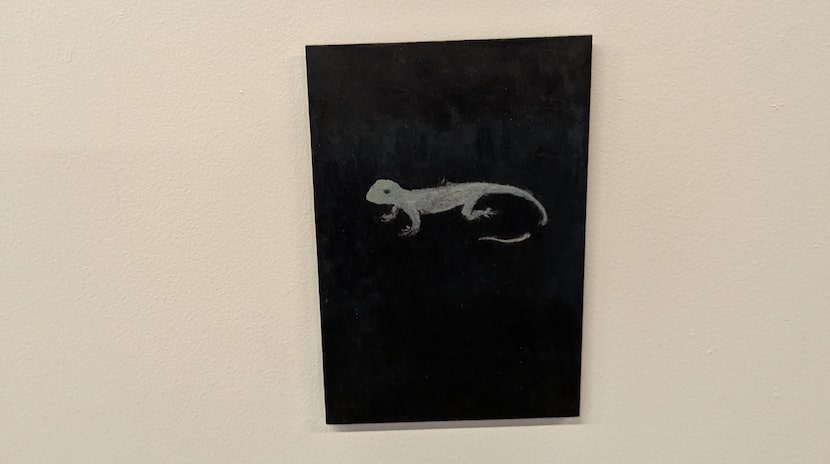
Jerónimo Elespe’s 2020 oil painting “Soberana” is among the works on display at the Power Station in Expo Park.
Benjamin Lima
The show is well worth seeing, although — viewer beware — it is not necessarily easy to get in the door. Obtaining basic information (phone number, opening hours, closing date) required some effort, with the website listing outdated or inaccurate information, to the extent that it almost seems more of a quasi-public exhibition than a public one.
To be sure, the question of what, if anything, private art foundations owe the public is a long-standing one, in Dallas and elsewhere. It is much easier to simply create a private foundation, with all its advantages, than to go to the considerable trouble needed to make it accessible to the public. Still, for those who manage to get inside, the experience is rewarding.
Details
“Cabinet Pictures” is on view at the Power Station, 3816 Commerce St., through Feb. 28. Saturdays from noon to 5 p.m. and by appointment through info@powerstationdallas.com. Free.
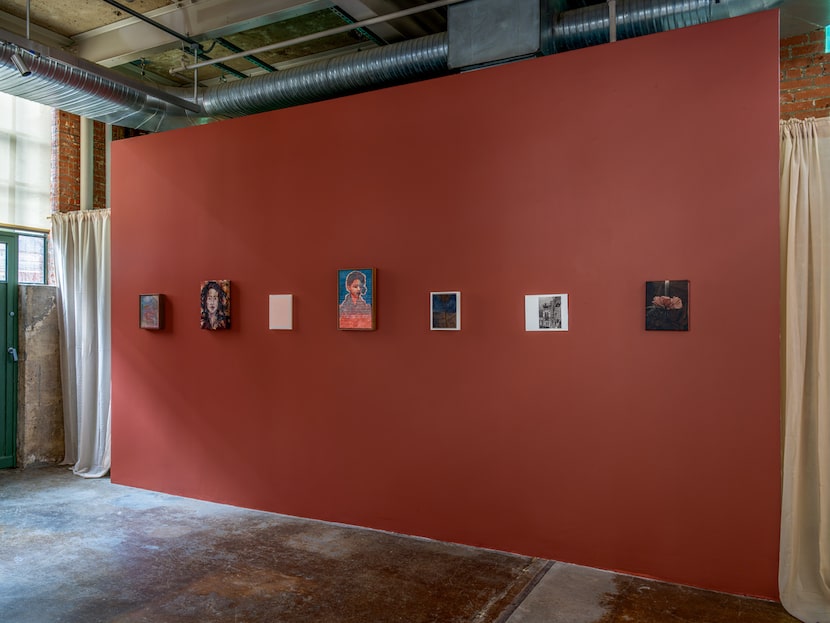
“Cabinet Pictures” features nearly four dozen paintings by 10 artists.
The Power Station